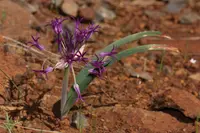
Giant Chincherinchee Care (Ornithogalum saundersiae)

Also known as: Giant Chink, Transvaal Chinkerinchee, Trasnvaal Chinkerinchee
Giant Chincherinchee

About Giant Chincherinchee

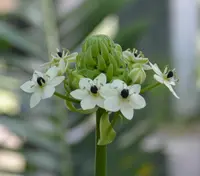
Giant Chincherinchee (Ornithogalum saundersiae) is a bulb-forming perennial grown mainly for its tall, elegant flower stalks. It produces sturdy stems topped with domed clusters of waxy white, star-shaped flowers with dark centers.

This species is native to South Africa, where it grows in sunny, open habitats with marked dry and wet seasons. It is often used as a cut flower because the blooms last well and the stems are strong.

In gardens or containers it prefers bright light, moderate moisture, and well-drained soil, and it resents waterlogged conditions. Once its seasonal rhythm is understood, it is not difficult to care for Giant Chincherinchee.

Main Plant Requirements

Care Difficulty

Moderate Care

Light Preference

Full Sun

Water Requirements

Moderate Water

Temperature Preference

Tropical / Frost Sensitive

Hardiness Zone

9–11

Soil Texture

Sandy, Loamy, Organic-rich

Soil pH

Slightly acidic (6.5–7.0), Neutral (7.0)

Soil Drainage

Well-drained

Fertilization

Light (every 4–6 weeks)

Get Personalized Care Plan

Scan your plant to receive care tips personalized for your specific plant

Available on iOS and Android

How to Care for the Giant Chincherinchee

This sun-loving bulb performs best with bright, direct light during its active growing season.

  • Provide 6–8 hours of sun daily, ideally with full morning sun and light afternoon shade, especially in hot summer regions.
  • Tolerates light or dappled shade, but stems may stretch and flowering can decrease if grown in less than 4–5 hours of direct sun.
  • In very intense climates, protect Giant Chincherinchee from harsh midday sun to reduce leaf scorch and premature flower fade.

Watering should support strong bulb growth while avoiding prolonged soggy conditions.

  • Irrigate when the top 3–5 cm of soil feel dry, giving a deep soak that drains freely through the root zone.
  • Use sharply drained soil or raised beds to prevent standing water; persistent wetness around the bulbs is a common cause of rot in Ornithogalum saundersiae.
  • During dormancy after foliage dies back, keep bulbs almost dry, watering only lightly if the soil becomes completely dry for extended periods.

This species prefers warm, frost-free conditions with a mild, dry rest period after flowering.

  • Aim for active growth temperatures around 65–80°F (18–27°C), which support strong foliage and reliable flowering.
  • Protect from cold; foliage and buds are damaged near 32°F (0°C), and bulbs should be lifted or heavily mulched where winters drop below 25°F (−4°C).
  • In hot climates, it tolerates brief highs up to about 90°F (32°C) if soil moisture is stable and roots are insulated from extreme surface heat.

This species handles typical indoor humidity but grows best with mildly moist air.

  • Aim for 40–60% humidity; average household levels usually suffice for Giant Chincherinchee.
  • Dry air can cause browning leaf tips and slower growth, especially near heating vents.
  • Increase humidity by grouping plants, placing pots on pebble trays with water, or using a small room humidifier.

This bulb prefers loose, sharply drained, mineral-lean substrates to prevent rot.

  • Use a sandy or gritty loam with 30–50% coarse material such as perlite, pumice, or horticultural grit for strong drainage.
  • For pots, mix roughly 2 parts all-purpose potting mix with 1 part coarse sand and 1 part perlite to keep the root zone aerated.
  • Maintain slightly acidic to neutral pH around 6.0–7.0; avoid very acidic or very alkaline mixes that can limit nutrient uptake.
  • Avoid heavy clay, compacted, or consistently wet substrates, which rapidly increase the risk of bulb and root rot in Ornithogalum saundersiae.

This species grows well in containers when the pot is stable and drains very efficiently.

  • Choose a deep pot so bulbs sit with at least 5–8 cm of mix beneath them to buffer against rapid drying and heat.
  • Use a heavy ceramic or clay container for tall flowering stems to reduce tipping in wind-exposed positions.
  • Raise the pot slightly on feet or bricks so drainage holes stay clear and water cannot pool under the base.

This bulb benefits from light, controlled feeding to support flowering without forcing lush, weak growth in Giant Chincherinchee.

  • Use a balanced liquid fertilizer (around 10-10-10) at 1/2 strength every 3–4 weeks during active growth in spring and summer.
  • Apply only to moist soil to avoid root burn and keep fertilizer off the leaves and flowers.
  • Stop feeding once foliage begins to yellow and the plant heads toward dormancy in late season.
  • Avoid rich compost or heavy slow-release products that keep soil too nutrient-dense for the resting bulbs.

Ornithogalum saundersiae needs only light, seasonal pruning focused on hygiene rather than shaping.

  • In late summer or after flowering, remove spent flower stems at the base using clean, sharp scissors or pruners.
  • Trim away yellowing or dead leaves, but leave healthy green foliage to feed the bulbs for next year.
  • Cut damaged or diseased tissue promptly and dispose of it to reduce fungal and bacterial problems.
  • Avoid hard cutting back of healthy growth, as this can weaken bulbs and reduce future flowering.

This bulbous plant prefers disturbance only every few years, so repotting or transplanting should be occasional and deliberate.

  • Check containers every 3–4 years; crowded bulbs, roots circling the pot, or reduced flowering signal a need to move up 1 pot size.
  • Transplant or repot in late winter to early spring, just before new growth starts, to minimize stress.
  • Gently loosen the root ball, separate crowded bulbs, and replant at the same depth in free-draining, gritty soil.
  • Water lightly after moving, then keep soil just slightly moist for 1–2 weeks while roots re-establish.

This species is commonly increased by bulb division, with seed used mainly for patient growers or breeding work.

  • Lift and divide offsets from the parent bulbs in late summer to early fall, once foliage has fully died back.
  • Select firm, healthy bulbs and replant them at the correct depth in well-drained soil with good light.
  • For seed, sow fresh seed in a gritty, free-draining mix, barely covered, and keep at 65–70°F with even moisture.
  • Label young pots clearly and allow several seasons for seedlings to reach flowering size.

This bulb is only moderately frost tolerant and often needs some winter attention, especially in colder climates.

  • In mild zones (around USDA 9–10), leave bulbs in the ground and apply a 5–8 cm mulch layer over the root zone.
  • In cooler regions, lift bulbs after foliage dies back, dry them, and store in a frost-free place around 45–55°F.
  • For containers, move pots indoors to a bright, cool, dry spot before hard frost arrives.

Care Tips

Stake Heavy Stems

Install thin, unobtrusive stakes when the flower stalks reach 15–20 cm and loosely tie them with soft plant ties so the tall, top-heavy spikes stay upright and do not snap in wind or under their own weight.

Rotate Bulbs Periodically

In outdoor clumps, lift and divide congested bulbs every 3–4 years, replanting the largest, healthiest bulbs at the same depth and spacing them 10–15 cm apart to maintain strong flowering and reduce disease buildup in the soil.

Manage Flower Harvest

For cut flowers, harvest when the lower 3–5 florets on a spike have opened, cutting early in the morning and leaving enough foliage to mature and feed the bulb, which helps sustain flowering performance in future seasons.

Dry Rest Preparation

At the end of the season, allow foliage to yellow fully before removing it, then store lifted bulbs in a dry, airy crate with a single layer of bulbs so the tunics dry evenly and are less prone to rot during dormancy.

Pest Monitoring Routine

Inspect plants weekly for aphids and thrips, especially on flower spikes and under leaves, and if found, remove them early with a strong water spray or a labeled insecticidal soap to prevent distorted blooms and virus transmission when growing Giant Chincherinchee.

Common Pests and Diseases

Narcissus bulb fly

This pest targets the bulbs, where larvae tunnel inside and destroy the storage tissues, often causing sudden collapse of leaves and failure to sprout. Symptoms include yellowing foliage, stunted growth, and soft, rotting bulbs with internal cavities.

Solution

Discard any infested bulbs that feel soft or show internal tunneling, as they do not recover. For remaining healthy bulbs, inspect regularly, keep planting areas clean of plant debris, and in outdoor beds use fine mesh or fleece over newly planted bulbs during the main egg‑laying period to prevent adults from reaching the soil surface.

Bulb mites

These insects are tiny soil-dwelling pests that invade damaged or stressed bulbs, feeding on the basal plate and scales and creating brown, corky patches. Symptoms include poor sprouting, weak growth, and bulbs that feel spongy or show dry, tan lesions when cut open.

Solution

Remove and destroy badly affected bulbs and any heavily infested potting mix. For remaining bulbs, dry-store them in a cool, well-ventilated spot, trim away damaged tissue, and replant only in fresh, free-draining medium, keeping bulbs on the dry side between waterings to discourage mite buildup.

Botrytis blight

This disease is a fungal infection that thrives in cool, humid conditions, leading to water-soaked spots on leaves, flower stalks, and blooms that quickly turn tan or brown and may develop gray fuzzy mold. Symptoms include collapsed stems and premature flower loss, especially in crowded or poorly ventilated plantings.

Solution

Promptly remove and discard affected leaves, flower stems, and spent blooms, and avoid overhead watering so foliage stays as dry as possible. Improve airflow around plants, reduce crowding, and in outdoor plantings consider a labeled ornamental bulb fungicide as a preventive treatment when cool, wet weather is expected.

Basal plate rot

This disease attacks the basal plate of the bulb, causing brown, sunken, or dry rot where the roots attach and leading to yellowing leaves, stunting, and eventual plant collapse. Symptoms include bulbs that separate easily into loose scales and show dry, crumbly tissue at the base when cut open.

Solution

Discard all bulbs showing basal plate decay and do not compost them. For prevention, plant only firm, healthy bulbs, use clean tools and fresh, well-drained medium, avoid overwatering during dormancy, and rotate planting areas outdoors so bulbs do not occupy the same soil year after year.

Interesting Facts

Architecture of the inflorescence

This species forms tall, rigid, cone-shaped flower spikes with many star-shaped blooms arranged in precise spiral rows, an adaptation that maximizes visibility to pollinators. The dense architecture also helps protect developing flowers in windy grassland habitats in its native South Africa and Eswatini.

Long-lasting cut flower

Its sturdy stems and slowly opening florets make it a highly valued cut flower in the global ornamental trade. Individual stems often hold ornamental value for several weeks because new flowers continue to open from the base upward while older ones persist.

Preference for summer growth

In its native climate it behaves as a summer-growing bulb that rests during the cooler, drier season. This growth pattern reflects the summer-rainfall ecology of its natural range, where moisture and warmth coincide to trigger active leaf and flower production.

Botan icon

Did you know?

Commercial breeding and selection programs have produced several taller and more floriferous forms of Ornithogalum saundersiae specifically for export cut-flower markets, making it one of the better-known South African bulb species in the international floriculture industry.

FAQs about Giant Chincherinchee

Poor flowering usually results from bulbs being too small, overcrowded, or depleted after a previous display. Allow foliage to fully die back after flowering, avoid cutting leaves early, and divide congested clumps every few years to restore bloom strength.

Grow Healthy Plants with Botan Care

Keep your plants happy and healthy with plant identification, disease detection, and easy care guidance.

Botan plant care app — identify plants on mobile

Explore More Plants