Mark Dormant Clumps
Place small, durable markers where tubers are growing before foliage dies back so you do not accidentally dig into resting plants when working the bed in late summer or autumn.

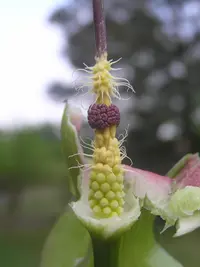
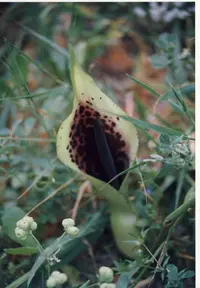
Mountain arum (Arum cylindraceum) is a small, tuber-forming woodland perennial from central and southern Europe. It grows from an underground storage organ and reappears each spring. Leaves are usually arrow-shaped and low to the ground, while the flower consists of a pale spathe surrounding a central spadix, giving it a distinctive, sculptural look. Plants often go dormant and disappear after flowering and seed set. In nature, it occurs in light woodlands, hedgerows, and calcareous or neutral soils with good drainage. It suits gardeners who enjoy subtle woodland plants and understand how to care for Mountain Arum in a cool, humus-rich, consistently moist site.

Care Difficulty
Moderate Care

Light Preference
Partial Shade

Water Requirements
Moderate Water

Temperature Preference
Cold Hardy

Hardiness Zone
5–8

Soil Texture
Loamy, Silty, Organic-rich

Soil pH
Acidic (5.5–6.5), Slightly acidic (6.5–7.0)

Soil Drainage
Moist but well-drained

Fertilization
Minimal (feed rarely)
Scan your plant to receive care tips personalized for your specific plant
Available on iOS and Android
This woodland tuber prefers bright, gentle light rather than intense, open sun.
This species prefers evenly moist, not waterlogged, soil around its tubers.
This hardy woodland plant tolerates cool conditions but has clear limits for growth and dormancy.
This species handles typical indoor humidity and rarely needs special adjustment.
Arum cylindraceum prefers loose, humus-rich soil that drains freely yet retains some moisture around the tubers.
This species grows reliably in containers when depth and drainage are planned carefully.
Arum cylindraceum grows from nutrient-storing tubers and needs only modest feeding in typical garden soil.
Arum cylindraceum needs minimal pruning, mainly to keep the clump tidy and disease free.
This woodland arum is usually grown in the ground; focus on dividing and transplanting clumps rather than frequent repotting.
Arum cylindraceum is most commonly propagated by division of its tubers, with seed raising used less often.
This species is generally hardy in temperate climates and needs only simple winter care in the garden.

Plant Health Check
Not sure what's wrong with your plant? Check your plant's health inside the app.
This species is native to central and southeastern Europe, where it typically appears in deciduous woodlands and forest edges in spring, often before the tree canopy fully leafs out.
The inflorescence has a narrow, cylindrical spadix that inspired the epithet cylindraceum, and it is partly enclosed by a pale, hood-like spathe that helps guide pollinating insects inside.
During flowering, the inflorescence can emit an unpleasant odor and temporarily trap small insects such as flies in the floral chamber, increasing the chances of effective pollination once they are released.
Lack of flowering often comes from insufficient plant maturity, too much shade, or recent disturbance of the tubers. Avoid heavy fertilization, keep the soil moderately fertile, and allow several undisturbed seasons for flower production to improve.
Keep your plants happy and healthy with plant identification, disease detection, and easy care guidance.