Spring cutback timing
Cut old stems down to 5–10 cm just as new shoots emerge in early spring, which keeps the clump compact and encourages dense, wind-resistant growth for the season.

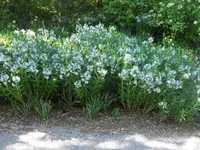
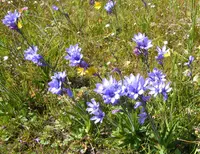
Fringed bluestar, Amsonia ciliata, is a clump-forming perennial known for its narrow, threadlike leaves and clusters of soft blue star-shaped flowers in spring. It typically forms tidy mounds that turn an attractive golden color in fall, adding multi-season interest to garden borders and naturalistic plantings.
This species is native to the southeastern United States, often found in prairies, open woods, and well-drained sandy or rocky soils. It is generally considered easy to grow, with good drought tolerance once established and few serious pest or disease problems.
Gardeners who want to care for fringed bluestar should provide full sun to light shade and moderately moist, well-drained soil for the best growth and flowering.

Care Difficulty
Easy Care

Light Preference
Full Sun

Water Requirements
Moderate Water

Temperature Preference
Cold Hardy

Hardiness Zone
5–9

Soil Texture
Sandy, Loamy, Rocky

Soil pH
Acidic (5.5–6.5), Slightly acidic (6.5–7.0)

Soil Drainage
Well-drained

Fertilization
Minimal (feed rarely)
Scan your plant to receive care tips personalized for your specific plant
Available on iOS and Android
This sun-loving perennial performs best in open, bright conditions for strong flowering and dense growth.
This species prefers evenly moist, well-drained soil, especially during its first 1–2 growing seasons.
This hardy perennial is adapted to temperate climates with hot summers and cold winters.
Humidity is rarely critical for Amsonia ciliata, which adapts well to typical outdoor levels.
Amsonia ciliata prefers well-drained, moderately fertile soil that does not stay wet.
This species can be grown in containers outdoors, though long-term performance is usually better in the ground.
This native perennial needs only modest feeding, as caring for fringed bluestar focuses more on site and soil than on fertilizer.
Pruning Amsonia ciliata is straightforward and mainly supports tidy shape and long-term vigor.
This perennial is usually grown in the ground, where it dislikes frequent disturbance but accepts careful transplanting when needed.
Amsonia ciliata is commonly propagated by seed or careful division, with timing and moisture as key factors.
This species is cold hardy in much of the US and generally requires minimal winter care once established.

Plant Health Check
Not sure what's wrong with your plant? Check your plant's health inside the app.
This species has very narrow, threadlike leaves that reduce water loss and wind damage, an adaptation to its native dry, sandy habitats in the southeastern United States.
Like other members of the dogbane family (Apocynaceae), it produces a white, latex-like sap that deters many herbivores from feeding on its stems and leaves.
After flowering in late spring, its foliage often turns a clear golden yellow in autumn, providing one of the more reliable fall color displays among native herbaceous perennials in its range.

Amsonia ciliata naturally forms loose colonies from slowly spreading root systems, which allows it to stabilize sandy soils and help prevent erosion along roadsides and in open, disturbed habitats.
This species forms clumps and slowly expands outward, but it is not considered invasive in typical garden conditions. It may self-seed lightly. Removal of unwanted seedlings and occasional division keep its spread controlled.
Keep your plants happy and healthy with plant identification, disease detection, and easy care guidance.