Andryala arenaria Care

Andryala arenaria

About Andryala arenaria

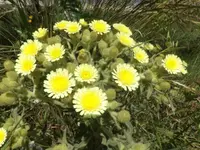
Andryala arenaria is a small, short-lived perennial or annual herb from sandy and coastal habitats of southwestern Europe and the Mediterranean. It belongs to the daisy family and forms low, often gray-green clumps.

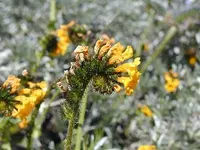
The plant produces soft, sometimes woolly leaves and yellow, dandelion-like flower heads on slender stems. Its natural adaptation to poor, dry, sandy soils makes it relatively undemanding where drainage is very sharp.

Gardeners who care for Andryala arenaria should note that it prefers full sun, low to moderate moisture, and open, well-drained sites, which reflects its dune and dry grassland origins.

Main Plant Requirements

Care Difficulty

Moderate Care

Light Preference

Full Sun

Water Requirements

Low Water

Temperature Preference

Warm Climate

Hardiness Zone

8–11

Soil Texture

Sandy, Loamy, Rocky

Soil pH

Slightly acidic (6.5–7.0), Neutral (7.0)

Soil Drainage

Well-drained

Fertilization

Minimal (feed rarely)

Get Personalized Care Plan

Scan your plant to receive care tips personalized for your specific plant

Available on iOS and Android

How to Care for the Andryala arenaria

This sun-loving Mediterranean wildflower needs bright, mostly direct light to stay compact and floriferous.

  • Provide 6–8 hours of direct sun daily; full sun suits most open, sandy sites where Andryala arenaria naturally occurs.
  • Accepts light afternoon shade in very hot climates; morning sun plus bright, open exposure helps reduce heat stress.
  • In late fall and winter, shorter days are acceptable, but prolonged deep shade leads to weak, elongated growth and fewer flowers.

This species prefers dry, well-drained conditions and is sensitive to persistent moisture around the roots.

  • Allow the top 5–7 cm of soil to dry fully before watering; in sandy ground this often means long gaps between waterings.
  • During the main growing season, watch foliage: slight dulling or mild wilting on hot afternoons can signal the need for a deep soak.
  • Avoid overwatering and poor drainage; yellowing lower leaves, soft stems, or a sour soil smell indicate excess moisture and possible root rot.

This plant is adapted to warm, dry climates but tolerates a moderate range of outdoor temperatures.

  • Optimal growth occurs around 65–80°F (18–27°C), typical of mild spring and early summer conditions in many temperate regions.
  • Mature plants usually handle down to about 25–28°F (-4 to -2°C) with brief light frosts, but young plants are more cold-sensitive.
  • Heat up to 90–95°F (32–35°C) is tolerated if soil is sharply drained and air is moving; extended extremes beyond this can scorch foliage and shorten flowering.

This species prefers relatively dry air and does not need added humidity in typical homes.

  • Aim for 30–50% humidity, similar to an average indoor environment or dry outdoor air.
  • Leaves may yellow from the base or develop grey mold spots if grown in overly humid, stagnant conditions.
  • If humidity is very high, increase air movement around Andryala arenaria with a fan and avoid crowding plants.

This plant is adapted to dry, sandy, well-drained soils.

  • Use a gritty, sandy mix such as 50–60% coarse sand with the rest light garden loam and a small amount of fine gravel.
  • Ensure very sharp drainage; water must pass through the mix quickly to avoid root rot in this drought-tolerant species.
  • Keep pH slightly alkaline to neutral, around 7.0–8.0, by avoiding highly acidic peat-based mixes.
  • Improve aeration by adding extra coarse sand or small grit and avoid dense, clay-heavy or water-retentive substrates.

This species can be grown in containers if fast-draining conditions are maintained.

  • Choose a wide, shallow pot to match its relatively shallow root system and reduce waterlogging risk.
  • Use a mineral-heavy mix and place a layer of coarse gravel above drainage holes to keep exits from clogging.
  • Position the container in a slightly raised spot so runoff drains freely and the base does not sit in collected water.

In most garden soils, Andryala arenaria grows well with minimal fertilization, so focus on lean, well-drained conditions.

  • Use a light top-dressing of compost in early spring if growth looks weak or foliage pale.
  • Where soil is very poor, apply a low-dose balanced NPK fertilizer at 1⁄2 strength once at the start of the growing season.
  • Avoid repeated or high-strength feeding, which encourages lanky growth and reduces drought tolerance.

Pruning needs for Andryala arenaria are low and mainly relate to tidying and encouraging compact growth.

  • Cut back spent flowering stems after bloom to neaten the plant and direct energy to new basal growth.
  • Remove dead, damaged, or diseased foliage whenever noticed using clean, sharp scissors or hand pruners.
  • Thin out crowded stems lightly in early spring to improve air flow and maintain a low, mounded shape.

This species is usually grown in the ground, so focus on careful transplanting rather than frequent repotting.

  • Transplant young plants in early spring or early fall, when temperatures are mild and soil moisture is stable.
  • Choose a sunny site with sharply drained, sandy or gritty soil to match Andryala arenaria’s natural conditions.
  • Handle the root ball gently, disturbing roots as little as possible to reduce stress and post-planting shock.
  • Water once after transplanting to settle soil around roots, then allow the soil to dry between light waterings.

Propagation of Andryala arenaria is most practical from seed, mirroring its natural life cycle in dry, open habitats.

  • Sow fresh seed in late winter or early spring on the surface of a very well-drained, sandy mix.
  • Provide bright light and keep the substrate just slightly moist; avoid waterlogging to prevent damping-off disease.
  • Do not cover seed heavily; a thin dusting of sand is enough, as light can support germination.
  • Once seedlings have several true leaves, harden off gradually before planting into their final sunny position.

In mild climates this species behaves as a hardy, dry-loving plant and usually needs little specific winter care.

  • In regions with wet winters, ensure very sharp drainage to prevent root rot in cold, saturated soil.
  • For borderline climates, apply a light, gritty mulch around the crown to keep the root zone aerated and stable.
  • Container plants in colder zones can be moved to a cold, bright, frost-free spot with minimal watering.

Care Tips

Sandier top layer

When planting in containers or heavy garden soils, finish with a 1–2 cm layer of coarse sand or fine grit on the surface to keep the crown drier and reduce the risk of rot in wet spells.

Rough site preparation

Before planting, lightly scarify or rake the top 1–2 cm of soil and leave small stones in place, as a slightly disturbed, stony seedbed mimics its natural habitat and improves establishment.

Targeted deadheading

Remove only spent flower heads while leaving a few to set seed in desired areas, which maintains flowering while allowing controlled self-seeding for the next season.

Controlled self-sowing

If seedlings appear too dense, thin them to 8–12 in spacing rather than pulling all of them out, selecting the strongest plants to create a naturalistic but manageable colony when growing Andryala arenaria.

Dry-season protection

In very hot, dry climates, install a low, open gravel mulch around the root zone to buffer soil temperature and reduce moisture loss without trapping excess humidity around the foliage.

Common Pests and Diseases

Powdery mildew

This disease appears in humid or crowded plantings as a white, powdery coating on leaves, stems, and flower stalks. Symptoms include reduced vigor and premature leaf yellowing or distortion.

Solution

Remove heavily infected leaves and any plant debris from around the clump, then improve air circulation by thinning nearby vegetation and avoiding overhead watering. If needed, apply a sulfur or potassium bicarbonate fungicide labeled for ornamental plants during dry, mild weather, making sure foliage dries quickly after treatment.

Leaf spot

This disease causes small brown to dark olive lesions on the narrow leaves, sometimes with a yellow halo, especially in prolonged damp conditions. Symptoms include gradual thinning of foliage and reduced flowering.

Solution

Promptly remove and discard affected leaves and spent stems to reduce inoculum, and water at soil level rather than over the foliage. In persistent, wet conditions, a copper-based fungicide can be used preventively on healthy foliage, with applications spaced according to the product label and timed to avoid very hot periods.

Aphids

These insects cluster on young shoots, buds, and the undersides of leaves, sucking plant sap and causing leaf curl and sticky honeydew deposits. This pest can reduce flowering and attract sooty mold growth on the sugary residue.

Solution

Dislodge colonies by spraying the plant with a firm stream of water, repeating every few days as needed, and encourage natural predators such as lady beetles by avoiding broad-spectrum insecticides. For persistent infestations, apply an insecticidal soap or neem oil thoroughly to all shoot tips and leaf undersides, preferably in the early morning or late afternoon.

Leaf-mining fly larvae

These insects create narrow, winding tunnels within the leaf blades, causing pale trails that can coalesce into larger blighted areas. Symptoms include cosmetic damage and, under heavy attack, partial loss of functional foliage.

Solution

Remove and discard mined leaves as soon as trails are noticed to interrupt the larvae life cycle. Floating row covers can be used over young plantings in areas with known problems, and yellow sticky cards placed nearby help monitor adult fly activity so that targeted insecticidal soap or horticultural oil sprays can be timed to early infestation stages.

Rust

This disease develops as small yellow spots on upper leaf surfaces with orange to brown pustules on the undersides, favored by moist conditions and poor air flow. Symptoms include gradual weakening of plants and early leaf drop.

Solution

Cut and remove infected leaves and faded flower stalks, disposing of them away from the planting area, and avoid wetting foliage when irrigating. In sites with repeated rust problems, rotate plant locations if possible and apply a labeled systemic or contact fungicide at the first sign of symptoms, following intervals on the label and maintaining good spacing to keep foliage dry.

Interesting Facts

Specialist sand dweller

This species is naturally restricted to loose, coastal and inland sandy substrates in parts of southwestern Europe, where its deep, slender roots help anchor the plant in shifting sands.

Silvery protective hairs

The leaves and stems are covered in a dense layer of fine hairs that create a silvery appearance and help reduce water loss and protect against intense sunlight in exposed dune habitats.

Composite flower heads

Its bright yellow flower heads are typical of the Asteraceae family and are composed entirely of strap-shaped ray florets, each of which is a complete flower capable of producing a seed.

FAQs about Andryala arenaria

This species is typically a short-lived perennial, sometimes behaving as a biennial depending on climate and soil stress. Plants often self-seed freely, so new rosettes appear nearby, giving the impression of a longer-lived, self-renewing colony.

Grow Healthy Plants with Botan Care

Keep your plants happy and healthy with plant identification, disease detection, and easy care guidance.

Botan plant care app — identify plants on mobile

Explore More Plants