Rotate for even bloom
In open, sunny beds rotate plants or containers every 1–2 weeks so all sides receive similar light, which encourages a fuller dome of flowers rather than a lopsided display.

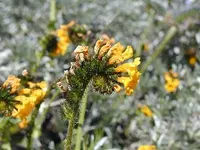
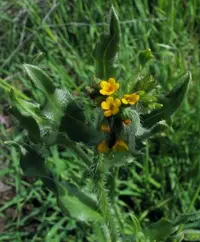
Amsinckia spectabilis, commonly called woolly breeches or seaside fiddleneck, is an annual wildflower in the borage family. It typically forms upright, branching stems covered in coarse, bristly hairs.
The plant bears curled spikes of yellow to orange tubular flowers that gradually uncoil as they open, giving a distinctive fiddleneck look. Its foliage is narrow and often somewhat gray-green due to the hairiness.
This species is native to coastal areas of western North America, especially sandy bluffs, dunes, and disturbed sites. It is adapted to poor, well-drained soils and dry, sunny conditions, which makes it relatively easy to care for woolly breeches in similar garden settings.

Care Difficulty
Easy Care

Light Preference
Full Sun

Water Requirements
Low Water

Temperature Preference
Warm Climate

Hardiness Zone
8–11

Soil Texture
Sandy, Loamy, Rocky

Soil pH
Slightly acidic (6.5–7.0), Neutral (7.0)

Soil Drainage
Well-drained

Fertilization
Minimal (feed rarely)
Scan your plant to receive care tips personalized for your specific plant
Available on iOS and Android
This coastal annual thrives in bright, open conditions with strong sun exposure.
This species prefers dry to moderately dry soil and is sensitive to excess moisture.
This plant is adapted to mild, coastal-type climates with cool to warm conditions.
This coastal annual tolerates low humidity and rarely needs special moisture control indoors or outdoors.
This species prefers light, fast-draining soil that mimics coastal sandy habitats.
This species can be grown in containers if the pot mimics its naturally sharp-draining, open root environment.
Amsinckia spectabilis, commonly called woolly breeches, usually needs only modest feeding in average to lean soil.
Pruning Amsinckia spectabilis is mainly done to tidy plants and encourage continued flowering.
This annual wildflower is more often direct-sown, but young container-grown plants transplant well with gentle handling.
Amsinckia spectabilis is most commonly propagated from seed rather than vegetative methods.
This annual species relies on seed survival rather than plant survival, so winter care focuses on the soil seedbank.

Plant Health Check
Not sure what's wrong with your plant? Check your plant's health inside the app.
This species is native to the Pacific coast of California and Baja California, where it naturally occurs on dunes, bluffs, and sandy coastal scrub exposed to salt-laden winds.
Like other members of the borage family, it has inflorescences that start tightly coiled like a fiddlehead and gradually unroll as the yellow, tubular flowers open along the curve.
It flowers mainly in late winter to spring along the coast, providing an important early food source for native bees and other pollinators when few other wildflowers are in bloom.
This annual wildflower is attractive to native bees, honeybees, and some butterflies, especially in open, sunny sites. Clusters of tubular yellow flowers provide nectar and pollen, making it useful in pollinator-friendly meadows, borders, and restoration plantings.
Keep your plants happy and healthy with plant identification, disease detection, and easy care guidance.