Succession Sowing
Sow small batches 1–2 weeks apart in early spring so flowering is staggered, which keeps the display going longer and supports more pollinators over time.

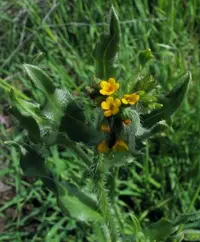
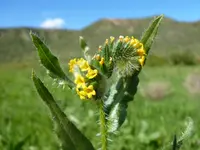
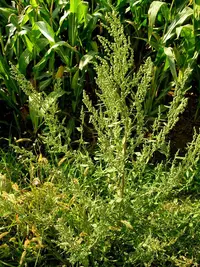
Menzies' fiddleneck (Amsinckia menziesii) is a small annual wildflower in the borage family, valued for its curled flower spikes and bright yellow to orange blooms. Plants usually form modest clumps with bristly, narrow leaves and a distinct fiddle-shaped flowering stem.
It is native to western North America, often found in open grasslands, fields, and disturbed ground where conditions are sunny and relatively dry. This species grows quickly from seed and completes its life cycle in one season, which generally makes it easy to manage in informal gardens or naturalistic plantings.
To care for Menzies' fiddleneck, provide full sun, well-drained soil, and low to moderate moisture, similar to other drought-tolerant annual wildflowers.

Care Difficulty
Easy Care

Light Preference
Full Sun

Water Requirements
Low Water

Temperature Preference
Cool Climate

Hardiness Zone
6–10

Soil Texture
Sandy, Loamy, Rocky

Soil pH
Slightly acidic (6.5–7.0), Neutral (7.0)

Soil Drainage
Well-drained

Fertilization
Minimal (feed rarely)
Scan your plant to receive care tips personalized for your specific plant
Available on iOS and Android
This annual wildflower needs abundant direct light to form compact, floriferous plants.
This species prefers dry to moderately dry conditions and is sensitive to soggy soil.
This hardy annual grows best in mild to warm conditions and tolerates a range of outdoor temperatures.
This annual wildflower tolerates a wide humidity range and rarely needs special adjustment in typical indoor or outdoor conditions.
This species prefers lean, well-drained mineral soils that do not stay wet for long.
This species can be grown in containers if the pot is set up to stay dry between waterings.
This annual wildflower usually needs little or no fertilizer, especially in native or naturally lean soils.
Pruning needs for Amsinckia menziesii are minimal and focus on cleanliness and seed control rather than shaping.
This species is best treated as a direct-sown annual, with transplanting used only when necessary for garden establishment.
Seed propagation is the standard method for Amsinckia menziesii, matching its natural annual life cycle.
This annual completes its life cycle in one growing season, so established plants do not need winter care.

Plant Health Check
Not sure what's wrong with your plant? Check your plant's health inside the app.
The flowers open bright yellow and often age to a more orange tone, creating a noticeable color shift across a single inflorescence as it matures over spring and early summer.
Its flower stalks form a coiled, scorpion-tail shape that gradually unrolls as the individual flowers open, a characteristic feature of the borage family that helps space out blooming over time.
This species completes its entire life cycle in a single growing season and relies on large seed production and a persistent seed bank in the soil to reappear in disturbed, open habitats year after year.
This species is usually an annual wildflower, completing its life cycle in a single growing season. In mild climates with reseeding, it may appear year after year, but individual plants do not live multiple seasons.
Keep your plants happy and healthy with plant identification, disease detection, and easy care guidance.