Oeonia rosea Care

Oeonia rosea

About Oeonia rosea

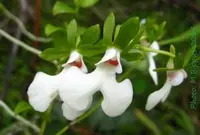
Oeonia rosea is a small epiphytic orchid, usually found growing on trees rather than in soil. It forms compact clumps with slender stems and narrow, grasslike leaves. Tiny, soft pink flowers appear along the stems, giving the plant a delicate, airy look. In nature it occurs in parts of Madagascar, where it grows in warm, humid forests with good air movement. Its modest size and relatively slow growth make it suitable for growers with limited space. Stable humidity and careful watering are important, so beginners may need some practice to learn how to care for Oeonia rosea.

Main Plant Requirements

Care Difficulty

Hard Care

Light Preference

Partial Shade

Water Requirements

Moderate Water

Temperature Preference

Tropical / Frost Sensitive

Hardiness Zone

Unknown

Soil Texture

Sandy, Loamy, Organic-rich

Soil pH

Acidic (5.5–6.5)

Soil Drainage

Well-drained

Fertilization

Light (every 4–6 weeks)

Get Personalized Care Plan

Scan your plant to receive care tips personalized for your specific plant

Available on iOS and Android

How to Care for the Oeonia rosea

This small orchid prefers bright, gentle light similar to dappled woodland shade.

  • Provide 4–6 hours of bright, filtered light each day, such as morning sun through a sheer curtain or light under open shade outdoors.
  • Protect Oeonia rosea from harsh midday and afternoon sun, which can scorch leaves and cause yellowing or reddish patches.
  • In lower light seasons, move slightly closer to an east or bright north window or to a brighter shaded outdoor spot to maintain compact growth.

This orchid prefers lightly moist conditions with good air movement around the roots.

  • Water when the top 2–3 cm of the mix feel dry, allowing water to run through freely, then drain fully so roots are not left standing in water.
  • In spring and summer, expect to water more often as warmth and light increase; in cooler or dimmer months, extend the interval between waterings.
  • Watch for wrinkling leaves or dry, papery roots as signs of underwatering, and soft, blackened roots or a sour smell as signs of overwatering.

This species prefers intermediate, stable temperatures with mild seasonal shifts.

  • Aim for 65–80°F (18–27°C) by day and 60–70°F (16–21°C) at night to support steady growth and flowering.
  • Protect the plant from cold below 50°F (10°C); brief dips to 45°F (7°C) may be tolerated but repeated exposure increases stress and rot risk.
  • In hot weather above 85°F (29°C), increase airflow and shade to prevent heat buildup, and avoid placing the plant near heaters, cold drafts, or air conditioners.

This orchid prefers moderate to high humidity to keep its fine roots and leaves functioning well.

  • Aim for 50–70% humidity, as very dry indoor air slows growth and shortens flower life.
  • Tolerates brief dips to 40%, but persistent dry air causes wrinkled leaves and shriveling roots.
  • Increase humidity with a pebble tray, grouping plants, or a small humidifier rather than frequent misting.

Oeonia rosea needs a very airy, fast-draining orchid-style medium rather than standard potting soil.

  • Use a loose mix of medium bark, perlite, and a small amount of sphagnum moss or coconut chips to hold some moisture.
  • Ensure the mix drains completely within seconds after watering; standing water around roots quickly leads to rot.
  • Keep pH slightly acidic to neutral (pH 5.5–7.0), which supports nutrient uptake and healthy root growth.
  • Avoid dense, peat-heavy, or garden soils that compact, limit aeration, and smother the fine epiphytic roots.

This species is well suited to container culture, especially in shallow pots or baskets that let the roots breathe.

  • Choose a pot with many side and bottom openings so air can move freely around the roots.
  • Select a relatively shallow but wide container to match the spreading root habit and prevent deep, soggy media layers.
  • Use a heavier or weighted pot base if hanging growth makes the container prone to tipping in strong air movement.

This orchid benefits from light, precise feeding during active growth but is sensitive to excess salts.

  • Use a balanced orchid fertilizer (for example 20-20-20) diluted to 1/4–1/2 strength for caring for Oeonia rosea.
  • Feed every 2–3 weeks in spring–summer when new roots and leaves are developing.
  • Rinse the potting medium with plain water once a month to prevent salt buildup.
  • Stop or reduce to monthly feeding at very weak strength in autumn–winter as growth slows.

Oeonia rosea requires minimal pruning, mainly to maintain plant health and tidy growth.

  • Best time for any trimming is after the main flowering period has finished.
  • Remove dead, yellowing, or damaged leaves with clean, sharp scissors or pruning snips.
  • Cut spent flower spikes back to the base without injuring healthy leaves or pseudobulbs.
  • Avoid heavy cutting, which can reduce future flowering and stress the plant.

This orchid prefers stable conditions and only needs repotting when clearly root-bound or the medium has broken down.

  • Check for crowded roots circling the pot, slow growth, or decomposed, sour-smelling medium as signs to repot.
  • Plan to repot every 2–3 years in late winter or early spring, just before new root growth starts.
  • Use a slightly larger pot with fresh, airy orchid mix and gently tease apart congested roots.
  • Water lightly after repotting, keep humidity moderate, and shade from strong sun for 1–2 weeks to reduce stress.

Propagation of Oeonia rosea is possible but usually slow and done on established, healthy plants.

  • Division is the most practical method, carried out in late winter or early spring when repotting.
  • Separate clumps so each division has at least 3–4 healthy pseudobulbs and a good root system.
  • Plant divisions in fresh orchid mix, keep humidity 50–70%, and provide bright, indirect light.
  • Seed propagation requires sterile technique and specialized orchid flasking, typically done by professionals.

This orchid is not frost tolerant and needs cool, frost-free conditions in winter.

  • Maintain indoor temperatures around 55–65°F in winter, avoiding drafts and sudden drops.
  • Move container plants indoors or into a heated greenhouse before temperatures fall below 50°F.
  • Keep the potting mix slightly drier than in summer but do not allow complete drying.
  • Ensure good air movement and bright, indirect light to prevent rot in cooler conditions.

Care Tips

Mounting strategy

Grow this epiphytic orchid on a small slab of cork or hardwood with a thin pad of sphagnum so roots dry rapidly between waterings and receive good air circulation, which closely mimics its natural growth habit.

Root zone inspection

Lift the mount or gently unpot once or twice a year to check that roots are firm and silvery-green, trimming only clearly dead, brown, mushy roots with sterilized tools to maintain a healthy, compact plant.

Flowering rest period

After flowering, slightly reduce watering and avoid repotting or remounting for several weeks to let the plant recover and set up for the next growth cycle without stress.

Targeted air movement

Place a small oscillating fan on a low setting nearby to keep air moving gently around leaves and roots, which reduces fungal problems and helps thin roots dry at an appropriate rate.

Water quality control

Use rainwater, distilled, or low-mineral filtered water and flush the mount thoroughly once a month to prevent salt buildup that can burn the fine roots, which is crucial for long-term Oeonia rosea care.

Common Pests and Diseases

Scale insects

This pest attaches to roots and leaf bases, sucking sap and weakening the plant, often hiding in tight crevices of the small epiphytic clumps. Symptoms include yellowing, slow growth, sticky honeydew, and sooty mold on nearby surfaces.

Solution

Remove visible insects with a cotton swab dipped in 70% isopropyl alcohol and rinse the plant thoroughly, including the mount or bark pieces. Improve air movement, avoid constant wetness around the leaf bases, and use a light horticultural oil or insecticidal soap on repeated 7–10 day intervals, taking care not to drench the fine roots.

Mealybugs

This pest appears as white cottony clusters in leaf axils, on roots, and at the base of pseudobulbs, feeding on sap and stressing the plant. Symptoms include distorted new growth, sticky residue, and poor flowering.

Solution

Quarantine affected plants, then physically remove mealybugs with a soft brush or cotton swab and 70% isopropyl alcohol, paying special attention to crevices in the tight rosettes. Follow with a thorough rinse, increase air circulation, and repeat treatment weekly until no new insects appear; for heavier cases, use an insecticidal soap labeled safe for orchids and allow the plant to dry quickly afterward.

Spider mites

These insects favor warm, dry air and can develop on the undersides of the narrow leaves, causing pale speckling and fine webbing. Symptoms include dull, stippled foliage and reduced vigor, especially in low-humidity indoor conditions.

Solution

Increase humidity to around 50–60% while keeping good airflow, and shower the plant with lukewarm water to wash off mites from both leaf surfaces and the mount. For persistent infestations, apply insecticidal soap or a neem-based product to the undersides of leaves every 5–7 days for several cycles, avoiding direct sun until foliage is dry.

Bacterial soft rot

This disease causes rapidly spreading, foul-smelling wet lesions at the base of leaves or pseudobulbs, often starting where water sits in the tight growths. Symptoms include mushy tissue, collapse of affected parts, and a strong odor.

Solution

Immediately cut away all affected tissue with a sterile blade back into firm, healthy tissue, and discard the infected parts and any heavily contaminated mount material. Keep the plant much drier around the base, avoid water standing in the leaf rosette, increase air movement, and treat remaining tissue with a bactericide or a dilute hydrogen peroxide rinse, allowing the plant to dry quickly afterward.

Black leaf spot (fungal)

This disease produces small, dark, sunken spots that may enlarge and merge on leaves exposed to prolonged surface moisture and poor airflow. Symptoms include disfigured foliage and premature leaf drop, especially in crowded, humid setups for Oeonia rosea indoor care.

Solution

Remove and discard affected leaves or leaf sections with sterilized tools, then improve spacing and airflow so foliage dries within a few hours after watering. Avoid overhead watering late in the day, keep water off the leaves where possible, and apply a fungicide labeled safe for orchids as a preventative on remaining foliage if spotting continues to appear.

Interesting Facts

Miniature Madagascan epiphyte

Oeonia rosea is a small epiphytic orchid endemic to Madagascar, where it grows attached to trees rather than in soil, absorbing moisture and nutrients from rain, dew, and organic debris on bark surfaces.

Night-scented flowers

Its pale, rose-tinted flowers open mainly in the evening and release fragrance at night, an adaptation that likely targets nocturnal pollinators such as moths rather than daytime insects.

Relatively restricted range

This species is considered relatively uncommon in cultivation and has a limited natural distribution in Madagascar, so botanists often study it in the context of conserving that island’s specialized orchid flora and habitats.

FAQs about Oeonia rosea

Bloom failure often relates to insufficient light, too much nitrogen fertilizer, or lack of a slight cooler, drier rest period. Crowded roots, old spent spikes not removed, or recent repotting can also delay or reduce flowering.

Grow Healthy Plants with Botan Care

Keep your plants happy and healthy with plant identification, disease detection, and easy care guidance.

Botan plant care app — identify plants on mobile

Explore More Plants