Control Spreading Rhizomes
Install a 20–30 cm deep root barrier or plant in a large bottomless container sunk into the bed to keep underground rhizomes from overtaking nearby perennials.

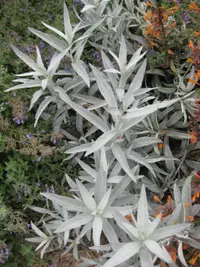
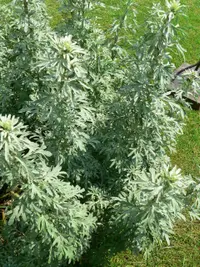
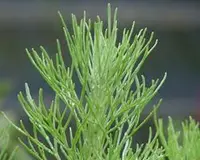
Prairie sage (Artemisia ludoviciana) is a hardy perennial herb in the aster family, valued for its aromatic, silvery-gray foliage. It usually forms low, spreading clumps and can slowly colonize open areas by rhizomes.
This species is native to dry prairies, plains, and open woodlands across much of North America, where it thrives in sun and lean, well-drained soils. Once established, it tolerates drought, poor soil, and heat, which generally makes it easy to care for prairie sage in low-maintenance gardens.
It suits naturalistic, meadow, and xeriscape plantings, and can help stabilize sunny, dry slopes. In many regions it is also used as a tough, wildlife-friendly background or edging plant.

Care Difficulty
Easy Care

Light Preference
Full Sun

Water Requirements
Low Water

Temperature Preference
Cold Hardy

Hardiness Zone
3–9

Soil Texture
Sandy, Loamy, Rocky

Soil pH
Slightly acidic (6.5–7.0), Slightly alkaline (7.0–7.5)

Soil Drainage
Well-drained

Fertilization
Minimal (feed rarely)
Scan your plant to receive care tips personalized for your specific plant
Available on iOS and Android
This sun-loving perennial thrives in open, bright conditions similar to its native prairie habitats.
This drought-tolerant species prefers infrequent, deep watering in fast-draining soil.
This hardy perennial tolerates wide temperature swings once established.
Humidity is rarely a concern for Artemisia ludoviciana, which is adapted to dry air.
Artemisia ludoviciana prefers lean, fast-draining soil that mimics dry, open habitats.
This species can grow in containers if the pot and substrate are managed to stay on the dry side.
Artemisia ludoviciana grows best in lean soils and needs only light feeding in cultivation.
Artemisia ludoviciana responds well to periodic pruning that maintains shape and vigor.
This species is usually grown in-ground, with transplanting focused on controlling spread and renewing clumps.
Artemisia ludoviciana is commonly propagated to start new patches or refresh aging clumps.
This prairie sage is cold hardy and generally needs minimal winter care in most temperate climates.

Plant Health Check
Not sure what's wrong with your plant? Check your plant's health inside the app.
This species often expands through underground rhizomes, forming large clonal colonies that can dominate open patches of prairie or roadside habitat over time.
The dense hairs and silvery color of its leaves help reflect intense sunlight and reduce water loss, an adaptation to the dry, exposed conditions of many North American prairies.
In disturbed sites such as old fields or road margins, this plant often appears early and helps stabilize soil, acting as a pioneer species in prairie and dry grassland succession.
Indigenous peoples across North America have long used this species culturally for smudging and ceremonial purposes, especially for its strong aromatic foliage that produces a distinctive, lingering smoke when burned.
This species spreads by rhizomes and self-seeding, forming loose colonies over time. It is not usually a problem in dry, well-managed beds, but can become invasive in richer soils if not periodically thinned or edged.
Keep your plants happy and healthy with plant identification, disease detection, and easy care guidance.