


Post-bloom handling
After flowering, cut spent flower spikes back to the base and shift the plant to slightly brighter light to help the pseudobulbs recharge and set buds for the next season.

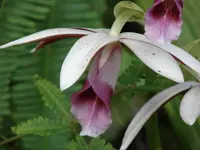
The greater swamp-orchid (Calanthe tankervilleae) is a terrestrial orchid, meaning it grows in soil rather than on trees. It forms clumps of pleated, strap-like leaves from fleshy underground pseudobulbs.
In bloom, it produces tall spikes lined with many delicate flowers, usually in white, cream, or soft pink tones, giving a light, elegant look. It naturally occurs in warm, humid forests and swampy habitats across parts of Southeast Asia.
This species prefers evenly moist, airy substrate and sheltered, filtered light, which can be recreated in pots or shaded outdoor spots. With stable moisture and protection from temperature extremes, it is moderately challenging but manageable for growers who want to learn how to care for greater swamp-orchid.

Care Difficulty
Moderate Care

Light Preference
Partial Shade

Water Requirements
Keep Soil Moist

Temperature Preference
Tropical / Frost Sensitive

Hardiness Zone
10–11

Soil Texture
Loamy, Peaty, Organic-rich

Soil pH
Acidic (5.5–6.5), Slightly acidic (6.5–7.0)

Soil Drainage
Moist but well-drained

Fertilization
Moderate (every 2–4 weeks)
Scan your plant to receive care tips personalized for your specific plant
Available on iOS and Android
Calanthe tankervilleae prefers bright, gentle light that mimics a forest understory.
This terrestrial orchid needs consistently moist but not waterlogged soil.
This species grows best in mild, frost-free conditions with moderate seasonal variation.
This terrestrial orchid prefers consistently moist air and reacts quickly to dry indoor conditions.
This species needs a loose, humus-rich medium that stays evenly moist yet drains freely around the roots.
This orchid grows reliably in containers when the pot supports its fleshy roots and stable moisture levels.
This terrestrial orchid benefits from moderate, targeted feeding during active growth, while the greater swamp-orchid rests on stored nutrients in dormancy.
Calanthe tankervilleae needs only light, cleanliness-focused pruning to maintain health and appearance.
This terrestrial Calanthe prefers infrequent but careful repotting to keep roots healthy and growing steadily.
New Calanthe tankervilleae plants are most reliably produced by division of mature clumps rather than from seed.
This species prefers cool, frost-free winters and benefits from simple measures that keep the root zone stable and dryish.

Plant Health Check
Not sure what's wrong with your plant? Check your plant's health inside the app.
Unlike many tropical orchids that are fully evergreen, this species is a terrestrial orchid that often sheds most of its foliage and enters a cool, drier rest period after flowering, then sprouts fresh leafy growth from its pseudobulbs with the return of warm, moist conditions.
It typically produces upright spikes of white to pale pink flowers with a contrasting, often yellow-marked lip in late winter to spring, and many well-grown plants release a light, pleasant fragrance during the main blooming period.
This species is native to lowland and lower montane forests from Myanmar and Thailand through Laos, Vietnam, and southern China to parts of Malaysia and the Philippines, where it usually grows in humus-rich, shaded forest soils rather than as an epiphyte on trees.

The species name tankervilleae honors Emma, Lady Tankerville, an 18th–19th century English aristocrat and plant collector whose extensive orchid collection at Walton House in Surrey contributed important living material and herbarium specimens to early European orchid science and horticulture.
Lack of blooms usually comes from insufficient winter rest, low light, or overfeeding with high-nitrogen fertilizer. This species needs a cooler, slightly drier rest period and balanced fertilizer to form strong flowering spikes the following season.
Keep your plants happy and healthy with plant identification, disease detection, and easy care guidance.

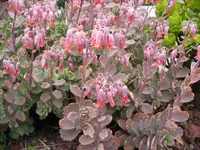 POPULAR
Lavender Scallops
Kalanchoe fedtschenkoi
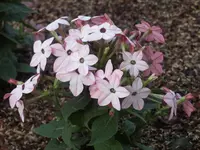
Garden Tobacco
Nicotiana × sanderi
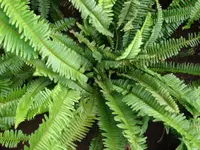
Tuberous sword fern
Nephrolepis cordifolia
Fuchsia triphylla
Fuchsia triphylla
Kanjiro Camellia
Camellia sasanqua
Wavy-leaf Plantain-Lily
Hosta undulata
 POPULAR
Never never plant
Ctenanthe oppenheimiana
Hydnophytum formicarum
Hydnophytum formicarum