Support Tall Stems
Install low, circular plant supports or short stakes early in the season so the tall, hollow stems grow through them and are less likely to lodge or snap in wind and heavy rain.

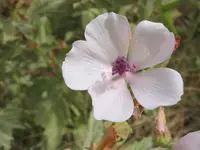
Marshmallow, Althaea officinalis, is a perennial herb from moist meadows and marshes in Europe and western Asia, now naturalized in many temperate regions. It forms upright, softly hairy stems with grey-green, velvety leaves and pale pink to whitish, hibiscus-like flowers along the upper stems in summer.
The plant has a deep, fibrous root system and a clumping habit, making it relatively stable once established. It is generally undemanding if given sun, moisture-retentive but well-drained soil, and protection from prolonged drought.
These traits make it suitable for wildlife-friendly and medicinal gardens, while still manageable for beginners who want to learn how to care for Marshmallow.

Care Difficulty
Easy Care

Light Preference
Full Sun

Water Requirements
Keep Soil Moist

Temperature Preference
Cold Hardy

Hardiness Zone
3–9

Soil Texture
Sandy, Loamy, Organic-rich

Soil pH
Slightly acidic (6.5–7.0), Neutral (7.0)

Soil Drainage
Moist but well-drained

Fertilization
Minimal (feed rarely)
Scan your plant to receive care tips personalized for your specific plant
Available on iOS and Android
This perennial herb prefers bright outdoor conditions with consistent sun exposure.
This deep-rooted species prefers evenly moist, not waterlogged, soil.
This hardy perennial tolerates cool climates but grows best in moderate temperatures.
Althaea officinalis handles a wide humidity range and usually does not need special humidity management outdoors.
Althaea officinalis prefers deep, moist, well-drained soils that hold water but do not stay saturated.
This species can grow in containers, but the pot must support its tall, deep-rooting habit.
This perennial herb grows well in modest soils and needs only light feeding for healthy growth.
Althaea officinalis benefits from simple annual pruning to maintain vigor and tidy growth.
This deep-rooted perennial is usually grown in garden beds, so transplanting is more relevant than frequent repotting.
This species is commonly propagated by seed and division for reliable stand establishment.
This cold-hardy herbaceous perennial usually requires minimal winter care in typical temperate climates.

Plant Health Check
Not sure what's wrong with your plant? Check your plant's health inside the app.
The original marshmallow confection was made by whipping the root sap of this species with sugar and egg white, long before modern recipes switched to gelatin-based formulations.
This species develops a deep, fleshy taproot and tolerant aerenchymatous tissues that help it cope with waterlogged, saline, or periodically flooded soils in coastal marshes and riverbanks.
Its roots and leaves are unusually rich in mucilage, a slimy polysaccharide that helps the plant retain water and buffer against environmental stress such as drought or salt exposure.

This species is thought to be one of the plants referred to as mallows in classical Greek and Roman texts, and it has been cultivated since antiquity along the eastern Mediterranean for food, fodder, and various household uses, making it one of the older documented European wetland crops.
This species is a herbaceous perennial. Top growth usually dies back in winter, then new shoots emerge from the root system in spring. With suitable conditions and periodic division, a planting can persist for many years.
Keep your plants happy and healthy with plant identification, disease detection, and easy care guidance.