Cool root zone
In warmer regions, apply a light mulch of fine gravel or composted bark around the crowns to keep the root zone cool and evenly moist without burying the rosettes.

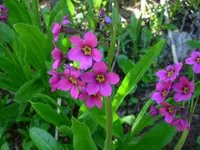
Parry's primrose, Primula parryi, is a cold-hardy alpine perennial found along mountain streams and wet meadows in the Rocky Mountains. It forms clumps of smooth green leaves at the base. Tall flower stalks rise above the foliage, carrying rings of magenta to deep pink, fragrant flowers that attract pollinators. Plants usually bloom in late spring to early summer as snowmelt recedes. This species prefers consistently moist, cool conditions and does not tolerate heat or drying out. Gardeners who care for Parry's primrose often grow it in rock gardens, bog gardens, or near water features where the soil stays damp and slightly acidic.

Care Difficulty
Hard Care

Light Preference
Partial Shade

Water Requirements
Keep Soil Moist

Temperature Preference
Cold Hardy

Hardiness Zone
3–7

Soil Texture
Loamy, Silty, Organic-rich

Soil pH
Strongly acidic (4.5–5.5), Acidic (5.5–6.5)

Soil Drainage
Moist but well-drained

Fertilization
Minimal (feed rarely)
Scan your plant to receive care tips personalized for your specific plant
Available on iOS and Android
Alpine Primula parryi grows best in bright, cool conditions with protection from strong midday sun.
This species needs consistently moist, cool soil and does not tolerate drying out.
This alpine primrose prefers cool summers and cold, stable winters.
This alpine primrose prefers consistently moist air and is sensitive to dry conditions.
Primula parryi needs cool, moist but sharply draining soil that never becomes stagnant.
This species can be grown in containers if moisture and drainage are controlled carefully.
Parry's primrose benefits from modest, targeted feeding during its active growing season.
Primula parryi needs only light pruning to stay tidy and support flowering.
This species is more often transplanted in garden beds than repotted, as it is usually treated as an outdoor alpine or bog plant.
Primula parryi is commonly propagated by seed and by careful division of mature clumps.
This cold-hardy alpine primrose tolerates freezing temperatures but benefits from simple winter safeguards in many gardens.

Plant Health Check
Not sure what's wrong with your plant? Check your plant's health inside the app.
The flowers have a distinct skunky or musky scent, which is unusual for primroses and helps attract specific pollinators such as flies and certain bees in cold alpine environments.
This species typically grows along seeps, wet meadows, and stream margins fed by melting snow in high mountains of the Rocky Mountain region, where it benefits from constant cold, saturated soils and cool air temperatures.
Primula parryi belongs to a group of North American primroses with a base chromosome number of x=9, a cytological feature that has helped botanists study evolutionary relationships within the genus Primula.

Primula parryi often forms striking flowering bands along receding snowfields in subalpine and alpine zones, creating vivid magenta strips that botanists use as visual indicators of recent snowmelt timing and moisture patterns in mountain ecosystems.
Lack of flowers usually comes from plants being too dry, too warm in winter, or overcrowded. This alpine species sets buds after a cool, moist period and benefits from division when clumps become dense and congested.
Keep your plants happy and healthy with plant identification, disease detection, and easy care guidance.