


Encourage Compact Growth
Pinch back the soft tips of long stems every few months to keep the plant dense and trailing rather than sparse and leggy, using clean fingernails or sterilized scissors to reduce infection risk.

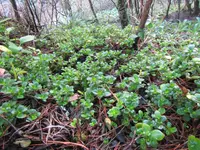
Peperomia urvilleana is a compact tropical perennial from the pepper family, usually grown as a small foliage houseplant. It often forms low, spreading mounds with fleshy stems and smooth, slightly succulent leaves that store water.
In nature, it occurs in humid tropical regions, often as an understory plant that receives filtered light rather than full sun. Its modest size and relatively slow growth make it suitable for shelves, desks, and mixed indoor displays.
This species is generally considered easy to manage once its needs are understood, and learning how to care for Peperomia urvilleana centers on providing bright, indirect light, moderate moisture, and a freely draining potting mix.

Care Difficulty
Easy Care

Light Preference
Bright Indirect Light

Water Requirements
Moderate Water

Temperature Preference
Tropical / Frost Sensitive

Hardiness Zone
11–12

Soil Texture
Loamy, Peaty, Organic-rich

Soil pH
Acidic (5.5–6.5), Slightly acidic (6.5–7.0)

Soil Drainage
Well-drained

Fertilization
Light (every 4–6 weeks)
Scan your plant to receive care tips personalized for your specific plant
Available on iOS and Android
This species prefers bright, indirect light that mimics a lightly shaded forest edge.
Watering should respect the plant’s semi-succulent leaves and shallow root system.
Stable, warm conditions support compact growth and healthy foliage.
This species prefers moderate room humidity but generally adapts to typical indoor levels.
Peperomia urvilleana prefers a loose, airy, and fast-draining potting medium.
This plant is very suitable for container growing due to its compact, shallow root system.
Light feeding supports steady growth for Peperomia urvilleana without causing soft, weak tissue.
Thoughtful pruning keeps Peperomia urvilleana compact, branching, and healthy.
Repotting is infrequent but important to prevent root binding and exhausted substrate in Peperomia urvilleana.
Vegetative propagation maintains the exact traits of Peperomia urvilleana and suits small-scale home growing.
Winter care for Peperomia urvilleana focuses on avoiding cold damage and excess moisture.

Plant Health Check
Not sure what's wrong with your plant? Check your plant's health inside the app.
Peperomia urvilleana naturally forms low, creeping mats, with stems that root at the nodes where they touch the substrate, allowing it to function as a groundcover in its native habitats.
The leaves are somewhat succulent, meaning they store water in their tissues and are adapted to short dry spells in the leaf-litter layer of tropical forests.
In the wild this species often grows as an epiphyte on tree trunks and rotten wood, anchoring into moss and debris rather than mineral soil, which explains its preference for airy, fast-draining substrates in cultivation.
This species adapts to both, but usually performs more consistently indoors in stable, warm conditions. Outdoors it needs frost-free, sheltered, shaded spots. Strong sun, cold nights, or heavy rain quickly reduce vigor and damage foliage.
Keep your plants happy and healthy with plant identification, disease detection, and easy care guidance.

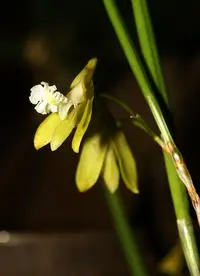
Straggly pencil orchid
Dendrobium bowmanii
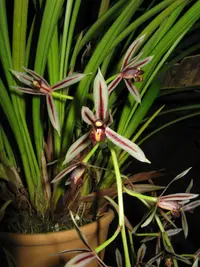
Day's Cymbidium
Cymbidium dayanum
Euphorbia decaryi
Euphorbia decaryi

Fancy-leaf Caladium
Caladium 'Carolyn Whorton'
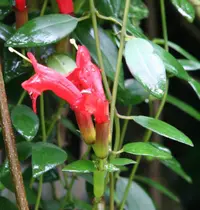
Lipstick plant
Aeschynanthus radicans
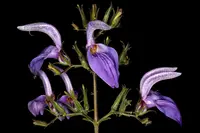
Brillantaisia cicatricosa
Brillantaisia cicatricosa
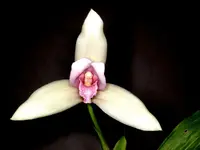
Lycaste virginalis
Lycaste virginalis
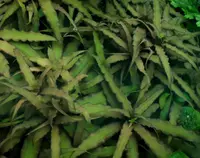
Green Earthstar
Cryptanthus acaulis