Showy Honey-myrtle Care (Melaleuca nesophila)

Also known as: Pink Melaleuca, Mindiyed
Showy Honey-myrtle

About Showy Honey-myrtle

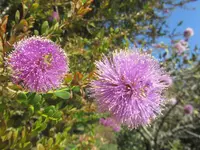
Showy honey-myrtle (Melaleuca nesophila) is an evergreen shrub or small tree from coastal areas of Western Australia. It is grown mainly for its dense foliage and abundant flowers. The plant forms a rounded, bushy shape with small, aromatic leaves and fluffy, ball-shaped pink to purple flower heads that attract bees and other pollinators. Bark becomes attractively rough and flaky with age.

This species is often used in mild coastal climates as a hedge, screen, or feature plant. It adapts well to wind and salt spray, so it suits coastal gardens. It is generally easy to care for Showy Honey-myrtle if given sun, well-drained soil, and protection from severe frost.

Main Plant Requirements

Care Difficulty

Moderate Care

Light Preference

Full Sun

Water Requirements

Low Water

Temperature Preference

Warm Climate

Hardiness Zone

9–11

Soil Texture

Sandy, Loamy

Soil pH

Slightly acidic (6.5–7.0), Neutral (7.0)

Soil Drainage

Well-drained

Fertilization

Minimal (feed rarely)

Get Personalized Care Plan

Scan your plant to receive care tips personalized for your specific plant

Available on iOS and Android

How to Care for the Showy Honey-myrtle

This coastal shrub thrives in bright, open positions with strong sun exposure.

  • Provide 6–8 hours of direct sun daily; full sun promotes dense growth and abundant flowers in Showy Honey-myrtle.
  • It tolerates light or dappled shade, especially in the afternoon, but too much shade leads to leggy stems and fewer blooms.
  • In very hot climates, give morning sun with light afternoon shade to reduce leaf scorch, especially for young or recently transplanted plants.

This species is drought-tolerant once established and prefers infrequent, deep watering.

  • Water when the top 3–5 cm of soil has dried; soak the root zone thoroughly, then allow the soil to drain completely.
  • Use sharply drained, sandy or loamy soil; standing water or compacted clay promotes root rot and stressed foliage in Melaleuca nesophila.
  • Reduce watering in cool or rainy seasons and watch for signs: yellowing, soft leaves suggest overwatering, while crisp leaf tips and drooping new growth indicate underwatering.

This plant favors mild, coastal-type climates with moderate temperature swings.

  • Best growth occurs around 60–80°F (16–27°C), with steady warmth supporting flowering and new shoot development.
  • It tolerates brief dips to about 25°F (−4°C), but repeated hard frosts can damage young shoots and thin bark, especially on small plants.
  • Heat tolerant up to 95°F (35°C) if soil is not waterlogged; in hot, dry periods, mulch the root zone to moderate temperature and reduce stress.

This coastal shrub handles a wide humidity range and rarely needs special humidity management.

  • Performs well at 30–60% humidity, matching typical indoor and outdoor conditions in most homes and gardens.
  • Tolerates dry air if soil moisture is appropriate, so avoid compensating with misting that can promote leaf disease.
  • Humidity stress shows as crispy leaf tips combined with underwatering; correct by watering appropriately rather than increasing air moisture.

Melaleuca nesophila prefers light, free-draining soil that mimics sandy coastal conditions.

  • Use a sandy or sandy-loam mix with 40–60% coarse sand or fine grit to keep roots well aerated.
  • In containers, blend equal parts cactus mix, coarse sand, and fine bark to improve drainage and structure.
  • Aim for slightly acidic to neutral pH, around 6.0–7.0, avoiding strongly alkaline or saline substrates.
  • Avoid heavy clay, peat-heavy mixes, or soils that stay wet for more than 1 day after watering, as these promote root rot.

This species is suitable for container growing, especially in smaller gardens or patios.

  • Choose a wide, heavy pot to counteract wind and the plant’s bushy top growth so the container does not tip over.
  • Select a mineral-based mix that dries quickly, as organic-rich potting soils hold too much water for the fine roots.
  • Use tall containers only where deeper root anchorage is needed, since overly deep pots can keep the lower zone chronically wet.

This nutrient-efficient Australian shrub needs only modest feeding in typical garden soils when caring for Showy Honey-myrtle.

  • In the ground, use a light top-dressing of compost once in spring for most soils, avoiding rich manures on native plants.
  • For container plants, apply a low-phosphorus, balanced slow-release NPK fertilizer at half strength at the start of the growing season.
  • Supplement with a diluted liquid balanced fertilizer (1/4–1/2 strength) every 6–8 weeks in active growth if foliage looks pale or growth is weak.
  • Stop feeding in late summer to early fall so new growth hardens before winter, and never fertilize during winter dormancy or very cool conditions.

Melaleuca nesophila responds well to light, thoughtful pruning that maintains shape and flowering wood.

  • Best time is late winter to early spring, just before new growth, or immediately after main flowering to avoid cutting off next season’s buds.
  • Remove dead, diseased, or storm-damaged branches first, cutting back to healthy wood with clean, sharp bypass pruners or loppers.
  • Thin crowded interior shoots to improve air flow and light penetration, which supports healthier foliage and more abundant blooms.
  • Lightly tip-prune new shoots to keep a dense, rounded form, avoiding hard cuts into very old, bare wood that may not reshoot reliably.

This species is usually grown in the ground, so focus on careful transplanting and only occasional container up‑potting.

  • Plan major transplanting for late winter to early spring in mild climates, when soil is workable and before strong new growth starts.
  • Look for roots circling the pot base, water running straight through, or stalled growth as signs a container plant needs a larger pot.
  • Shift to a container only 1–2 sizes larger, using a free-draining mix, and loosen circling roots gently without tearing the root ball.
  • After transplanting, water thoroughly, provide light shade and reduced wind exposure for 1–2 weeks, and keep soil evenly moist but not saturated to limit stress.

New plants are commonly raised from semi-hardwood cuttings or seed when increasing Melaleuca nesophila stock.

  • Take semi-hardwood cuttings in late summer to early fall, 8–12 cm long, removing lower leaves and lightly wounding the base.
  • Dip cut ends in a rooting hormone, then place in a free-draining, low-fertility mix kept just moist under high humidity and bright, indirect light.
  • Sow fresh seed in late winter to spring on the surface of a sandy mix, barely covering, and maintain 65–75°F with consistent light moisture.
  • Pot on seedlings or rooted cuttings once roots fill their plug, handling gently to avoid disturbing the fine root system.

This coastal shrub is only moderately frost tolerant and benefits from basic winter precautions in cooler regions.

  • In areas below about 25°F, treat as tender and position in a very sheltered microclimate near walls or larger shrubs.
  • Apply a 5–8 cm mulch layer around the root zone in fall, keeping it slightly away from the trunk to reduce rot risk.
  • Wrap young or exposed stems with breathable frost cloth during forecast hard frosts, removing covers once temperatures rise.
  • For container plants in cold climates, move pots indoors to a bright, cool, frost-free space and water sparingly but do not let the root ball fully dry.

Care Tips

Wind-hardening young plants

In the first 1–2 years, gradually expose young shrubs to stronger wind by removing temporary windbreaks over several weeks so the flexible new wood strengthens and is less likely to snap in coastal storms.

Shaping for strong framework

After flowering, selectively shorten only the longest shoots by 1/3 to an outward-facing bud to create a balanced, open framework that resists wind damage and supports heavy bloom without splitting.

Managing root competition

When planting near lawns or vigorous groundcovers, maintain a 45–60 cm grass-free mulch ring so feeder roots have access to moisture and nutrients without intense competition from turf.

Salt spray maintenance

In exposed coastal gardens, lightly hose foliage with fresh water every few weeks in dry spells to rinse off accumulated salt spray and reduce leaf scorch, taking care not to waterlog the root zone.

Low-input weed control

Use a 5–8 cm layer of coarse, woody mulch under the canopy to suppress weeds and stabilize soil temperature, but keep mulch pulled back 5–10 cm from the trunk to avoid collar rot while growing Showy Honey-myrtle.

Common Pests and Diseases

Myrtle rust

This disease causes bright yellow to orange powdery spores on young leaves, shoots, and sometimes flowers, leading to leaf distortion and dieback. Symptoms include premature leaf drop and thinning of the canopy in severe cases.

Solution

Remove and bag affected shoots and leaves as soon as symptoms appear and dispose of them in household trash, not compost. Avoid overhead watering, improve air circulation, and in high-risk regions consider applying a myrtle rust–specific fungicide labeled for ornamental Myrtaceae, following local guidelines and product directions carefully.

Scale insects

These insects appear as small, rounded or oval bumps on stems and leaf undersides, often accompanied by sticky honeydew. Symptoms include sooty mold growth on the honeydew and a general decline in vigor or yellowing foliage.

Solution

Prune out heavily infested twigs and wipe accessible stems with a cloth dipped in dilute insecticidal soap or horticultural oil. For larger shrubs, apply a horticultural oil spray to coat the insects thoroughly, repeating as directed, and encourage natural predators such as lady beetles by avoiding broad-spectrum insecticides.

Psyllids

This pest causes cupping, distortion, and pitting of new leaves, sometimes with tiny white, waxy pellets or honeydew on the foliage. Symptoms include reduced growth and a generally sparse, untidy canopy on affected branches.

Solution

Prune and dispose of heavily affected shoot tips to remove eggs and nymphs, then monitor new growth closely. If needed, treat with a low-toxicity systemic insecticide or horticultural oil when new flushes begin, and reduce plant stress by providing full sun, appropriate watering, and avoiding excessive nitrogen fertilization.

Webbing caterpillars

These insects create webbed nests in branch tips and among leaves, where they feed on foliage and can skeletonize shoots. Symptoms include brown, chewed leaves held together by silk and localized defoliation.

Solution

Cut out and destroy webbed nests as soon as they are noticed, preferably in the early morning or evening when caterpillars are inside. In larger infestations, use a biological control such as Bacillus thuringiensis (Bt) targeted to caterpillars, applying it only to actively feeding foliage and repeating as label directions recommend.

Sooty mold

This disease appears as a black, powdery or velvety coating on leaves and stems that grow on the sugary honeydew excreted by sap-sucking insects like scale or psyllids. Symptoms include reduced photosynthesis and a dull, dirty appearance of the plant canopy.

Solution

Control the underlying honeydew-producing pests first using targeted methods such as horticultural oil or insecticidal soap. Once pest levels drop, gently wash affected foliage with a soft cloth and water or allow new clean growth to replace the sooty leaves over time, maintaining good air flow through regular, light pruning as part of Melaleuca nesophila care.

Interesting Facts

Naturally wind-shaped shrub

In its native coastal habitat of southwestern Australia, this species often grows as a dense, wind-sculpted shrub or small tree on exposed headlands, tolerating salty sea spray and poor sandy soils.

Bottlebrush-style blooms

The rounded, mauve-pink flower clusters are made of many small flowers packed along short stems, giving a pom-pom or bottlebrush-like appearance that is highly attractive to bees and nectar-feeding birds.

Leathery, aromatic foliage

Its small, thick, grey-green leaves are adapted to reduce water loss in windy, dry coastal conditions and release a noticeable aromatic scent when crushed due to essential oil glands in the leaf tissue.

Botan icon

Did you know?

Melaleuca nesophila has become naturalized in some Mediterranean-climate regions outside Australia, such as parts of coastal California, where it is planted as an ornamental but can self-seed and persist in the landscape, so local guidance should be checked before planting to avoid ecological issues when trying to grow Melaleuca nesophila.

FAQs about Showy Honey-myrtle

Yes, this species does well in large containers with good drainage and regular pruning to manage size. Use a gritty, low-phosphorus mix, refresh the top layer every 1–2 years, and avoid allowing roots to dry out completely.

Grow Healthy Plants with Botan Care

Keep your plants happy and healthy with plant identification, disease detection, and easy care guidance.

Botan plant care app — identify plants on mobile

Explore More Plants