Wind-resistant shaping
In windy sites, thin rather than shear the canopy and keep the shrub slightly lower than surrounding windbreaks to reduce branch breakage and maintain a stable, compact framework.

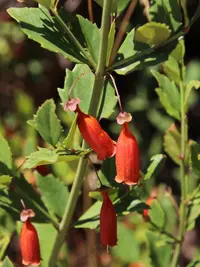
Bush honeysuckle, Halleria elliptica, is an evergreen shrub or small tree valued for its dense foliage and tubular, often orange-red flowers. It typically forms a rounded, bushy shape and can be used as a feature shrub, informal hedge, or screening plant in mild climates.
This species is native to South Africa, where it grows in forest margins and rocky slopes, which hints at its tolerance for varied conditions. The plant is generally robust and forgiving, so learning how to care for Bush Honeysuckle is straightforward for most gardeners.
It prefers sun to light shade, moderately moist but well-drained soil, and benefits from protection from severe frost in cooler regions.

Care Difficulty
Moderate Care

Light Preference
Partial Sun

Water Requirements
Moderate Water

Temperature Preference
Warm Climate

Hardiness Zone
9–11

Soil Texture
Sandy, Loamy, Organic-rich

Soil pH
Acidic (5.5–6.5), Slightly acidic (6.5–7.0)

Soil Drainage
Moist but well-drained

Fertilization
Minimal (feed rarely)
Scan your plant to receive care tips personalized for your specific plant
Available on iOS and Android
Halleria elliptica grows best with bright, gentle sun and some protection from intense afternoon exposure.
Halleria elliptica prefers consistently moist but not waterlogged soil, with adjustments between cool and hot seasons.
This shrub grows best in mild, frost-light climates and dislikes prolonged hard freezes.
This species tolerates a fairly wide humidity range but grows best with moderate ambient moisture.
This shrub prefers a loose, well-drained, moderately fertile substrate that still holds some moisture.
This shrub can adapt well to container culture when the pot is chosen to support its woody root system and canopy.
Halleria elliptica grows reasonably well in average soil but responds to modest feeding in containers or poor ground.
Halleria elliptica benefits from light, timely pruning to maintain shape and flowering performance.
This shrub is usually grown in the ground, so focus on thoughtful transplanting rather than frequent repotting.
Halleria elliptica is most commonly propagated from semi-ripe cuttings, with seeds used less often for home growers.
In mild climates Halleria elliptica is fairly tolerant of light frost, but extra winter care improves long-term health in colder areas.

Plant Health Check
Not sure what's wrong with your plant? Check your plant's health inside the app.
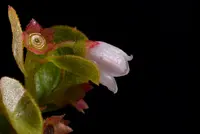
The tubular, drooping orange to red flowers are adapted for bird pollination, especially by sunbirds that can easily access the nectar with their long, curved beaks.
The flowers often start greenish and become more orange or red as they mature, signaling to pollinators which blooms are richer in nectar and more rewarding to visit.
In its native South African range, this evergreen shrub commonly grows on forest margins and rocky cliffs, where its dense branching provides shelter for small birds and insects.

In traditional South African landscapes, Halleria elliptica is sometimes called a tree-fuchsia or bush honeysuckle because its nectar-rich, pendant flowers attract large numbers of sunbirds, making it an important garden plant for supporting local bird diversity.
This species is usually evergreen or semi-evergreen in mild climates, holding foliage year-round. In colder areas it may drop some leaves in winter, then quickly re-leaf from its woody framework once temperatures rise.
Keep your plants happy and healthy with plant identification, disease detection, and easy care guidance.