Trunk flare protection
Maintain a clear mulch-free ring of 5–8 cm around the base so the trunk flare stays dry and visible, which reduces risk of bark rot and girdling roots over time.

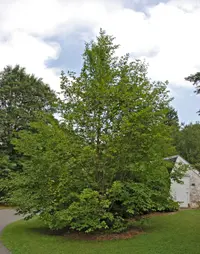
Japanese stewartia (Stewartia pseudocamellia) is a small deciduous tree valued for its refined, multi-season interest. It develops a graceful, upright form with layered branches and neat, oval leaves that turn vivid shades of red and orange in autumn.
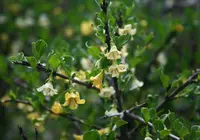
The bark is a major feature, peeling in irregular patches to reveal mottled tones of cream, orange, and gray that stand out in winter. In early to mid-summer, it produces white, camellia-like flowers with yellow centers that appear on new growth.
This species is native to woodland areas of Japan and Korea, where it grows in cool, moist, acidic soils. It is considered moderately demanding, as it dislikes drought, heat stress, and poorly drained or alkaline soil, so consistent conditions are important to care for Japanese stewartia.

Care Difficulty
Moderate Care

Light Preference
Partial Shade

Water Requirements
Regular Water

Temperature Preference
Cold Hardy

Hardiness Zone
5–8

Soil Texture
Loamy, Sandy, Organic-rich

Soil pH
Strongly acidic (4.5–5.5), Acidic (5.5–6.5)

Soil Drainage
Moist but well-drained

Fertilization
Minimal (feed rarely)
Scan your plant to receive care tips personalized for your specific plant
Available on iOS and Android
This small tree prefers bright conditions with protection from intense midday sun.
This species prefers evenly moist, cool soil that never stays waterlogged.
This temperate tree thrives in cool to mild climates with distinct seasons.
This species handles a wide humidity range but benefits from moderately moist air.
Stewartia pseudocamellia prefers cool, evenly moist, well-drained soil with high organic content.
This species can be grown in containers for several years, especially as a young tree or dwarf selection.
This species generally needs modest feeding, especially when young or container grown.
Pruning Stewartia pseudocamellia focuses on light shaping and health maintenance rather than heavy cutting.
This tree is usually grown in the ground, so care centers on careful transplanting rather than frequent repotting.
Propagation of this species is possible but slow and better suited to patient or experienced growers.
Mature plants are quite cold hardy but young or container-grown specimens benefit from some winter attention.

Plant Health Check
Not sure what's wrong with your plant? Check your plant's health inside the app.
This species produces white, camellia-like flowers in early to mid-summer, which is unusual among many temperate trees that typically bloom in spring. Each flower lasts only a short time, but the tree continues to open new buds over several weeks, extending the display.
As the trunk and older branches age, their outer bark peels away in irregular patches to reveal mottled plates of gray, reddish-brown, and cream. This creates a distinctive patchwork effect that provides strong winter interest even when the tree is leafless.
The tree combines showy summer flowers, rich orange to red fall foliage, and decorative seed capsules that can persist into winter. This combination of traits makes growing Japanese stewartia particularly valued in landscape design for long seasonal impact from a single species.

In its native habitats of Japan and the Korean Peninsula, this species often grows as an understory or forest-edge tree on acidic, well-drained soils, where its slow growth and refined branching pattern allow it to coexist beneath taller canopy trees without competing aggressively for resources.
Lack of flowers usually comes from too much shade, recent transplanting, or heavy pruning of young wood where buds form. Late frosts, drought stress, and excess nitrogen fertilizer can also reduce bud formation and shorten the blooming period.
Keep your plants happy and healthy with plant identification, disease detection, and easy care guidance.