Wind-form training
In windy areas, lightly stake young trees and remove lower competing branches over 2–3 seasons to develop a single sturdy leader that resists storm damage and supports heavier fruit crops later.

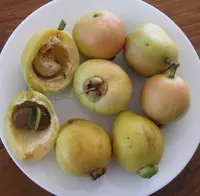
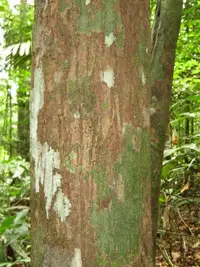
Rose-apple (Syzygium jambos) is an evergreen fruit tree in the myrtle family, grown for its glossy foliage and pale, bell-shaped, aromatic fruits. It typically forms a dense, rounded crown with smooth bark and oppositely arranged leaves that give it a neat, structured look.
This species is native to South and Southeast Asia but is now cultivated in many tropical and warm subtropical regions worldwide. It is considered moderately easy to grow where temperatures stay warm, as long as it receives ample light, regular moisture, and well-drained soil. Gardeners who care for Rose-apple often value it as both an ornamental and a backyard fruit tree.

Care Difficulty
Moderate Care

Light Preference
Full Sun

Water Requirements
Regular Water

Temperature Preference
Tropical / Frost Sensitive

Hardiness Zone
9–11

Soil Texture
Sandy, Loamy, Organic-rich

Soil pH
Acidic (5.5–6.5), Slightly acidic (6.5–7.0)

Soil Drainage
Moist but well-drained

Fertilization
Minimal (feed rarely)
Scan your plant to receive care tips personalized for your specific plant
Available on iOS and Android
Syzygium jambos grows best with bright, warm conditions that mimic a tropical-subtropical climate.
Syzygium jambos prefers consistently moist, well-drained soil without long periods of drought or standing water.
This species is a tropical to subtropical tree that thrives in stable, warm temperatures with no frost exposure.
This species prefers moderately humid air and reacts when conditions become too dry.
Syzygium jambos grows best in deep, well-aerated, moisture-retentive but free-draining soil.
This species can adapt well to container growing when the pot is chosen for root depth and stability.
Syzygium jambos benefits from moderate feeding to support healthy foliage and fruiting without forcing overly lush, weak growth.
Pruning Syzygium jambos maintains a strong structure, encourages airflow, and supports reliable flowering and fruiting.
Syzygium jambos is usually grown in the ground, but young or patio specimens in containers need thoughtful transplanting to avoid stress.
Syzygium jambos is commonly propagated from seeds or semi-hardwood cuttings under warm, stable conditions.
Syzygium jambos is frost sensitive and needs thoughtful winter care in regions with cold winters.

Plant Health Check
Not sure what's wrong with your plant? Check your plant's health inside the app.
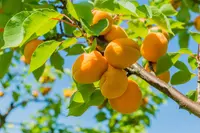
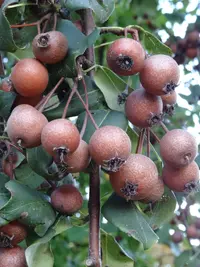
The pale yellow fruit has a crisp texture and a distinct floral aroma often compared to roses or green apples, which is unusual among edible Myrtaceae fruits.
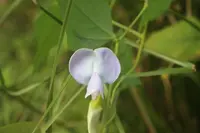
The flowers are pollinated mainly by insects attracted to their nectar, but the plant also spreads effectively through seeds dispersed by birds and mammals that eat the fruit.
Outside its native range in South and Southeast Asia, this species has become invasive on many tropical islands, where it forms dense stands that outcompete native forest vegetation.

In some Pacific island regions, Syzygium jambos was introduced as an ornamental and fruit tree in the 19th century and has since reshaped whole lowland forest structures, prompting long-term management and removal programs to protect endemic plant communities.
The fruit is edible and often eaten fresh, candied, or used in jams. It has a mild rose-like aroma and a crisp texture. Unripe seeds should not be eaten due to potential toxicity concerns.
Keep your plants happy and healthy with plant identification, disease detection, and easy care guidance.