Early leader training
In the first few years, regularly check the central leader and lightly stake or tie it if it starts to lean, so the tree develops a straight, dominant trunk that resists storm damage later.

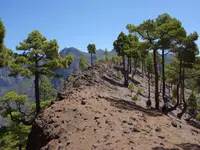
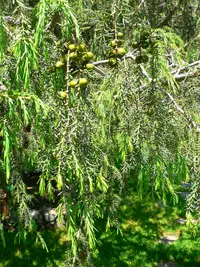
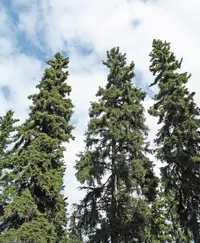
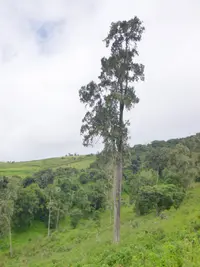
Canary Islands pine (Pinus canariensis) is a long-lived evergreen conifer known for its tall, straight trunk and long, soft needles held in dense clusters. In suitable climates it develops a strong central leader and a broad, conical to rounded crown that gives good year-round structure in landscapes.
This species is native to the Canary Islands, where it grows on volcanic slopes and tolerates dry, sunny, and windy conditions. Once established, it is relatively low-maintenance, which helps explain why many gardeners look for guidance on how to care for Canary Islands Pine.
It prefers full sun, well-drained soil, and moderate moisture, but it copes with brief drought once mature. Its resilience and adaptability make it a practical choice for larger gardens and parks in mild climates.

Care Difficulty
Moderate Care

Light Preference
Full Sun

Water Requirements
Low Water

Temperature Preference
Warm Climate

Hardiness Zone
9–11

Soil Texture
Sandy, Loamy, Rocky

Soil pH
Acidic (5.5–6.5), Slightly acidic (6.5–7.0)

Soil Drainage
Well-drained

Fertilization
Minimal (feed rarely)
Scan your plant to receive care tips personalized for your specific plant
Available on iOS and Android
This sun-loving pine performs best in bright, open landscapes with long daily exposure.
This drought-tolerant pine prefers deep, infrequent watering once established.
This pine thrives in warm, mild climates and does poorly in severe or prolonged frost.
This pine tolerates a wide humidity range and rarely needs special humidity control indoors or outdoors.
Pinus canariensis prefers sharply drained, mineral soils that stay aerated around the roots.
This species can be grown in containers for many years if the pot is managed for stability and fast drainage.
This pine grows acceptably in poor soils but benefits from light, thoughtful feeding in containers or nutrient-poor sites.
Pinus canariensis needs minimal pruning, mainly to maintain safety and basic structure.
This species is usually grown in the ground, with repotting mainly relevant for young container-grown plants or bonsai.
Pinus canariensis is usually propagated from seed; vegetative methods are difficult and used mainly in specialist settings.
Mature Pinus canariensis is only moderately frost tolerant and benefits from some winter protection in colder regions.

Plant Health Check
Not sure what's wrong with your plant? Check your plant's health inside the app.
The extremely long, fine needles of this species are adapted to intercept moisture from trade-wind clouds and fog, helping the tree and surrounding ecosystem access water even during dry periods.
Its thick, insulating bark and the ability of inner tissues to survive intense heat allow many mature trees to resprout after crown fires, making it one of the most fire-tolerant pines in its native range.
This pine is naturally restricted to the Canary Islands, where it forms distinctive montane forests that stabilize volcanic slopes and play a key role in local water regulation and soil formation.

In suitable conditions this species can reach over 40 m in height and live for several centuries, forming some of the tallest and longest-lived trees in the Macaronesian region.
This species is generally fast-growing in suitable climates, often adding 30–90 cm of height per year when young. Growth slows with age. Rate depends on soil depth, moisture availability, and lack of root disturbance or severe pruning.
Keep your plants happy and healthy with plant identification, disease detection, and easy care guidance.