Windfirm training
In the first 3–5 years, allow some gentle wind exposure and avoid staking unless necessary so the trunk and root system develop strong, flexible tissue that resists storm damage later.


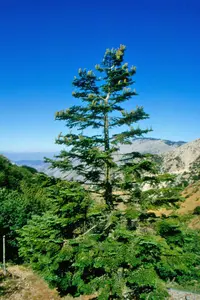
Picea glauca, often called white spruce and sometimes listed as Picea laxa, is an evergreen conifer widely used in landscapes and windbreaks. It forms a dense, pyramidal tree with short, bluish to gray-green needles and small, hanging cones.
This species is native to northern North America, where it tolerates cold climates, wind, and relatively poor soils. Its hardiness and slow, steady growth habit make it a reliable choice for many gardens.
It prefers full sun, cool conditions, and well-drained soil with even moisture. These traits make how to care for Picea glauca fairly straightforward for gardeners in suitable climates.

Care Difficulty
Moderate Care

Light Preference
Full Sun

Water Requirements
Moderate Water

Temperature Preference
Cold Hardy

Hardiness Zone
5–7

Soil Texture
Sandy, Loamy, Rocky

Soil pH
Acidic (5.5–6.5), Slightly acidic (6.5–7.0)

Soil Drainage
Well-drained

Fertilization
Minimal (feed rarely)
Scan your plant to receive care tips personalized for your specific plant
Available on iOS and Android
This high-mountain spruce prefers cool, bright conditions with steady exposure to sun.
Picea laxa prefers evenly moist, cool soil that never stays saturated for long periods.
This species is adapted to cold, high-altitude climates with cool summers and long winters.
Picea laxa prefers cool, moderately humid air but usually adapts to 40–60% humidity outdoors.
Picea laxa grows best in deep, cool, well‑aerated soil that drains freely yet holds steady moisture.
This species can be grown in containers for some years, but it is best treated as a temporary or semi-permanent potted tree.
Picea laxa grows well in lean soils and generally needs only modest, well-timed feeding.
Picea laxa needs only light, purposeful pruning to maintain structure and health.
This spruce is usually grown in the ground; focus on careful transplanting rather than frequent repotting.
Picea laxa is usually propagated by seed or semi-hardwood cuttings under controlled conditions and can be slow to establish.
Picea laxa is generally cold hardy and often needs only minimal winter care once established in the landscape.

Plant Health Check
Not sure what's wrong with your plant? Check your plant's health inside the app.
This Himalayan spruce is naturally restricted to high-altitude forests, typically around 2,700–3,700 m, where it experiences cold, snowy winters and cool, humid summers.
Picea laxa is native to a relatively small area in the eastern Himalayas, especially in parts of Bhutan and adjacent regions, which makes its natural distribution much more limited than many other spruce species.
In its native montane forests, this species contributes to dense conifer stands that provide shelter and microhabitats for cold-adapted birds, small mammals, and understory plants.
This species is naturally slow to moderate growing, usually adding about 15–30 cm per year under good conditions, sometimes less in dry or compacted sites. Growth slows further with age as the tree approaches its mature size.
Keep your plants happy and healthy with plant identification, disease detection, and easy care guidance.