Weeping Blue Atlas Cedar Care (Cedrus atlantica 'Glauca Pendula')

Weeping Blue Atlas Cedar

About Weeping Blue Atlas Cedar

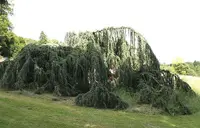
Cedrus atlantica 'Glauca Pendula', commonly called weeping blue Atlas cedar, is a distinctive conifer grown mainly as a specimen tree in gardens and landscapes. It is valued for its cascading, irregular branches and blue-gray needles that create a dramatic, sculptural form over time.

This cultivar originates from the Atlas Mountains species in North Africa but is now widely cultivated in temperate regions. It grows slowly to moderately and stays manageable in size with pruning, which helps gardeners care for Weeping Blue Atlas Cedar in smaller spaces.

The plant prefers full sun, well-drained soil, and consistent but not excessive moisture. Once established, it is relatively drought tolerant and generally considered low-maintenance if sited correctly.

Main Plant Requirements

Care Difficulty

Moderate Care

Light Preference

Full Sun

Water Requirements

Moderate Water

Temperature Preference

Cold Hardy

Hardiness Zone

6–9

Soil Texture

Sandy, Loamy, Rocky

Soil pH

Acidic (5.5–6.5), Slightly acidic (6.5–7.0)

Soil Drainage

Well-drained

Fertilization

Minimal (feed rarely)

Get Personalized Care Plan

Scan your plant to receive care tips personalized for your specific plant

Available on iOS and Android

How to Care for the Weeping Blue Atlas Cedar

This conifer prefers bright outdoor sites with strong light and open exposure for best form and needle color.

  • Provide 6–8 hours of direct sun daily; morning sun with light afternoon shade is ideal in hotter regions to reduce needle scorch.
  • It tolerates light partial shade (around 3–4 hours direct sun), but growth becomes looser and the blue color of Weeping Blue Atlas Cedar may fade.
  • Avoid dense shade, which leads to sparse, weak shoots, and monitor reflected heat from walls or paving that can stress the plant in midsummer.

This plant prefers deep, infrequent watering once established, supported by sharply draining soil.

  • For newly planted Cedrus atlantica 'Glauca Pendula', water when the top 5–8 cm of soil feels dry, applying a slow soak to moisten the full root zone.
  • After establishment, rely on weather: in typical conditions, deep watering every 10–21 days is enough, more often only during extended drought or extreme heat.
  • Watch for overwatering signs such as yellowing needles and dieback on lower branches, and underwatering signs like browning needle tips and premature needle drop.

This cedar is a hardy outdoor tree suited to temperate climates with cold winters and moderate summers.

  • Active growth is strongest around 50–75°F (10–24°C), with the tree tolerating typical seasonal swings without issue once established.
  • It withstands winter lows near -10°F (-23°C) when properly sited, but young plants benefit from some wind protection in very exposed locations.
  • In summer, it tolerates brief heat up to about 95°F (35°C) if soil is not waterlogged and roots are mulched to limit temperature and moisture stress.

Humidity is rarely a concern for this conifer, which adapts well to typical outdoor air levels in temperate regions.

Cedrus atlantica 'Glauca Pendula' needs well-structured, sharply drained soil to avoid root decline.

  • Use a loamy or sandy mineral soil amended with coarse grit or bark to keep the structure open and free-draining.
  • Aim for slightly acidic to neutral pH, roughly 6.0–7.0, as strongly alkaline soils can reduce nutrient availability.
  • Avoid heavy clay, compacted, or waterlogged sites, which promote root rot and poor root oxygenation.
  • For planting, blend roughly 60–70% native mineral soil with 30–40% coarse sand, fine gravel, or pine bark to improve aeration and drainage.

This species can be grown in large outdoor containers for a time, but it remains a long-term landscape tree rather than a permanent pot specimen.

  • Choose a wide, heavy container that resists tipping, since the arching, weeping canopy can become strongly one-sided in windy sites.
  • Select a deep pot that allows a moderately spreading root system, leaving at least 8–10 cm of space around the existing root ball for future growth.
  • Use a fast-draining, mineral-based mix and raise the container slightly on pot feet so excess water clears quickly from the drainage holes when it rains.

This conifer usually needs minimal feeding if grown in decent garden soil, but targeted fertilization can support young or container-grown Weeping Blue Atlas Cedar.

  • Apply a balanced slow-release fertilizer (for example 8-8-8 or 10-10-10) in early spring for in-ground trees, following label rates.
  • For containers, use a diluted balanced liquid feed at 1/2 strength every 4–6 weeks during spring–summer growth.
  • Avoid fertilizing in late fall–winter to prevent soft, cold-sensitive growth and reduce nutrient waste.
  • Add a light layer of compost around the drip line once a year to improve soil structure rather than pushing rapid growth.

Pruning Cedrus atlantica 'Glauca Pendula' focuses on maintaining structure and safety rather than frequent shaping.

  • Carry out main pruning in late winter to early spring, before active growth starts.
  • Remove dead, diseased, rubbing, or storm-damaged branches first, using clean, sharp bypass pruners or a pruning saw.
  • Shorten or redirect overly long weeping branches by cutting back to a healthy side shoot to refine the outline.
  • Avoid heavy cuts into old wood; light, selective thinning preserves the characteristic cascading form and reduces stress.

This cedar is usually planted directly in the landscape, so transplanting young specimens correctly is more important than frequent repotting.

  • Transplant in-ground Cedrus atlantica 'Glauca Pendula' in late fall or early spring when temperatures are mild and soil is workable.
  • Look for signs such as roots circling a nursery container, water running off quickly, or stalled growth as indicators it has outgrown its pot.
  • Move up only 1 container size, keeping the root ball intact, loosening circling roots gently to reduce girdling.
  • Water deeply after planting, mulch 5–8 cm around but not against the trunk, and shade temporarily if sun or wind is intense.

Cedrus atlantica 'Glauca Pendula' is typically propagated by specialists, as it is slow and technically demanding for most home growers.

Mature plants are generally cold hardy in suitable climates, so winter care is minimal once established.

  • Tolerates typical winter frost in much of USDA zones 6–8, but young trees benefit from some protection during severe cold snaps.
  • Apply 5–8 cm of mulch around the root zone in late fall to moderate soil temperature and conserve moisture.
  • For container-grown specimens, move pots to a sheltered, unheated but frost-free or slightly protected area to limit root freezing.

Care Tips

Early leader training

In the first 3–5 years, choose a single flexible stem to tie loosely to a sturdy stake or support, adjusting ties yearly so the plant develops a strong, directed leader before allowing more natural weeping forms.

Guide weeping branches

Use soft, wide ties on a fence, arch, or horizontal wire to gently position young, pendulous branches, checking and loosening ties once or twice a year to avoid girdling and to refine the overall shape.

Prevent snow damage

In regions with wet, heavy snow, loosely bundle long weeping branches with soft twine in late fall so they support each other, then remove the ties in early spring to reduce breakage without deforming the plant.

Root zone protection

Maintain a 5–8 cm layer of inorganic mulch such as gravel or coarse bark over the root zone, keeping it a few cm away from the trunk, to stabilize soil temperature and protect shallow feeder roots from compaction and mechanical damage.

Wind and staking strategy

In exposed sites, install a low, flexible staking system for the trunk and main leader only during the first 2–3 years, then remove it gradually so the tree develops natural wind firmness while still protecting its unusual form when growing Weeping Blue Atlas Cedar.

Common Pests and Diseases

Cedar bark beetles

This pest tunnels under the bark, causing fading foliage, dieback of branches, and small exit holes with fine boring dust on the trunk or limbs. This problem is more common on drought‑stressed or already weakened trees.

Solution

Prune and remove heavily infested branches, promptly dispose of prunings, and avoid leaving fresh cedar wood or logs nearby that attract beetles. Reduce stress by deep, infrequent watering during dry periods, avoid trunk injuries, and consult a certified arborist about trunk‑injected or bark‑applied insecticides if an active infestation is confirmed and the tree is of high value.

Cedar aphids

These insects cluster on young shoots and needles, sucking sap and causing yellowing, sticky honeydew, and sooty mold growth. New growth may appear distorted or stunted when populations are high.

Solution

Spray infested branches with a strong stream of water to dislodge aphids, and prune out heavily affected tips if practical. For persistent infestations, use horticultural soap or neem oil, applied thoroughly to the undersides of shoots in cool, dry conditions, and encourage natural predators such as lady beetles by avoiding broad‑spectrum insecticides.

Cedar leaf blight

This disease causes scattered needles or small clusters of needles to turn brown and drop, often starting on the lower, inner branches where humidity is higher. Symptoms include a thin, open canopy and dead inner foliage while outer tips may stay green at first.

Solution

Prune out and discard affected inner branches to improve airflow through the canopy and reduce infection sources. Avoid overhead watering, keep the area under the tree free of dense weeds or debris, and, in severe or recurring cases, consult local extension guidance about timing a copper‑ or chlorothalonil‑based fungicide to protect new growth.

Sirococcus tip blight

This disease affects young shoots and needle tips, which turn brown from the tip inward and may bend or curl, giving the plant a scorched appearance. Small black fruiting bodies can sometimes be seen on dead needles or shoots in wet weather.

Solution

Remove and dispose of blighted shoot tips during dry weather, cutting back into healthy tissue, and disinfect pruning tools between cuts. Improve air circulation, avoid wetting the foliage, and consider a preventative fungicide program in early spring and during prolonged wet periods if tip dieback recurs year after year as part of broader Cedrus atlantica 'Glauca Pendula' plant care.

Scale insects

These insects appear as small, immobile bumps on needles and stems, feeding on sap and causing general yellowing, thinning foliage, and sticky honeydew. Heavy infestations can weaken branches and increase the risk of secondary problems like sooty mold.

Solution

Gently scrub small colonies off stems and needles with a soft brush or cloth, or prune and discard heavily infested twigs. For larger infestations, use horticultural oil during the dormant season or when crawlers are active, making sure to coat branches thoroughly, and repeat according to label directions while monitoring for beneficial insects.

Interesting Facts

Naturally cascading form

This cultivar has strongly pendulous branches that do not form a central leader, so it must be staked and trained when young to create a desired silhouette, then allowed to cascade once the framework is established.

Grafted for stability

It is almost always propagated by grafting onto the rootstock of straight-species Cedrus atlantica, which provides stronger roots and more uniform growth than the weeping form would develop on its own roots.

Intense glaucous needles

The blue color comes from a heavy glaucous wax layer on the needles that scatters light, making the foliage appear silvery blue and slightly changing tone with humidity and viewing angle.

Botan icon

Did you know?

In long-established arboreta, specimens of this cultivar trained horizontally along supports have been documented extending their sinuous trunks for more than 10 m, creating living sculptures that are almost impossible to replicate from seed because the exact growth habit does not come true in seedlings.

FAQs about Weeping Blue Atlas Cedar

Growth is moderate rather than rapid, typically 15–30 cm per year under good conditions. Young plants establish slowly, then gain speed. Grafting, site quality, and climate strongly influence overall vigor and ultimate size.

Grow Healthy Plants with Botan Care

Keep your plants happy and healthy with plant identification, disease detection, and easy care guidance.

Botan plant care app — identify plants on mobile

Explore More Plants