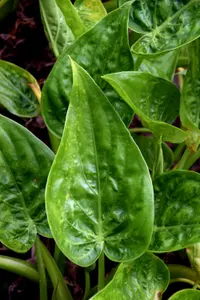
piggyback araucaria Care (Araucaria biramulata)

Also known as: biramule araucaria
piggyback araucaria

About piggyback araucaria

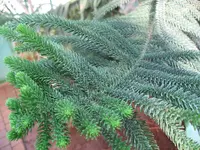
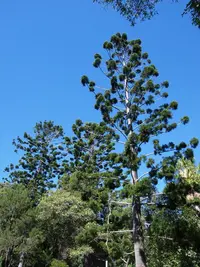
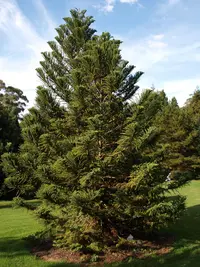
Piggyback araucaria (Araucaria biramulata) is an evergreen conifer from the tropical rainforests of New Caledonia. It forms a tall, upright tree with symmetrical, layered branches and dense, scale-like foliage.

In cultivation it is mainly grown as a collector’s specimen or landscape tree in mild climates, rather than as a common houseplant. Growth is relatively slow but steady, and the plant prefers stable conditions without extreme heat, cold, or drought.

Understanding how to care for piggyback araucaria starts with its natural habitat, where it receives bright light, high humidity, and well-drained, slightly acidic soils.

Main Plant Requirements

Care Difficulty

Moderate Care

Light Preference

Full Sun

Water Requirements

Moderate Water

Temperature Preference

Warm Climate

Hardiness Zone

10–11

Soil Texture

Sandy, Loamy, Organic-rich

Soil pH

Acidic (5.5–6.5), Slightly acidic (6.5–7.0)

Soil Drainage

Well-drained

Fertilization

Minimal (feed rarely)

Get Personalized Care Plan

Scan your plant to receive care tips personalized for your specific plant

Available on iOS and Android

How to Care for the piggyback araucaria

This species prefers bright, gentle light that mimics open woodland or coastal conditions.

  • Provide 4–6 hours of morning sun with light afternoon shade; strong mid‑afternoon sun in hot climates can scorch needles, especially on young trees.
  • Accepts light or partial shade (around 2–4 hours of direct sun) but growth becomes looser and less dense if light is much lower.
  • In cooler seasons, full sun is usually safe; in summer, piggyback araucaria benefits from filtered light from taller trees or buildings facing west.

Water needs focus on evenly moist but freely draining soil to protect the roots.

  • Allow the top 3–5 cm of soil to dry before deep watering, then moisten the full root zone; soil should feel damp, not soggy, a few hours later.
  • In warm growing seasons, monitor more often and water when needles begin to lose some gloss or lower foliage feels slightly limp, early signs of drying stress.
  • During cooler months, extend intervals between waterings; persistent wet soil, yellowing needles, or a sour smell around Araucaria biramulata indicate poor drainage or overwatering.

Stable, mild temperatures support steady growth and reduce stress on this conifer.

  • Best growth occurs around 60–77°F (16–25°C); sustained conditions in this range help maintain dense, even branching.
  • Tolerates brief drops to about 28–30°F (-2 to -1°C) once established, but young plants and new growth are easily damaged by frost and cold winds.
  • Handles summer warmth up to about 86–90°F (30–32°C) if soil moisture is consistent and roots are mulched; prolonged hotter periods increase stress and needle browning.

This conifer prefers moderate humidity but usually adapts to typical indoor levels.

  • Aim for 40–60% humidity to reduce browning of needle tips on piggyback araucaria.
  • In very dry air, watch for crispy needles, increased shedding, and slow growth as signs of humidity stress.
  • Increase humidity with a nearby humidifier, grouping plants together, or a wide pebble tray that keeps the pot above, not in, the water.

Araucaria biramulata prefers airy, free-draining, slightly acidic soil that still holds some moisture.

  • Use a mix of roughly 2 parts peat or coco coir, 1 part pine bark fines, and 1 part perlite or pumice for structure and drainage.
  • Keep pH around 5.5–6.5; avoid strongly alkaline mixes that can cause nutrient lockout and yellowing needles.
  • Ensure the mix feels springy, not compact; coarse bark and perlite increase air pockets around the roots and prevent suffocation.
  • Avoid heavy clay, unamended garden soil, or peat-only mixes that stay waterlogged and raise the risk of root rot.

This species can grow in containers for many years if the pot is chosen and managed carefully.

  • Choose a wide, heavy container such as thick-walled ceramic or concrete to counteract wind rock and support its tall, top-heavy form.
  • Select a pot noticeably deeper than wide to accommodate its strong taproot and limit circling roots near the surface.
  • Raise the container slightly on pot feet so gravity can pull water out faster and prevent perched water at the base.

This species grows slowly and needs only light feeding in containers or nutrient-poor sites.

  • Use a balanced, slow-release fertilizer (around 10-10-10) or a thin layer of compost in spring for piggyback araucaria.
  • Apply once at the start of the growing season for in-ground trees; container plants may need 1–2 light applications.
  • Always follow label rates at half-strength for young or stressed plants to avoid root burn.
  • Stop feeding in late summer so growth hardens before winter and no soft, frost-sensitive shoots develop.

Araucaria biramulata needs minimal pruning, mainly to maintain safety and remove weak material.

  • Carry out light work in late winter or very early spring before new growth extends.
  • Remove dead, diseased, or storm-damaged branches with clean, sharp bypass pruners or a pruning saw.
  • Limit cuts to smaller side branches; avoid cutting the central leader to preserve natural form and strong structure.
  • Thin crowded interior branches only where needed to clear access or improve airflow, not for heavy reshaping.

This tree is usually grown in the ground; container plants or young nursery stock need careful, infrequent moves.

  • Look for roots circling the pot, water running straight through, or slowed growth as signals to shift to a larger container.
  • Transplant or up-pot in late winter to early spring so new roots establish during the full growing season.
  • Plan on moving container-grown plants every 2–3 years into a pot 2–5 cm wider, using a well-drained, slightly acidic mix.
  • Handle the root ball gently, keep it intact, water thoroughly after planting, and shade from intense sun for 7–10 days to limit stress.

New plants are usually raised by seed; vegetative propagation of Araucaria biramulata is slow and technically demanding.

This warm-climate conifer is not fully frost hardy and benefits from thoughtful winter management, especially in containers.

  • In regions with frost, grow in a large container that can be moved into a bright, cool indoor or sheltered space for winter.
  • Keep winter temperatures above about 40°F and provide as much light as possible to reduce needle drop.
  • Reduce watering in the cold season, allowing the top of the mix to dry slightly while never letting the root ball stay bone dry.
  • For in-ground trees in marginal zones, mulch the root zone with 5–8 cm of bark or wood chips, keeping mulch off the trunk.

Care Tips

Early structural staking

Install 2–3 sturdy stakes and loosely tie the main stem in 2–3 places while the tree is young to keep the trunk straight and prevent wind rock that can distort its naturally symmetrical form.

Wind-buffer planting

On exposed sites, position the plant where nearby buildings or taller evergreens break prevailing winds, which reduces branch breakage and keeps whorled branches evenly spaced as it matures.

Root zone protection

Maintain a permanent, mulch-only zone under the canopy, keeping turf and foot traffic away from the root area to prevent soil compaction and damage to the shallow feeder roots.

Managed leader selection

If the main leader is damaged, select one strong vertical side shoot and remove competing upright shoots so the plant regains a single, dominant leader rather than developing a weak, forked top.

Salt and spray shielding

In coastal or roadside locations, create a low hedge, windbreak, or solid barrier on the salt-exposed side to limit salt spray and de-icing salt drift, which can scorch needles and weaken the tree when growing piggyback araucaria.

Common Pests and Diseases

Scale insects

This pest feeds on sap along stems and needle bases, causing yellowing, thinning foliage, and sticky honeydew that can attract sooty mold. Infestations often start on stressed or shaded branches.

Solution

Prune out heavily infested twigs, then wipe accessible stems with cotton pads dipped in 70% isopropyl alcohol to remove adults and nymphs. For larger trees, use a systemic insecticide labeled for conifers or apply horticultural oil during the crawler stage, and reduce plant stress with proper light, watering, and nutrition as part of Araucaria biramulata care instructions.

Mealybugs

These insects appear as white, cottony clusters in branch crotches and on young shoots, weakening the plant through sap feeding. Symptoms include stunted growth and sticky residue on nearby surfaces.

Solution

Isolate smaller potted plants and remove visible mealybugs with a cotton swab dipped in alcohol, then wash foliage with a strong but gentle stream of water. For persistent cases, apply neem oil or insecticidal soap thoroughly to all branch junctions and repeat at 7–10 day intervals while improving light and airflow to reduce reinfestation risk.

Spider mites

These pests thrive in warm, dry conditions and cause fine speckling, dull needles, and very fine webbing between twigs. Symptoms include gradual bronzing of foliage, especially on indoor or sheltered specimens.

Solution

Increase humidity around the plant and hose down branches, focusing on the undersides where mites hide. If damage continues, apply insecticidal soap or a miticide labeled for conifers, repeating applications as directed and avoiding water stress, which favors mite build-up.

Needle blight

This disease causes browning and premature drop of older needles, often starting on lower or inner branches where humidity is highest. Symptoms include distinct bands or lesions on needles and a thin lower crown over time.

Solution

Prune and dispose of affected branches and fallen needles to reduce fungal spores, making cuts back to healthy wood. Improve spacing and airflow, avoid wetting the foliage when watering, and use a copper-based or other labeled fungicide on new growth if the problem recurs seasonally.

Phytophthora canker

This disease affects the lower stem and roots, leading to localized sunken cankers, resin bleeding, and progressive dieback of affected branches. Symptoms include sudden wilting and yellowing of sections of the canopy while other parts remain green.

Solution

Remove and destroy severely affected plants, or prune out localized cankers by cutting into healthy tissue and disinfecting tools between cuts. Improve drainage, avoid waterlogged soil around the root zone, and for valuable specimens consult a local arborist or plant pathologist about soil drenches or trunk treatments specifically labeled for Phytophthora on conifers.

Interesting Facts

Endemic New Caledonian conifer

This species occurs naturally only in New Caledonia, where it grows in humid, low- to mid-elevation forests, making it a narrow-range endemic with a strong link to the island’s unique flora.

Distinct tiered branching

Unlike several related araucarias, it often shows a more open crown with characteristically tiered, somewhat irregular horizontal branches, which gives mature trees a distinctive layered profile in the landscape.

Ultramafic soil specialist

In parts of its range it grows on ultramafic substrates, soils naturally high in heavy metals and low in essential nutrients, indicating a significant physiological tolerance to chemically challenging conditions.

Botan icon

Did you know?

Araucaria biramulata is considered globally vulnerable due to its restricted distribution and habitat loss in New Caledonia, and it is included in international conservation assessments aimed at protecting the island’s relict conifer lineages.

FAQs about piggyback araucaria

This species performs best outdoors in mild, frost-free climates where it has space, strong light, and moving air. Indoors it often grows slowly, becomes sparse, and needs very bright light and careful humidity management to stay attractive.

Grow Healthy Plants with Botan Care

Keep your plants happy and healthy with plant identification, disease detection, and easy care guidance.

Botan plant care app — identify plants on mobile

Explore More Plants