Chinese elm Care (Ulmus parvifolia)

Also known as: lacebark elm
Chinese elm

About Chinese elm

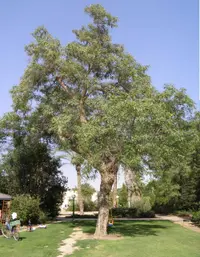
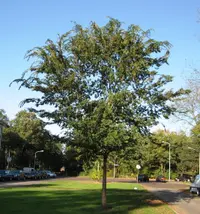
Chinese elm, Ulmus parvifolia, is a small to medium deciduous tree often grown as a landscape specimen or as a bonsai. It has fine, serrated leaves, a dense branching pattern, and naturally develops an attractive, spreading crown.

In the wild, it occurs across China and East Asia, where it grows in a range of climates and soils. This adaptability makes it a popular choice for both outdoor planting and container culture.

Its tolerance of pruning, variable light, and urban conditions means it is generally forgiving for beginners, as long as basic watering and soil drainage needs are met. Learning how to care for Chinese elm mainly involves understanding its seasonal growth and rest periods.

Main Plant Requirements

Care Difficulty

Easy Care

Light Preference

Full Sun

Water Requirements

Moderate Water

Temperature Preference

Cold Hardy

Hardiness Zone

5–9

Soil Texture

Sandy, Loamy, Clay

Soil pH

Acidic (5.5–6.5), Slightly acidic (6.5–7.0)

Soil Drainage

Moist but well-drained

Fertilization

Minimal (feed rarely)

Get Personalized Care Plan

Scan your plant to receive care tips personalized for your specific plant

Available on iOS and Android

How to Care for the Chinese elm

Ulmus parvifolia grows best with ample natural light and moderate sun exposure.

  • Provide 6–8 hours of sun daily, ideally with morning sun and light afternoon shade, especially in hotter regions.
  • Tree tolerates partial shade, but in less than 4–5 hours of direct sun growth becomes looser and fall color weaker.
  • In very strong summer sun, particularly in the south or for young Chinese elm trees, protect from harsh afternoon exposure to reduce leaf scorch.

Ulmus parvifolia prefers evenly moist, well-drained soil rather than constant wetness.

  • Water when the top 3–5 cm of soil feels dry, applying a deep soak that reaches the root zone instead of frequent shallow splashes.
  • In spring and summer, monitor more often during hot, windy spells; in fall and winter, extend intervals as growth slows and soil dries more slowly.
  • Watch for yellowing, dropping leaves and sour-smelling, soggy soil as signs of overwatering, and crisp, browning leaf edges as signs of underwatering.

This species is a hardy tree that tolerates a wide temperature range with proper seasonal adjustment.

  • Optimal active growth occurs around 65–80°F (18–27°C), supporting steady shoot and leaf development.
  • Established trees tolerate winter lows near 0°F (-18°C), though young plants benefit from protection from severe, drying winds and sudden cold snaps.
  • In hot summers above 90°F (32°C), provide soil mulch and adequate moisture to limit heat stress and prevent excessive leaf drop.

This species tolerates a wide humidity range and usually does not need special humidity control.

  • Target 30–60% humidity, which matches most heated and air-conditioned homes.
  • Leaves that crisp at the edges or drop excessively in very dry rooms indicate humidity stress combined with underwatering.
  • If air is extremely dry near heaters or vents, move the Chinese elm slightly away from the source rather than using heavy misting.

Ulmus parvifolia prefers a slightly moist, well-structured mineral soil that drains freely but does not dry rock-hard.

  • Use a loamy mix with roughly 50% standard potting soil, 25% coarse sand, and 25% fine bark or pumice for structure and drainage.
  • Aim for mildly acidic to neutral pH, around 6.0–7.5, avoiding strongly acidic or saline substrates that restrict root function.
  • Ensure the mix stays airy by including coarse particles; avoid dense, peat-heavy blends that compact and suffocate roots.
  • For heavy native clay, improve aeration and drainage by incorporating coarse sand and grit into the top 15–20 cm before planting.

This species adapts well to container growing when given stable support and consistent root conditions.

  • Choose a container wider than it is deep to balance the tree’s canopy and reduce tipping in strong winds.
  • Use a heavier material such as ceramic or concrete for outdoor pots to improve stability for the woody canopy.
  • Elevate the pot slightly on feet or bricks so drainage holes clear freely and roots are not exposed to standing water on patios or balconies.

Ulmus parvifolia benefits from moderate, balanced nutrition but can tolerate lean soils once established.

  • Use a balanced NPK fertilizer (for example 10-10-10) or a slow-release tree formulation in spring as new growth starts.
  • Feed container or bonsai Chinese elm every 4–6 weeks during the growing season at 1/2 strength.
  • Avoid fertilizing in late fall and winter to prevent soft, frost-tender growth.
  • Supplement with a thin layer of well-rotted compost over the root zone once a year, keeping it off the trunk.

Ulmus parvifolia responds well to thoughtful pruning that maintains structure and airflow.

  • Carry out main pruning in late winter or very early spring before buds break to see the framework clearly.
  • Remove dead, diseased, crossing, or inward-growing branches first to reduce disease risk and improve light penetration.
  • Shorten overly long shoots to a lateral bud or branch to control size and refine shape, especially on bonsai.
  • Use clean, sharp bypass pruners or small saws, making smooth cuts just outside the branch collar without leaving stubs.

Chinese elm grown in containers or as bonsai needs periodic repotting, while landscape trees mainly need careful transplanting when young.

  • Plan root work for late winter or early spring, just before active growth, to support quick recovery.
  • Repot when roots circle the pot, drainage slows, or growth declines, usually every 2–3 years for young container plants.
  • Shift into a pot only 2–5 cm wider, using a well-drained mix, and trim damaged or excessively circling roots lightly.
  • After transplanting, water thoroughly, shade from strong sun for 1–2 weeks, and keep soil evenly moist but not waterlogged.

Ulmus parvifolia can be propagated by seed, softwood cuttings, or layering under controlled conditions.

  • Sow fresh seed in fall or early spring in a free-draining seed mix, keeping it slightly moist and cool for better germination.
  • Take softwood cuttings in late spring to early summer, use rooting hormone, and place in a humid, bright, indirect light environment.
  • Maintain rooting media at 68–75°F with gentle bottom heat if possible, and avoid waterlogging to prevent rot.
  • For air layering, girdle a healthy shoot in late spring, wrap in moist sphagnum and plastic, then pot once strong roots form.

Ulmus parvifolia is generally cold hardy but container plants need some winter attention.

  • In-ground trees tolerate moderate frost once established, though extreme cold may cause twig dieback.
  • Apply 5–8 cm of mulch over the root zone in late fall, keeping it a few cm away from the trunk to limit rot.
  • Move containers to a sheltered, unheated but frost-moderated spot such as a cold frame, garage, or against a protected wall.
  • Water sparingly in winter, keeping the root ball just slightly moist so it does not dry out completely.

Care Tips

Root flare check

When planting or repotting, ensure the uppermost structural roots sit just at or slightly above the soil surface so the root flare is visible, which reduces risk of rot and promotes stable anchoring.

Seasonal wire training

For bonsai or young trees, apply aluminum training wire only to lignified (firm, brown) shoots in late spring to early summer and remove it within 2–3 months to guide branch structure without causing wire scars.

Targeted branch thinning

Once a year, selectively remove a few inward-growing or crossing branches to open the canopy, which improves air flow and light penetration and significantly reduces fungal and pest pressure.

Controlled root pruning

For container or bonsai specimens, carry out root pruning every 1–3 years by trimming back the outer 10–20% of the root mass and replanting in fresh, well-structured substrate to maintain vigor and fine feeder roots.

Preventive pest scouting

From spring through early fall, inspect the undersides of leaves and young shoots weekly with a hand lens so spider mites, scale, or aphids are detected early and can be managed before caring for Chinese elm becomes more complicated.

Common Pests and Diseases

Elm leaf beetle

This pest feeds on foliage, causing skeletonized leaves, browning, and early leaf drop, especially in summer. Symptoms include small shot holes and a lace-like appearance on affected leaves.

Solution

Prune and destroy heavily infested twigs and fallen leaves to reduce overwintering stages, then use a targeted insecticide such as a spinosad or pyrethrin product according to label directions if damage is significant. For small trees or bonsai, rinse foliage with a strong stream of water and use insecticidal soap or horticultural oil to suppress larvae on leaf undersides.

Elm bark beetle

These insects tunnel under the bark of branches and small trunks, creating galleries that weaken the tree and can introduce Dutch elm disease. Symptoms include wilting branch tips, dieback, and small exit holes in the bark.

Solution

Promptly prune and destroy dead or declining branches and avoid leaving elm wood on-site, which can harbor beetles. In landscape settings, maintain tree vigor through proper watering and mulching, and consult a certified arborist about professional trunk injections or preventive treatments if beetle pressure or disease risk is high.

Japanese beetle

This pest chews irregular holes between leaf veins, sometimes leaving only a network of veins on heavily infested trees. Symptoms include rapid defoliation on sun-exposed parts of the canopy during mid to late summer.

Solution

Hand-pick beetles in early morning into soapy water on smaller trees or container plants, and consider row covers or netting for bonsai or young specimens during peak flight. Where pressure is high, apply a labeled contact insecticide or neem-based product to foliage, repeating as directed, and avoid using beetle traps close to the tree because they can attract more insects into the area.

Black spot (elm anthracnose)

This disease causes small dark brown to black spots on leaves that may merge into larger blotches, sometimes leading to early leaf drop. Symptoms include scattered spotting that is more severe in cool, wet weather.

Solution

Remove and discard fallen leaves to reduce fungal spores, and water at the soil level rather than overhead to keep foliage dry. Improve air circulation by thinning crowded branches if needed, and in severe, recurring cases use a labeled foliar fungicide early in the season according to the product instructions as part of overall Ulmus parvifolia care.

Powdery mildew

This disease produces a white to gray powdery coating on the upper leaf surfaces, which can cause leaf distortion and reduced vigor in young or container-grown trees. Symptoms include dull, faded foliage that may yellow and drop prematurely in shaded, humid conditions.

Solution

Increase light and airflow around the canopy, avoid wetting leaves late in the day, and remove heavily infected leaves where practical. For persistent cases, apply a labeled fungicide such as potassium bicarbonate, sulfur, or horticultural oil at the first sign of infection, repeating as directed and avoiding oil-sulfur combinations to prevent leaf burn.

Interesting Facts

Mottled flaking bark

Mature trees develop a patchwork bark that exfoliates in small flakes, revealing gray, orange, and brown layers that give the trunk a camouflaged appearance.

High elm disease tolerance

This species shows notable resistance to Dutch elm disease and elm leaf beetle compared with many other elms, which is why it is widely used as a street and landscape tree.

Tiny, leathery leaves

The leaves are small, firm, and slightly leathery, with serrated edges, which makes them especially suitable for bonsai and helps reduce water loss in hot urban environments.
Botan icon

Did you know?

In some regions, this species naturalizes along roadsides and disturbed urban sites, where its tolerance of heat, drought, compacted soil, and air pollution allows it to establish and persist where many native tree species struggle.

FAQs about Chinese elm

Yellowing foliage often comes from inconsistent watering, compacted or waterlogged soil, nutrient deficiency, or low light. Check root health, adjust watering rhythm, refresh or loosen soil, and apply a balanced fertilizer at recommended strength.

Grow Healthy Plants with Botan Care

Keep your plants happy and healthy with plant identification, disease detection, and easy care guidance.

Botan plant care app — identify plants on mobile

Explore More Plants