Plan Root Zone
When siting young trees, leave at least a 12–15 m radius free of foundations, drain lines, and paved surfaces, as eastern cottonwood develops an aggressive, wide-spreading root system that can damage structures if planted too close.


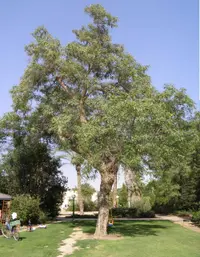
Eastern cottonwood, Populus deltoides, is a fast-growing deciduous tree native to riverbanks, floodplains, and wetlands across much of North America. It is typically large, with a broad, open crown and triangular, toothed leaves that tremble in the wind.
The tree produces fluffy, cotton-like seeds that travel long distances and can create heavy seed fall in late spring. Its rapid growth and extensive root system make it useful for erosion control but less suitable for small gardens or close to foundations.
It prefers full sun, moist to wet soils, and plenty of space, so care for eastern cottonwood focuses mainly on giving it the right site rather than intensive maintenance.

Care Difficulty
Moderate Care

Light Preference
Full Sun

Water Requirements
Regular Water

Temperature Preference
Cold Hardy

Hardiness Zone
2–9

Soil Texture
Sandy, Loamy, Clay

Soil pH
Slightly acidic (6.5–7.0), Neutral (7.0)

Soil Drainage
Moist but well-drained

Fertilization
Minimal (feed rarely)
Scan your plant to receive care tips personalized for your specific plant
Available on iOS and Android
This fast-growing riparian tree needs abundant direct light to reach full size and strong structure.
This species is naturally adapted to moist riverbanks and performs best in consistently damp but not stagnant soil.
This hardy deciduous tree tolerates a wide temperature range but grows most actively under moderate warmth.
This species tolerates a wide humidity range and usually does not need special adjustment outdoors.
Populus deltoides prefers moist, deep, fertile mineral soils with consistent structure and drainage.
This species is generally unsuitable for long-term container growing, except as a very short-term sapling or bonsai experiment.
This fast-growing eastern cottonwood benefits from light, targeted feeding in poor soils but usually needs little input in naturally rich, moist ground.
Populus deltoides responds well to structured pruning that focuses on safety, tree health, and a stable crown form.
Young Populus deltoides are typically started in containers, then transplanted once vigorous root systems develop.
New Populus deltoides plants are most often produced from hardwood cuttings, with seeds used mainly for large-scale or genetic work.
This hardy riparian tree tolerates typical winters in most temperate regions with minimal intervention once established.

Plant Health Check
Not sure what's wrong with your plant? Check your plant's health inside the app.
This species is one of the first large trees to establish on freshly deposited river sandbars in North America, using its wind-dispersed cottony seeds to rapidly colonize unstable, flood-prone shores.
Female trees release huge numbers of seeds wrapped in white cotton-like hairs that can travel long distances on wind, often forming visible drifts along streets and riverbanks in late spring to early summer.
Eastern cottonwood stands stabilize riverbanks, slow floodwaters, and create critical habitat structure for birds, beavers, and many insect species along large rivers and floodplains in central and eastern North America.

Eastern cottonwood is among the fastest-growing temperate hardwood trees, capable of adding more than 1–2 m of height per year under ideal riverine conditions, which makes it an important species in forestry trials focused on rapid biomass production.
This species is one of the fastest-growing native trees, often adding 1–2 m per year in favorable conditions. Growth is quickest in deep, moist soils with full light and slows noticeably on dry or compacted sites.
Keep your plants happy and healthy with plant identification, disease detection, and easy care guidance.