Shelterbelt Positioning
Plant in a position where nearby trees or a windbreak fence reduce prevailing winter winds, as this limits needle desiccation and helps young trees establish stronger crowns when growing Siberian Fir.

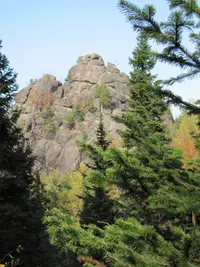
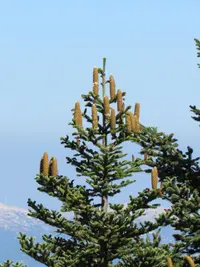
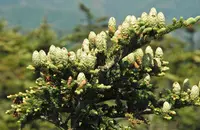
Siberian fir, Abies sibirica, is an evergreen conifer valued for its dense, soft needles and narrow, upright crown. It naturally forms a tall, straight tree with layered branches. Native to cold forests of Siberia and parts of northern Asia, it is adapted to harsh winters and short growing seasons.
This species prefers cool climates, consistent moisture, and well-drained, slightly acidic soils. It generally needs full sun to maintain a compact, healthy form.
For gardeners, the main challenges are heat, drought, and air pollution sensitivity, which limit its use in warmer or urban areas. Understanding these traits helps when planning how to care for Siberian Fir.

Care Difficulty
Moderate Care

Light Preference
Full Sun

Water Requirements
Moderate Water

Temperature Preference
Cold Hardy

Hardiness Zone
2–5

Soil Texture
Sandy, Loamy, Silty

Soil pH
Strongly acidic (4.5–5.5), Acidic (5.5–6.5)

Soil Drainage
Well-drained

Fertilization
Minimal (feed rarely)
Scan your plant to receive care tips personalized for your specific plant
Available on iOS and Android
This cold-climate conifer prefers steady, cool light conditions rather than intense heat.
This species prefers consistently moist but not saturated soil, especially during establishment.
This boreal conifer is strongly cold-adapted but can struggle in prolonged heat.
This conifer handles a broad humidity range and usually does not need special air moisture control outdoors.
Abies sibirica prefers cool, moist, well‑aerated soil with stable structure.
This species can be grown in containers only for the short to medium term, mainly as a young specimen or patio tree.
This cold-climate conifer grows well in average garden soil and usually needs only light supplemental feeding.
Pruning needs for Abies sibirica are minimal and mainly focused on safety and structure.
This species is rarely grown long-term in containers, so care focuses on timely outdoor transplanting.
Propagation of Abies sibirica is usually done from seed and can be slow but reliable with correct conditions.
This fir is highly cold hardy and generally needs little special winter care once established in the landscape.

Plant Health Check
Not sure what's wrong with your plant? Check your plant's health inside the app.
This Siberian fir can survive winter temperatures well below −50°C in its native range, thanks to highly frost-resistant buds and needles that tolerate deep cellular dehydration.
Across large areas of western and central Siberia, this species forms extensive taiga stands, often as a major canopy tree on cool, moist mountain slopes and river valleys.
Its needles contain essential oils rich in bornyl acetate and other terpenes, which produce the characteristic balsamic, resinous scent often used as a reference in Abies sibirica care instructions.

Fossil and pollen records indicate that this fir expanded dramatically after the last glacial period, becoming one of the key conifer species that shaped modern Siberian taiga ecosystems as ice sheets retreated.
This species is usually slow to moderate growing. Young trees often add 15–30 cm of height per year, sometimes up to 40 cm in ideal conditions with cool climates, consistent moisture, and deep, fertile soil.
Keep your plants happy and healthy with plant identification, disease detection, and easy care guidance.