Windfirm training
In the first 3–5 years, selectively shorten or remove competing side branches on the windward side so the central leader stays dominant and the young tree develops a sturdy, wind-resistant structure.

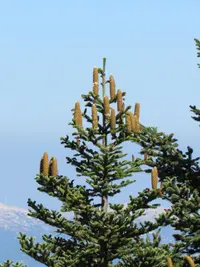
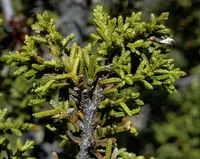
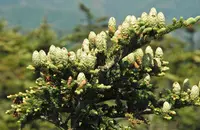
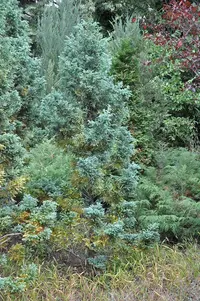
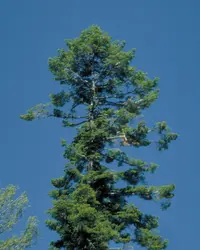
Greek fir, Abies cephalonica, is a medium to large evergreen conifer known for its dense, symmetrical crown and glossy dark green needles. It forms a strong central trunk with tiered horizontal branches and upright cones held above the foliage.
This species is native to the mountains of Greece, where it grows in cool, humid forests on rocky slopes. It is generally hardy and wind tolerant but can be slow to establish, which affects how easy it is to care for Greek Fir in gardens.
It prefers full sun, evenly moist but well-drained soil, and benefits from protection from extreme heat and prolonged drought, especially when young.

Care Difficulty
Moderate Care

Light Preference
Full Sun

Water Requirements
Moderate Water

Temperature Preference
Cold Hardy

Hardiness Zone
5–7

Soil Texture
Sandy, Loamy, Rocky

Soil pH
Acidic (5.5–6.5), Slightly acidic (6.5–7.0)

Soil Drainage
Well-drained

Fertilization
Minimal (feed rarely)
Scan your plant to receive care tips personalized for your specific plant
Available on iOS and Android
This mountain conifer prefers full sun but tolerates some light shade in hotter regions.
This species prefers evenly moist, cool soil that never stays saturated for long periods.
This hardy conifer is adapted to cool to temperate climates with distinct seasons.
This species prefers outdoor air humidity rather than controlled indoor conditions.
Abies cephalonica grows best in deep, well-aerated, free-draining mineral soil.
This species can be grown in containers only for the short to medium term, mainly as a juvenile plant.
Abies cephalonica grows steadily in average garden soil and needs only light feeding in managed landscapes.
Abies cephalonica requires minimal pruning, mainly to maintain health and safe structure.
This fir is seldom kept long-term in containers, so focus on careful outdoor transplanting of young trees.
Abies cephalonica is mainly propagated from seed, which requires patience and cool conditions for best results.
Established Greek Fir trees are cold hardy and usually need little active winter care in suitable climates.

Plant Health Check
Not sure what's wrong with your plant? Check your plant's health inside the app.
This fir is naturally restricted to high-elevation mountain ranges of mainland Greece, where it forms pure or near-pure forests on limestone and other calcareous rocks in a relatively narrow climatic zone.
Mature trees often develop asymmetric, flattened crowns in exposed sites, an adaptation to strong mountain winds and heavy snow loads that helps reduce branch breakage.
Its needles and bark contain abundant resin canals, which make the wood strongly aromatic and contribute to the tree’s resistance against certain bark-boring insects and fungal pathogens.
Greek fir is one of the few Mediterranean conifers that regularly forms extensive, dense montane forests, creating a distinct cool, moist microclimate that supports many shade-tolerant understory plants otherwise rare in its surrounding dry, summer-hot landscapes.
This species grows slowly, usually 15–30 cm per year in good conditions. Growth is faster in deep, cool, moist but well-drained soil and full light, and slower in compacted, dry, or exposed urban sites.
Keep your plants happy and healthy with plant identification, disease detection, and easy care guidance.