African Juniper Care (Juniperus procera)

Also known as: African Pencil Cedar, East African Cedar
African Juniper

About African Juniper

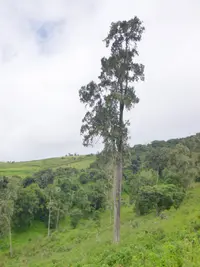
African juniper (Juniperus procera) is a tall, evergreen conifer known for its narrow, columnar crown and dense, aromatic foliage. In nature it often forms dominant trees in dry highland forests and mountain slopes in eastern Africa and parts of the Arabian Peninsula.

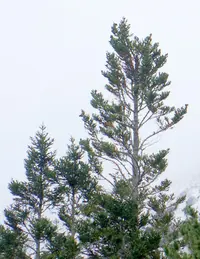
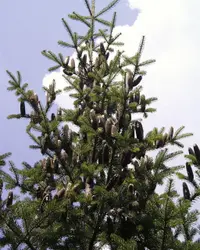
Its foliage is typically dark green to bluish, with small scale-like leaves and reddish-brown bark that becomes rough and fissured with age. The tree produces rounded berry-like cones that mature over several seasons.

This species is generally hardy and drought-tolerant once established, which can make it easier to grow in suitable climates. Those who care for African Juniper should provide full sun, well-drained soil, and avoid consistently wet conditions.


Main Plant Requirements

Care Difficulty

Moderate Care

Light Preference

Full Sun

Water Requirements

Low Water

Temperature Preference

Warm Climate

Hardiness Zone

9–11

Soil Texture

Sandy, Loamy, Rocky

Soil pH

Acidic (5.5–6.5), Slightly acidic (6.5–7.0)

Soil Drainage

Well-drained

Fertilization

Minimal (feed rarely)

Get Personalized Care Plan

Scan your plant to receive care tips personalized for your specific plant

Available on iOS and Android

How to Care for the African Juniper

This highland conifer performs best in strong natural light with some protection from extreme heat.

  • Provide full sun for 6–8 hours daily; African Juniper develops denser foliage and stronger branching in open, unobstructed light.
  • Tolerates light partial shade, especially with morning sun and light afternoon shade, but prolonged shade causes sparse growth and reduced vigor.
  • In very hot, low-humidity regions, give slight afternoon shade to reduce needle scorch, especially on young trees and newly transplanted specimens.

This species prefers dry to slightly moist soil and is sensitive to chronic excess water.

  • Allow well-drained soil to dry so the top 3–5 cm feel dry before watering young or recently planted Juniperus procera.
  • In the first growing season, water deeply but infrequently, then reduce once roots establish; in winter, water only during extended dry spells.
  • Watch for yellowing, soft foliage or persistent wet soil as overwatering signs; twig dieback and overly brittle foliage typically indicate underwatering.

This mountain juniper thrives in mild to warm climates with cool nights and limited frost.

  • Optimal growth occurs around 60–77°F (16–25°C), with best vigor where summers are warm but not extremely hot and nights cool slightly.
  • Mature trees tolerate brief drops near 20°F (-7°C) if hardened, but young plants are more frost sensitive and benefit from wind and frost protection.
  • Handles dry heat up to about 95°F (35°C) if soil is well drained and roots are mulched, but prolonged extreme heat can slow growth and stress foliage.

This species handles low humidity well and rarely needs special humidity management indoors or outdoors.

  • Target 30–50% relative humidity, similar to most heated homes and dry outdoor climates.
  • Dry indoor air is usually tolerated, but prolonged exposure above radiators or forced-air vents can cause browning of inner foliage tips.
  • If foliage browning coincides with very dry, hot air, move the African Juniper away from heat sources and improve air circulation rather than adding mist.

Juniperus procera prefers mineral, sharply drained soil that prevents waterlogging around the roots.

  • Use a gritty mix such as 50–60% coarse sand or fine gravel with 40–50% loam and a small amount of compost for nutrients.
  • Aim for slightly acidic to neutral pH around 6.0–7.5, avoiding strongly acidic or alkaline substrates that limit nutrient availability.
  • Increase aeration and drainage by adding pine bark fines or pumice instead of peat-heavy mixes that compact and hold excess water.
  • Do not plant in heavy clay, poorly drained low spots, or organic-rich potting mixes that stay wet for longer than 1–2 days after watering.

This species can be grown in containers if the pot is large, heavy, and supports its eventual height and root spread.

  • Choose a deep, wide container that allows a broad root plate to develop, reducing the risk of the plant becoming unstable in wind.
  • Use a heavy material such as ceramic or concrete in exposed sites so the tall, woody canopy does not tip the pot over.
  • Raise the pot slightly on feet or bricks so drainage holes clear quickly after watering and roots do not sit in trapped runoff.

Juniperus procera grows best in lean, well-drained soil and needs only modest feeding in cultivation.

  • Apply a balanced slow-release fertilizer (around 10-10-10) at half strength once in early spring for outdoor trees.
  • In containers, use a diluted balanced liquid feed every 6–8 weeks during the growing season if growth is weak.
  • Avoid rich compost or heavy feeding, which promotes soft, pest-prone growth and weakens structure.
  • Stop feeding in late summer so growth hardens before winter; African Juniper prefers a relatively low-nutrient regime.

Juniperus procera benefits from light, targeted pruning to maintain structure and health.

  • Prune in late winter or very early spring before new growth starts, using clean, sharp bypass pruners or loppers.
  • Remove dead, diseased, crossing, or storm-damaged branches back to healthy wood to improve airflow and reduce infection risk.
  • Limit cuts to younger, green shoots; avoid cutting back into old, bare wood that may not resprout.
  • Use selective thinning rather than shearing to preserve the natural form and prevent overly dense, shaded interiors.

This species is usually grown in the ground, so focus on careful transplanting rather than frequent repotting.

  • Transplant young trees in late winter or early spring when soil is workable and temperatures are mild.
  • Look for circling roots, dense root mats, or stalled growth in containers as signs that an upsize or planting out is needed.
  • Move up only 1–2 pot sizes or plant into a similar, sharply drained soil to limit waterlogging and transplant shock.
  • Water deeply after transplanting, then keep soil lightly moist, shading the tree from intense sun for 1–2 weeks to reduce stress.

Juniperus procera is typically propagated from semi-hardwood cuttings or seed under controlled conditions.

  • Take semi-hardwood cuttings in late summer, 8–12 cm long, with heel wood if possible for better rooting.
  • Use a gritty, well-drained mix, apply rooting hormone, and maintain high humidity with bright, indirect light.
  • Germinate seeds after cold stratification, then provide warm, bright conditions and very free-draining substrate.
  • Expect slow establishment; maintain consistent but not waterlogged moisture and avoid disturbance of young root systems.

This species is moderately cold tolerant in mild-winter climates and usually needs little specific winter care in the ground.

  • In regions with occasional frost, apply a 5–8 cm mulch layer around the root zone, keeping it away from the trunk.
  • Container plants are more vulnerable; move them to a sheltered, unheated but frost-free spot if hard freezes are expected.
  • Brush off heavy, wet snow from branches to limit breakage, especially on upright, young trees.

Care Tips

Wind exposure planning

Site young trees where they receive steady air movement but are shielded from the most extreme prevailing winds using existing buildings or a temporary windbreak, as this reduces root rock and trunk bending during establishment.

Deep staking method

Stake only the lowest 1/3 of the trunk with 2–3 sturdy stakes and wide, soft ties, and remove the support after 1–2 years once the root system has anchored, to encourage a strong, tapered trunk rather than a weak, top-heavy tree.

Root flare inspection

When planting, locate and expose the root flare (where the trunk widens at the top of the roots) and ensure it sits just above soil level, since burying this area increases risk of collar rot and long-term decline.

Targeted structural pruning

During the first 3–5 years, remove only rubbing, sharply V-shaped, or competing leaders in late winter so the tree develops a single dominant leader and well-spaced scaffold branches that will better tolerate snow and wind loads.

Mulch management zone

Maintain a 30–60 cm grass-free, 5–8 cm deep mulch ring around the base, keeping mulch pulled back 5–8 cm from the trunk, to reduce mower damage, conserve soil moisture, and moderate soil temperature when caring for African Juniper.

Common Pests and Diseases

Juniper needle blight

This disease causes browning and death of older needles, often starting on lower branches and moving upward. Symptoms include thinning foliage and dieback, especially in humid, crowded conditions.

Solution

Prune out and dispose of infected shoots during dry weather, disinfecting tools between cuts, and improve airflow by thinning dense growth and avoiding overhead watering. In high-risk, humid sites, a labeled copper or chlorothalonil fungicide can be applied preventively in spring when new growth emerges, following local Juniperus procera care instructions and product labels carefully.

Juniper rust

This disease produces orange to rusty swellings or galls on twigs and can lead to distorted growth and gradual branch decline. Symptoms include orange, gelatinous spore masses during wet periods, especially where junipers grow near alternate hosts such as apples or hawthorns.

Solution

Remove and destroy affected twigs and galls, cutting 5–10 cm below visible symptoms, and avoid planting susceptible apple or hawthorn species close to junipers. In areas with a history of rust, apply a suitable systemic fungicide at bud break and repeat per label directions during wet spring periods to protect new growth.

Juniper scale

These insects appear as tiny, gray to white, shell-like bumps on needles and stems, causing yellowing, needle drop, and overall decline. This pest weakens the plant by sucking sap and can lead to branch dieback if populations are heavy.

Solution

Prune and discard heavily infested twigs and improve plant vigor with correct watering and light to help natural predators. Treat remaining infestations by spraying thoroughly with horticultural oil during the crawler stage (often late spring to early summer), repeating as needed according to label directions and avoiding applications during extreme heat.

Spider mites

These pests cause fine stippling, dull gray-green foliage, and in heavy infestations, webbing on inner branches, especially in hot, dry conditions. Symptoms include premature needle drop and an overall dusty or off-color appearance of the canopy.

Solution

Rinse foliage thoroughly with a strong but gentle stream of water, focusing on inner branches, and repeat every few days to knock down populations. In persistent cases, use a horticultural oil or insecticidal soap labeled for mites, applied in the early morning or evening, and increase humidity around the plant while avoiding waterlogged soil.

Juniper bark beetles

These insects bore into stressed or drought-weakened trees, creating small entry holes in bark and galleries under the surface that interrupt water flow. Symptoms include rapid yellowing, browning, and death of individual branches or entire sections of the tree.

Solution

Remove and destroy heavily infested branches or entire dead trees promptly to reduce beetle breeding sites, and avoid leaving cut juniper wood nearby. Focus on prevention by maintaining plant health with adequate but not excessive watering, avoiding mechanical trunk injuries, and, in high-risk forestry or landscape settings, using preventive trunk sprays with a labeled insecticide before peak beetle flight periods if recommended by local extension services.

Interesting Facts

High‑altitude specialist

This species naturally forms forests on East African mountains, often between 2,000–3,000 m, where it can dominate dry, open slopes and ridges that many other trees cannot tolerate.

Remarkably tall conifer

In suitable mountain habitats it often develops a straight, cylindrical trunk and narrow crown, and is considered one of the tallest native African conifers, with mature trees forming prominent skyline features above mixed forest.

Fragrant, resinous wood

The heartwood is aromatic and rich in resin canals, which makes it resistant to insect attack and decay and has led to long-standing use in East Africa for poles, construction timber, and high‑value carpentry.

Botan icon

Did you know?

In parts of the Ethiopian and East African highlands, extensive stands of Juniperus procera have been intensely logged over the last century, so remaining old-growth trees are now considered important relics of once widespread montane juniper forests and are a conservation priority in several protected areas.

FAQs about African Juniper

Growth is generally slow to moderate. Young plants may add 15–30 cm per year under good conditions, then slow as they mature. Cooler temperatures, drought, poor soil, or root disturbance can reduce annual shoot extension noticeably.

Grow Healthy Plants with Botan Care

Keep your plants happy and healthy with plant identification, disease detection, and easy care guidance.

Botan plant care app — identify plants on mobile

Explore More Plants