Provide sturdy staking
Install a strong stake or small trellis when the plant is still young so the main stem grows straight and supported, which prevents wind damage and trunk bending as it gains height and canopy weight.

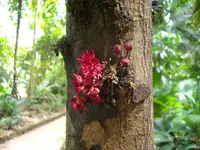
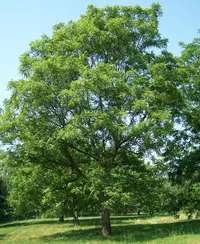
Cacaui, Theobroma speciosum, is a tropical tree from the cacao family, valued for its striking foliage and decorative fruits rather than for commercial cocoa. It typically grows with a straight trunk, glossy green leaves, and colorful, showy flowers that form directly on older branches and stems.
This species is native to the Amazon basin, where it grows in warm, humid lowland forests under partial shade. In cultivation it prefers high humidity, consistently moist but well-drained soil, and protection from cold or dry winds.
For most home growers, how to care for Cacaui centers on providing stable warmth, ample moisture, and shelter from strong sun, which can make it moderately challenging indoors or in temperate climates.

Care Difficulty
Hard Care

Light Preference
Partial Shade

Water Requirements
Keep Soil Moist

Temperature Preference
Tropical / Frost Sensitive

Hardiness Zone
11–12

Soil Texture
Loamy, Organic-rich

Soil pH
Acidic (5.5–6.5), Slightly acidic (6.5–7.0)

Soil Drainage
Moist but well-drained

Fertilization
Light (every 4–6 weeks)
Scan your plant to receive care tips personalized for your specific plant
Available on iOS and Android
Theobroma speciosum is an understory tropical tree that prefers bright, filtered light rather than direct, intense sun.
This tropical species needs steadily moist, well-drained soil and does not tolerate long dry spells or waterlogged conditions.
This plant is a true tropical species and grows best in consistently warm, frost-free conditions.
This understory tropical tree needs high humidity to stay healthy in cultivation.
This species prefers a moist, airy, organic-rich substrate that drains freely yet retains some moisture.
This species can be grown in large containers when space or climate limits in-ground planting.
This nutrient-demanding Amazonian tree benefits from steady, modest feeding in cultivation, especially when grown as Cacaui indoors or in containers.
Pruning needs for Theobroma speciosum are modest and focus on structure and plant health rather than heavy shaping.
This tropical tree is usually grown in the ground, so management focuses on careful transplanting of young specimens rather than frequent repotting.
Propagation of this species is usually done from seed, with vegetative methods used more rarely and requiring controlled conditions.
This strictly tropical tree has very low frost tolerance and needs significant winter protection outside frost-free climates.

Plant Health Check
Not sure what's wrong with your plant? Check your plant's health inside the app.
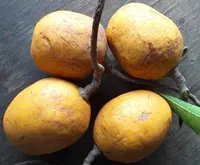
This species is a close wild relative of the cultivated cacao tree Theobroma cacao and shares similar large, ridged pods and seeds that are rich in fats and polyphenols, although its seeds are not used in commercial chocolate production.
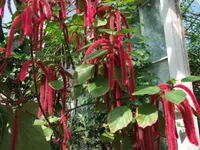
The plant shows strong cauliflory, meaning its bright red flowers emerge directly from the main trunk and older branches, an adaptation that makes nectar and pollen more accessible to certain pollinators in dense rainforest understories.
It naturally occurs in the humid lowland rainforests of the Amazon basin, where it grows as a small understory tree that tolerates shade when young but benefits from higher light levels as it matures.

In parts of its native range in Brazil, the visually striking fruits and seeds of this species have been used in small-scale, local preparations and as a genetic resource in breeding and research programs aimed at improving cultivated cacao’s resilience and flavor diversity.
In warm, suitable climates this tree can reach 6–10 m tall with a narrower crown. In containers or restricted spaces, it often stays much smaller, around 2–4 m, depending on root space and pruning.
Keep your plants happy and healthy with plant identification, disease detection, and easy care guidance.