Senegal saba Care (Saba senegalensis)

Senegal saba

About Senegal saba

Senegal saba, Saba senegalensis, is a vigorous woody climber grown mainly for its edible, sweet-tart fruits. It typically scrambles over supports or nearby trees, forming long, twining stems with glossy green leaves.

This species is native to the drier savanna and woodland regions of West and Central Africa, where it tolerates heat and seasonal drought. Its toughness makes it attractive for experimental cultivation, but it can be slow to establish from seed and needs warmth to grow well.

In cultivation, it prefers bright light, well-drained soil, and moderate moisture. Understanding these natural preferences makes it easier to care for Senegal saba in suitable climates or protected spaces.

Main Plant Requirements

Care Difficulty

Moderate Care

Light Preference

Full Sun

Water Requirements

Moderate Water

Temperature Preference

Tropical / Frost Sensitive

Hardiness Zone

10–12

Soil Texture

Sandy, Loamy, Organic-rich

Soil pH

Acidic (5.5–6.5), Slightly acidic (6.5–7.0)

Soil Drainage

Well-drained

Fertilization

Minimal (feed rarely)

Get Personalized Care Plan

Scan your plant to receive care tips personalized for your specific plant

Available on iOS and Android

How to Care for the Senegal saba

This sun-loving African shrub fruits best with strong, consistent light in warm climates.

  • Provide 6–8 hours of direct sun daily, ideally with morning and late-afternoon sun and lighter exposure around midday in very hot regions.
  • Allow light partial shade (2–4 hours filtered light) in areas above 95°F (35°C) to reduce leaf scorch and flower drop in Senegal saba.
  • Watch for pale, elongated shoots as a sign of insufficient light, and sunburned, crispy leaf edges as a sign of excessive, intense sun.

This drought-tolerant shrub prefers deep, infrequent watering once established.

  • Water when the top 5–8 cm of soil feel dry, giving a slow soak so moisture reaches the deeper root zone, then let the soil dry again.
  • Use well-drained, sandy or loamy soil; persistent puddling, sour smell, or soft, yellowing leaves signal overwatering and poor drainage.
  • In the first 1–2 growing seasons, water more often during hot, dry periods; reduce frequency in cool seasons, but do not allow prolonged wilting.

This species is adapted to hot, semi-arid climates and needs warm conditions for strong growth.

  • Aim for 77–95°F (25–35°C) during active growth; Saba senegalensis can tolerate brief peaks near 104°F (40°C) if soil moisture is adequate.
  • Protect the plant below 50°F (10°C); growth slows, and damage can occur near 41°F (5°C), with high risk of death at freezing or frost.
  • In marginal climates, choose the warmest, most sheltered microclimate, avoid cold valley bottoms, and protect roots with mulch during cooler months.

This species prefers warm, moderately humid air but copes with typical indoor levels.

  • Aim for 40–60% humidity; avoid very dry heated rooms for long periods when caring for Senegal saba.
  • Crisping leaf edges, stalled growth, and leaf drop during hot, dry spells suggest humidity stress rather than watering issues.
  • Increase humidity by grouping plants, placing the pot on a pebble tray with water below the base, or running a nearby humidifier in dry seasons.

This species grows best in loose, well‑drained, slightly sandy soil that does not stay waterlogged.

  • Use a mix of 40–50% loam or all‑purpose potting soil, 30–40% coarse sand, and 10–20% perlite to mimic its naturally gritty habitat.
  • Keep drainage fast enough that water runs through in seconds and the top layer dries between waterings, preventing root suffocation and rot.
  • Aim for mildly acidic to neutral pH around 6.0–7.0, which supports nutrient uptake for Saba senegalensis without extra adjustment in most tap‑water areas.
  • Avoid heavy clay, peat‑dense, or compacted mixes; lighten them with coarse sand, fine bark, or perlite to improve aeration and root penetration.

This species can adapt to container growing if the pot supports its deep, vigorous root system.

  • Choose a tall, heavy container to counterbalance vining top growth and reduce tipping in wind or when fruit develops.
  • Select a pot material with moderate porosity, such as thick terracotta or composite, to prevent prolonged waterlogging while limiting rapid moisture loss.
  • Ensure multiple large drainage holes and keep the container slightly elevated so runoff clears quickly and does not pool under the base.

This dryland fruit vine benefits from modest feeding when grown in managed conditions, especially in poor soils.

  • Use a balanced NPK fertilizer (e.g. 10-10-10) or well-rotted compost at the start of the warm growing season.
  • Apply fertilizer every 6–8 weeks during active growth, keeping soils moderately fertile, not rich.
  • Dilute liquid feeds to half strength to avoid salt buildup and excessive vegetative growth.
  • Stop feeding Senegal saba in late fall and during cool, semi-dormant periods to let growth harden.

Thoughtful pruning keeps Saba senegalensis manageable, healthy, and productive as a vine or trained shrub.

  • Carry out main pruning at the end of the dry or cool season, just before strong new growth begins.
  • Remove dead, diseased, and damaged shoots first, then thin congested or crossing stems to improve airflow.
  • Shorten overly long vines to maintain the chosen framework and make fruiting areas easier to reach.
  • Use clean, sharp bypass pruners and make angled cuts just above healthy buds or side branches.

This species is usually field-grown, so focus on careful transplanting from nursery containers into permanent ground positions.

  • Transplant young plants in late spring or early summer once soil is warm and frost risk has passed.
  • Look for roots circling the pot or pushing through drainage holes as a sign the plant is ready to move.
  • Water the container well, slide the root ball out gently, and loosen circling roots without tearing them heavily.
  • Replant at the same depth in a wide hole, backfill with free-draining soil, water deeply, then shade and irrigate consistently for 1–2 weeks to reduce transplant shock.

New plants are most often raised from seed, which reflects natural Saba senegalensis reproduction in its native range.

  • Collect fully ripe fruit and clean seeds, then sow fresh for best germination.
  • Sow in warm conditions around 75–85°F in a well-drained, sandy mix, barely covering the seeds.
  • Keep the medium evenly moist, not wet, and provide bright light without intense midday sun.
  • Semi-ripe stem cuttings can be tried in late spring with rooting hormone, bottom heat, and high humidity, though success is less consistent than from seed.

This tropical species is frost-sensitive and needs protection in climates cooler than its native range.

  • In USDA zones below 10, grow in containers and move plants indoors or into a heated greenhouse before temperatures drop near 40°F.
  • Outdoors in mild climates, apply 5–8 cm of dry mulch around the root zone, keeping it slightly away from the stem.
  • If an unexpected light frost is forecast, wrap young vines and trunks with breathable fabric or frost cloth overnight.

Care Tips

Early support training

Install a strong trellis, wire fence, or tensioned wires when the plant is young so the vines can be tied and guided as they grow, which prevents stem kinking and makes future pruning and harvest much easier.

Root-zone mulching

Apply a 5–8 cm layer of coarse organic mulch around the root zone, keeping it 5–10 cm away from the stem, to stabilize soil temperature, reduce moisture stress, and protect the shallow feeder roots from mechanical damage.

Wind and stress management

In exposed sites, use windbreak netting or plant near a solid fence so that vigorous new shoots do not snap in strong winds, and remove any damaged or crossing stems promptly to reduce entry points for disease.

Controlled suckering

Monitor the base of the plant and root zone for unwanted suckers, then cut them cleanly at or just below soil level so the main vine keeps its vigor and energy is not diverted into weak side shoots.

Seasonal fruit thinning

If flowering and fruit set are heavy, remove a portion of young developing fruits by hand so the remaining fruits size up better, branches are not overloaded, and overall energy balance supports long-term growing Senegal saba health.

Common Pests and Diseases

Fruit flies

These insects are strongly attracted to the ripening, fragrant fruits and lay eggs under or near the skin, leading to maggots in the pulp and rapid fruit spoilage. Symptoms include tiny puncture marks on the rind, soft spots, and premature fruit drop.

Solution

Collect and destroy infested or fallen fruits promptly, and avoid leaving ripe fruits on the tree for long periods. Use fine mesh bags around developing fruits, hang yellow sticky traps to monitor adults, and, in outdoor settings, consider protein bait traps placed away from the plant canopy to reduce pressure while growing Senegal saba.

Fruit borers

This pest tunnels into developing fruits, feeding inside and causing internal rotting and seed damage. Symptoms include small entry holes with frass (sawdust-like droppings), distorted fruit development, and premature yellowing and drop.

Solution

Remove and destroy all affected fruits to break the life cycle and reduce larval stages. Prune lightly to open the canopy for better light and monitoring, use fruit bagging where possible, and in outdoor plantings apply targeted Bacillus thuringiensis (Bt) or other labeled biological controls to young larvae on flowers and very small fruits.

Anthracnose

This disease causes dark, sunken lesions on leaves, stems, and sometimes fruits, often with a yellow halo or irregular dead patches. In humid, warm conditions it can lead to leaf blight and dieback of tender shoots.

Solution

Prune out and dispose of infected leaves and twigs, and avoid overhead watering to keep foliage dry. Improve airflow by thinning dense growth, protect foliage from prolonged leaf wetness, and in persistent cases use a copper-based or other labeled fungicide applied according to local guidelines and only when conditions favor disease spread.

Leaf spot

This disease produces scattered brown to black spots on leaves, sometimes with pale centers, leading to premature leaf yellowing and drop under humid conditions. Symptoms include a speckled or patchy canopy that looks thinned over time.

Solution

Remove and discard heavily spotted leaves from the plant and ground, and water at the base early in the day so foliage dries quickly. Maintain good spacing and pruning for airflow, reduce overhead irrigation in warm, wet weather, and use a broad-spectrum fungicide labeled for leaf spots only if cultural measures are insufficient.

Scale insects

This pest appears as small, fixed bumps on stems and leaf midribs, feeding on sap and causing leaf yellowing, reduced vigor, and sticky honeydew that can lead to sooty mold. Infestations can build up on older wood and sheltered parts of the plant, especially in warm indoor or greenhouse conditions.

Solution

Wipe or scrub small colonies off with a soft cloth or brush dipped in diluted soapy water, and prune out heavily infested twigs. For larger infestations, use repeated applications of horticultural oil or insecticidal soap, ensuring thorough coverage of stems and leaf undersides while avoiding application in direct hot sun to prevent leaf burn.

Interesting Facts

Sahel climate specialist

This liana is naturally adapted to the hot, seasonally very dry Sahel zone of West Africa and survives long droughts by shedding leaves and relying on a deep, extensive root system.

Dry-season fruiting

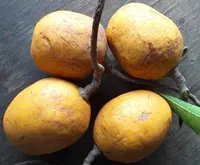
Its orange, sour-sweet fruits ripen mainly in the dry season, providing an important source of vitamins and energy when many other wild fruits are scarce.

Local food and beverage

In several West African countries the pulp is widely eaten fresh, and is also used to prepare juices and fermented drinks, making it a regionally important wild food resource.

Botan icon

Did you know?

The species is often left standing or actively protected when fields are cleared, so it functions as a semi-domesticated agroforestry tree that supplies fruit while sharing space with crops such as millet and sorghum.

FAQs about Senegal saba

This woody climber has a moderate to fast growth rate in warm climates, often adding 50–150 cm of length per year. Growth slows in cool weather, poor soil, or containers with restricted root space.

Grow Healthy Plants with Botan Care

Keep your plants happy and healthy with plant identification, disease detection, and easy care guidance.

Botan plant care app — identify plants on mobile

Explore More Plants