Angled Sea Fig Care (Carpobrotus aequilaterus)

Also known as: Angled Pigface, ice plant, Chilean pigface
Angled Sea Fig

About Angled Sea Fig

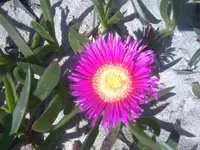
Angled sea fig, Carpobrotus aequilaterus, is a low, spreading succulent commonly used as a coastal groundcover. It forms dense mats of fleshy, triangular leaves and large, daisy-like flowers in pink to purple tones.

This species is native to coastal areas of the Americas and thrives in sandy, well-drained soils, often stabilizing dunes and rocky slopes. Its strong drought and salt tolerance make it relatively easy to establish in suitable climates.

Gardeners who want to care for Angled Sea Fig should note that it prefers full sun, limited watering once established, and soils that do not stay wet for long periods.

Main Plant Requirements

Care Difficulty

Easy Care

Light Preference

Full Sun

Water Requirements

Low Water

Temperature Preference

Tropical / Frost Sensitive

Hardiness Zone

9–11

Soil Texture

Sandy, Loamy, Rocky

Soil pH

Slightly acidic (6.5–7.0), Slightly alkaline (7.0–7.5)

Soil Drainage

Well-drained

Fertilization

Minimal (feed rarely)

Get Personalized Care Plan

Scan your plant to receive care tips personalized for your specific plant

Available on iOS and Android

How to Care for the Angled Sea Fig

This coastal succulent thrives in strong light and is best placed in open, sunny positions.

  • Provide 6–8 hours of direct sun daily; full sun promotes dense growth and abundant flowering in Angled Sea Fig.
  • Plant in exposed sites with morning and midday sun; light afternoon shade is acceptable in very hot inland areas to reduce leaf scorch.
  • In cloudy or coastal fog zones, avoid heavy shade from buildings or trees, which causes stretched, weak growth and fewer flowers.

This species is highly drought tolerant and prefers infrequent, deep watering once established.

  • Allow sandy or rocky soil to dry at least in the top 5–8 cm before watering; in many coastal gardens natural rainfall is often enough for Carpobrotus aequilaterus.
  • During prolonged summer drought, water thoroughly, then let excess drain away completely to prevent root rot in this succulent groundcover.
  • Watch for shriveling, dull leaves as a sign of underwatering, and soft, yellowing, or translucent pads as indicators of overwatering.

This coastal ice plant favors mild, frost‑free climates with warm, dry summers.

  • Optimal growth occurs around 65–80°F (18–27°C); plants continue tolerating up to about 90°F (32°C) if soil is well drained and not waterlogged.
  • It is damaged by hard frost; growth slows below 50°F (10°C) and top growth may die near 30–32°F (-1–0°C), though roots sometimes resprout if frosts are brief.
  • In regions with occasional light frost, place on slopes or near heat-retaining walls to buffer cold, and avoid low-lying frost pockets.

This coastal succulent handles low humidity and rarely needs special moisture adjustments indoors or outdoors.

  • Target 30–50% humidity; typical household or outdoor air in most regions is adequate for Angled Sea Fig.
  • Dry indoor heating can increase leaf shriveling; pair with underwatering checks before blaming low humidity.
  • If tips wrinkle despite moist but not wet soil, move away from strong hot drafts rather than adding humidifiers.

This species needs very fast-draining, sandy soil to prevent root rot and maintain healthy growth.

  • Use a cactus/succulent mix amended with 30–50% coarse sand or fine gravel for Carpobrotus aequilaterus.
  • Aim for pH 6.0–7.5, avoiding strongly acidic or saline mixes that can burn roots or limit nutrient uptake.
  • Ensure water drains through in seconds, not minutes; mix in extra perlite or pumice if water lingers on the surface.
  • Avoid heavy clay, peat-heavy, or compacted soils; they trap moisture, reduce aeration, and quickly lead to root decline.

This trailing succulent is well suited to container growing outdoors in sunny, dry locations.

  • Choose a wide, shallow pot to match its spreading, surface-hugging roots and reduce wasted depth that stays wet.
  • Use a heavier container material or add surface stones to prevent tipping as long stems cascade over edges.
  • Raise the pot slightly on feet or bricks outdoors so drainage holes stay clear and runoff leaves the root zone quickly.

This coastal succulent needs minimal feeding, as it is adapted to lean, sandy soils.

  • For container-grown Carpobrotus aequilaterus, apply a balanced, low-nitrogen slow-release fertilizer (for example 5-10-10) once in early spring.
  • Use at 1/2 the label rate to avoid lush, weak growth and salt buildup in the soil.
  • In ground plantings, a thin top-dressing of compost in spring is usually sufficient.
  • Stop feeding in late summer and do not apply fertilizer in winter dormancy.

Pruning helps keep Carpobrotus aequilaterus dense, safe, and within bounds.

  • Best time is late winter to early spring, before active growth, with light touch-up after flowering if needed.
  • Remove dead, damaged, or rotting stems to limit fungal problems and improve air flow.
  • Shorten overly long or tangled runners to control spread and maintain a low, compact mat.
  • Use clean, sharp hand pruners and avoid cutting into the woody crown where new shoots emerge.

This sprawling succulent is usually transplanted outdoors rather than repotted frequently in containers.

  • Transplant in spring or early summer once soil has warmed and rain is not excessive.
  • Move plants when growth slows, mats become overcrowded, or bare centers appear in the clump.
  • Lift sections with roots attached, keeping the shallow root system intact to limit stress.
  • Replant into very well-drained sandy soil, water once to settle roots, then allow the surface to dry between light waterings.

Carpobrotus aequilaterus is commonly propagated from stem cuttings or rooted runners for rapid cover.

  • Best season is late spring to early summer, when stems are actively growing but not flowering heavily.
  • Take 7–10 cm tip cuttings or small runner sections with visible nodes and remove lower leaves.
  • Allow cut ends to dry for 1–2 days, then place in a sharply drained mix of sand and perlite.
  • Keep in bright, indirect light with slightly moist, not wet, substrate until firm roots form.

This coastal succulent is sensitive to hard frost and benefits from simple winter protection in colder regions.

  • In mild coastal climates, keep soil sharply drained and avoid winter waterlogging.
  • In areas below about 25–30°F, apply a light, gritty mulch around the root zone, not over the crown.
  • Container plants in cold regions should be moved to a bright, frost-free spot with cool, dry conditions.

Care Tips

Control Spreading Edges

Periodically cut back or lift and remove outer runners to stop the mat from smothering neighboring plants and to keep access paths clear.

Encourage Dense Carpets

Pin down long, healthy stems with landscape staples or U-shaped wire so nodes touch the soil, which speeds rooting and fills bare patches more evenly.

Salt-Exposure Management

In coastal sites, hose off foliage with fresh water after strong salt-laden winds to reduce salt burn on leaves while allowing soil to dry again quickly.

Targeted Slug Protection

In mild, moist climates, place rough gravel or coarse sand bands around young plants and use iron phosphate bait if needed, since succulent leaves can attract slugs and snails.

Renew Aging Mats

Every 3–4 years, remove woody, bare-centered sections and replant vigorous outer cuttings in refreshed sandy soil to maintain a healthy, flowering groundcover when growing Angled Sea Fig.

Common Pests and Diseases

Aphids

These insects cluster on young shoots and flower stalks, sucking sap and causing distortion, sticky honeydew, and sooty mold on the fleshy leaves. This pest is often favored by sheltered, nutrient-rich sites along coastal plantings.

Solution

Rinse colonies off with a firm stream of water and remove heavily infested shoots, then apply an insecticidal soap or horticultural oil, ensuring full coverage of stems and leaf joints. Limit high-nitrogen fertilization and encourage natural predators such as lady beetles by avoiding broad-spectrum insecticides nearby.

Mealybugs

These insects appear as small white cottony clusters lodged between fleshy leaves and along stems, causing slow decline, yellowing, and weak growth. This pest can spread quickly in dense groundcover mats or in Angled Sea Fig indoor care situations with poor monitoring.

Solution

Isolate affected plants if possible, wipe visible insects with cotton swabs dipped in 70% isopropyl alcohol, and then treat with repeated applications of insecticidal soap or neem oil, focusing on leaf bases and stem joints. Thin overly dense patches slightly to improve air movement and inspection access, and discard badly infested sections of the mat.

Snails and slugs

These pests chew irregular holes and broad scalloped edges in the thick leaves, often leaving silvery slime trails across the foliage. Symptoms include worst damage on lower, shaded edges of mats and near hard surfaces such as rocks or paths.

Solution

Hand-pick snails and slugs at dusk or early morning and use low-toxicity iron phosphate baits placed outside the main mat. Reduce hiding spots by lifting debris, boards, and dense weeds near the planting and avoid frequent overhead watering that keeps the soil surface wet at night.

Leaf spot

This disease causes small, water-soaked lesions that enlarge into brown or dark patches on the succulent leaves, which may eventually shrivel and drop. Symptoms include scattered spots that expand faster in warm, humid, or poorly ventilated sites, especially where foliage stays damp.

Solution

Remove and discard affected leaves to reduce inoculum, then improve air circulation and reduce overhead irrigation, watering early in the day so foliage dries quickly. In high-value plantings, a labeled copper-based or other appropriate fungicide can be used preventively on healthy foliage when wet weather is expected.

Botrytis blight

This disease produces soft, water-soaked areas on leaves and flowers that become covered with gray fuzzy mold, especially in cool, damp weather. Symptoms include rapid collapse of succulent tissues in crowded or shaded patches where moisture lingers.

Solution

Cut out and discard all infected tissue promptly and thin overly dense areas so light and air reach the mat surface. Avoid overhead watering, increase drainage where possible, and in persistent cases apply a suitable fungicide labeled for Botrytis, targeting periods of prolonged cool, wet conditions.

Interesting Facts

Pacific coastal specialist

This species is native to sandy and rocky coastal habitats along the Pacific, especially in California and Baja California, where it forms dense mats on dunes and sea bluffs close to the high-tide line.

Large magenta blooms

It is known for its showy, bright magenta to purple flowers, typically larger than those of several related Carpobrotus species, which open in full sun and are visited by a range of insect pollinators.

Hybridization with relatives

In areas where it grows alongside related iceplant species, this plant can hybridize, making field identification difficult and influencing the genetic makeup of some coastal Carpobrotus populations.

Botan icon

Did you know?

In parts of its native range, this species has been documented forming extensive, almost continuous coastal mats that stabilize dunes but can also outcompete more delicate native sand-dune plants, leading to its careful monitoring in habitat restoration projects.

FAQs about Angled Sea Fig

This species spreads vigorously through long, trailing stems and rooting nodes, forming dense mats. In mild climates it can quickly cover large areas and may smother nearby vegetation, so regular edging and monitoring are important, especially near natural habitats.

Grow Healthy Plants with Botan Care

Keep your plants happy and healthy with plant identification, disease detection, and easy care guidance.

Botan plant care app — identify plants on mobile

Explore More Plants