Support Heavy Spikes
Install discreet stakes or a low ring support before the catkins elongate so the long, heavy flower spikes stay upright and do not kink or snap at the stem base.

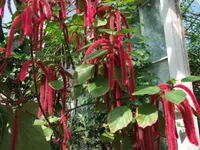
The chenille plant, Acalypha hispida, is a tropical evergreen shrub valued for its long, fuzzy red flower spikes that resemble soft caterpillars. It is often grown as a striking container or hanging basket plant. In nature it comes from warm, humid regions of the South Pacific, where it can reach shrub size with dense foliage and continuous flowering in the right conditions. This species prefers bright, indirect light, consistently moist but not waterlogged soil, and good drainage. With steady warmth and humidity, it grows quickly but needs regular upkeep. Understanding how to care for Chenille plant helps keep it compact, leafy, and flowering over a long season.

Care Difficulty
Moderate Care

Light Preference
Partial Sun

Water Requirements
Keep Soil Moist

Temperature Preference
Tropical / Frost Sensitive

Hardiness Zone
10–11

Soil Texture
Loamy, Sandy, Organic-rich

Soil pH
Acidic (5.5–6.5), Slightly acidic (6.5–7.0)

Soil Drainage
Moist but well-drained

Fertilization
Moderate (every 2–4 weeks)
Scan your plant to receive care tips personalized for your specific plant
Available on iOS and Android
This species prefers bright, indirect light to produce dense foliage and flowers.
This plant prefers evenly moist, well-drained soil without long dry or waterlogged periods.
Consistent warmth is essential for strong growth and flowering.
This species prefers moderately high air moisture for best foliage and flower spike development.
Acalypha hispida grows best in loose, aerated, moisture-retentive but fast-draining soil.
This species is well suited to container growing for patios, balconies, and movable displays.
Acalypha hispida benefits from consistent but moderate feeding to support foliage and flower production.
Pruning Acalypha hispida maintains compact growth and encourages fresh flowering stems.
Container-grown plants benefit from occasional repotting to refresh soil and support vigorous growth.
New Acalypha hispida plants are most commonly produced from softwood stem cuttings.
This tropical shrub is frost-tender and needs structured winter care in temperate climates.

Plant Health Check
Not sure what's wrong with your plant? Check your plant's health inside the app.
The long red tassels are not true single flowers but dense pendulous spikes made of many tiny unisexual flowers arranged along a central stem, structurally similar to catkins seen in some trees.
This species is functionally dioecious in cultivation, with individual plants typically bearing either predominantly male or predominantly female flowers, which is unusual among common ornamental house and patio plants.
In its native range from New Guinea to parts of Malesia, this plant grows as a woody shrub that can reach several meters in height, forming part of humid tropical lowland vegetation rather than behaving as a small pot plant as commonly seen in cultivation.

In some tropical botanic gardens, individual specimens grown in open ground have been recorded producing hundreds of long pendant inflorescences at once, creating a striking display where the foliage is almost completely obscured by the red floral tassels during peak bloom.
Lack of blooms usually comes from low light, insufficient warmth, or nutrient imbalance. Ensure bright, indirect light, stable temperatures above 60°F, and moderate feeding. Light pruning after flowering also encourages new growth and flower spikes.
Keep your plants happy and healthy with plant identification, disease detection, and easy care guidance.