Drooping Juniper Care (Juniperus recurva)

Also known as: Sacred Juniper
Drooping Juniper

About Drooping Juniper

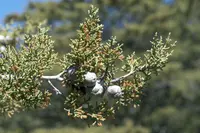
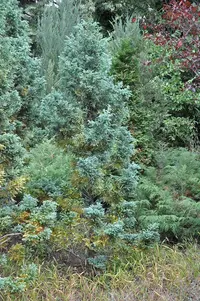
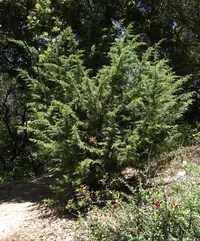
Drooping juniper (Juniperus recurva) is an evergreen conifer known for its soft, pendulous branchlets that create a graceful, weeping outline. It is usually grown as a large shrub or small tree.

This species comes from the Himalayas, where it grows on cool, exposed mountain slopes. Its arching branches and fine, needle-like foliage give it a textured, slightly informal look in gardens.

Juniperus recurva is generally hardy and tolerates cold, wind, and poor soils, but it dislikes waterlogged sites. It prefers full sun, well-drained soil, and moderate moisture.

Gardeners who learn how to care for Drooping Juniper often value it as a long-lived, low-maintenance structure plant in mixed borders or as a specimen.

Main Plant Requirements

Care Difficulty

Moderate Care

Light Preference

Full Sun

Water Requirements

Low Water

Temperature Preference

Cold Hardy

Hardiness Zone

7–9

Soil Texture

Sandy, Loamy, Rocky

Soil pH

Acidic (5.5–6.5), Slightly acidic (6.5–7.0)

Soil Drainage

Well-drained

Fertilization

Minimal (feed rarely)

Get Personalized Care Plan

Scan your plant to receive care tips personalized for your specific plant

Available on iOS and Android

How to Care for the Drooping Juniper

This species prefers bright outdoor conditions with several hours of direct sun for dense, healthy foliage.

  • Provide 4–6 hours of direct sun daily, ideally with morning sun and light afternoon shade, which suits Drooping Juniper in most temperate climates.
  • Allow light to medium partial shade, especially in hotter regions, but avoid deep shade where growth becomes sparse and foliage turns dull or thins out.
  • In summer, protect from intense late-afternoon sun in very hot areas to reduce foliage scorch, while in winter ensure an open site with maximum available light.

This conifer prefers slightly dry, well-aerated soil and is more tolerant of drought than excess moisture.

  • Before watering, let the top 3–5 cm of soil dry; established landscape plants often rely mainly on rainfall once roots are deep and soil drains freely.
  • During the first 1–2 growing seasons, water deeply when foliage begins to lose some turgor or soil feels dry at finger depth, then reduce frequency as roots mature.
  • Avoid waterlogged conditions; persistent wet soil, yellowing foliage from the inside out, or a sour smell around roots suggest overwatering and poor drainage for Juniperus recurva.

This mountain conifer tolerates a wide temperature range but grows best in cool to mild climates.

  • Optimal growth occurs around 50–75°F (10–24°C), with steady, moderate temperatures supporting dense foliage and healthy root development.
  • Mature plants typically handle winter lows near 0°F (−18°C) when hardened off, but young specimens benefit from shelter from harsh wind and sudden freeze–thaw cycles.
  • Heat tolerance extends to about 85–90°F (29–32°C) if soil stays slightly dry and air moves well, but prolonged extreme heat with high humidity can stress foliage and invite pests.

Juniperus recurva handles a wide humidity range and usually does not need special humidity management outdoors.

Juniperus recurva prefers mineral, well-drained soil that stays aerated and never waterlogged.

  • Use sandy or loamy soil with coarse particles that prevent compaction and let water move through quickly.
  • Aim for slightly acidic to neutral pH around 6.0–7.0, avoiding strongly alkaline or salty substrates.
  • Blend roughly 2 parts sandy loam with 1 part sharp sand or grit and 1 part fine bark or composted pine mulch.
  • Avoid heavy clay or peat-heavy mixes that stay wet, reduce root oxygen, and increase root rot risk.

This species can be grown in containers if the pot is set up to protect its deep, spreading root system and arching form.

  • Choose a wide, heavy container to counterbalance the plant’s drooping, wind-catching canopy and reduce tipping risk.
  • Select a deep pot that gives the main root room to extend downward while still leaving space for a fast-draining mix.
  • Use a rigid material such as thick ceramic or concrete when growing Drooping Juniper in exposed sites to improve stability and moisture buffering.

This species is adapted to lean soils, so Drooping Juniper needs only light, occasional feeding in cultivation.

  • Use a balanced slow‑release granular fertilizer (for example 10-10-10) or well‑matured compost in spring.
  • Apply once at the start of the growing season, or at most 1–2 times per year in poor soil.
  • Use about half the label rate for trees and shrubs to avoid overly soft, weak growth.
  • Do not feed in late fall or winter, since dormant plants do not use extra nutrients effectively.

Pruning Juniperus recurva is mainly corrective, aimed at maintaining health and a natural, graceful form.

  • Carry out light pruning in late winter to early spring, before active growth starts.
  • Remove dead, diseased, crossing, or storm‑damaged branches back to healthy wood.
  • Thin crowded interior twigs slightly to improve airflow while keeping the weeping outline.
  • Use clean, sharp bypass pruners or loppers, and avoid cutting back into old bare wood that lacks green foliage.

This juniper is usually grown in the ground, so care focuses on planting and occasional transplanting rather than frequent repotting.

  • Transplant young plants in early spring or early fall, when temperatures are mild and soil is workable.
  • Choose a well‑drained site and plant at the same depth as in the nursery container, spreading the roots gently.
  • For containers, shift to a slightly larger pot only when roots circle the bottom or growth slows noticeably.
  • Water deeply after planting, keep soil evenly moist (not saturated) for the first season, and use mulch to reduce transplant stress.

Juniperus recurva is most often propagated from semi‑hardwood cuttings rather than seed, which is slow and variable.

  • Take semi‑hardwood cuttings in late summer to early autumn from healthy, pencil‑thick shoots.
  • Cut 8–12 cm pieces, remove lower foliage, and optionally dip the base in a rooting hormone powder or gel.
  • Insert cuttings into a sharply drained mix (for example 50% coarse sand or perlite) and keep just slightly moist.
  • Provide bright, indirect light and cool conditions, as rooting may take several months before transplanting on.

This species is generally cold hardy in suitable climates and usually needs minimal winter care once established outdoors.

  • In colder regions, apply a 5–8 cm mulch layer around the root zone, keeping it slightly away from the trunk.
  • Shield young plants from drying winter winds with a breathable barrier such as burlap if exposure is high.
  • For container specimens, move pots to a sheltered, unheated but frost‑free or minimally frozen location to protect roots.

Care Tips

Wind-aware placement

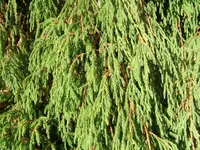
Site the plant where prevailing winds will not constantly whip the long, pendulous shoots, using fences or taller shrubs as windbreaks to reduce mechanical damage and winter desiccation of the foliage.

Single-leader training

In the first 3–5 years, select one strong central stem and lightly stake it if needed so the plant develops a stable framework that can support its naturally drooping branchlets without splitting in storms or snow.

Snow load management

In climates with heavy, wet snow, gently shake or brush accumulated snow off the arching branches during thaws to prevent them from bending permanently or snapping under the weight.

Root-zone protection

Maintain a 5–8 cm layer of inert mulch such as pine bark or gravel over the root zone, keeping it a few cm away from the trunk flare, to stabilize soil temperature and reduce freeze–thaw heaving that can disturb shallow roots.

Targeted disease monitoring

Inspect inner and lower branches several times a year for dieback, cankers, or browning that can signal early fungal issues, and promptly prune out affected wood back to healthy tissue to support long-term Juniperus recurva plant care.

Common Pests and Diseases

Juniper blight

This disease causes browning and death of young shoots, typically starting at the tips and moving inward along the branch. Symptoms include tan to reddish-brown needles that remain attached and sharply demarcated dead sections on otherwise green branches.

Solution

Prune out infected shoots 10–15 cm below the last discolored tissue during dry weather and discard, then improve air circulation by thinning dense growth and avoiding overhead watering. In landscapes with a history of blight, apply a copper or chlorothalonil-based fungicide to new growth in early spring and after prolonged wet periods, following label directions carefully.

Phomopsis tip blight

This disease mainly affects young foliage and shoot tips, which turn dull green, then brown and die back while older interior foliage often stays green. Symptoms include scattered dead tips that can coalesce, giving the plant a scorched, patchy appearance, especially on lower branches.

Solution

Remove and destroy blighted tips, disinfecting pruning tools between cuts, and reduce plant stress by maintaining proper soil moisture and avoiding high-nitrogen fertilization. In sites with recurring issues, protect new spring growth with a registered fungicide labeled for Phomopsis on junipers, applied at bud break and repeated as recommended during wet weather.

Cedar-apple rust

This disease produces orange-brown galls on branches that, in wet spring weather, develop bright orange, gelatinous spore horns. Symptoms include swelling on twigs, dieback near heavily galled areas, and an important disease cycle that also affects nearby apple and crabapple trees.

Solution

Prune out and dispose of galls during dry weather, cutting several cm below the gall, and increase spacing and airflow around plants. Where apples or crabapples are present and rust has been severe, consider using a labeled systemic fungicide on the juniper and/or the apple hosts in early spring, and avoid planting highly susceptible apple cultivars near junipers.

Spider mites

These pests feed on needles, causing a dull, gray-green discoloration, fine speckling, and in heavier infestations, premature needle drop. Symptoms include fine webbing in the inner branches and more pronounced damage during hot, dry weather or on plants subjected to dust and drought stress.

Solution

Spray foliage thoroughly with a strong jet of water every few days to dislodge mites, focusing on inner branches, and reduce plant stress through consistent, moderate watering. If populations remain high, use a horticultural oil or insecticidal soap labeled for mites, applied in cool parts of the day and repeated as directed, and avoid broad-spectrum insecticides that kill natural mite predators.

Juniper scale

These insects appear as tiny, white or grayish, shell-like bumps on needles and stems and can cause yellowing, thinning foliage, and overall decline. This pest sucks plant sap, weakening the plant and predisposing it to other problems if populations are high.

Solution

Prune and discard heavily infested branches and gently rub or brush accessible scales from small plants to reduce numbers. For larger or persistent infestations, target the crawler stage with horticultural oil or insecticidal soap in late spring, based on local timing, and improve plant vigor with proper watering and full-sun exposure to support long-term Juniperus recurva care.

Interesting Facts

Natural Himalayan drapery

This species develops long, loosely hanging branchlets that create a distinct trailing curtain effect, especially on older trees in its native Himalayan slopes.

High-altitude specialist

It is naturally found on steep mountain slopes of the eastern Himalayas, often between roughly 2,400–3,600 m, where it tolerates cold, wind, and thin, rocky soils.

Genetic variation patterns

Studies on its populations across Nepal and surrounding regions have shown clear genetic structuring along elevation and geography, indicating limited seed dispersal and adaptation to local mountain conditions.

Botan icon

Did you know?

In traditional Himalayan communities, the strongly aromatic wood and foliage of this species have long been burned as incense in religious and cultural rituals, valued for their dense, resinous smoke.

FAQs about Drooping Juniper

Growth is generally slow to moderate. Young plants may add 10–20 cm per year under good conditions, sometimes a bit more in ideal sites. Expect a long-term landscape plant rather than rapid screening.

Grow Healthy Plants with Botan Care

Keep your plants happy and healthy with plant identification, disease detection, and easy care guidance.

Botan plant care app — identify plants on mobile

Explore More Plants