peach heath Care (Lissanthe strigosa)

peach heath

About peach heath

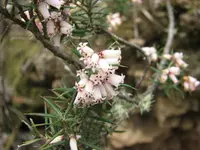
Peach heath, Lissanthe strigosa, is a small, fine-textured shrub in the heath family, valued for its delicate foliage and dainty bell-shaped flowers. It usually forms a compact, bushy shape and can show soft pink or white blooms that give a light, airy look.

This species is native to eastern Australia, where it grows in heathlands and open forests, often on sandy or well-drained, acidic soils. It can be moderately challenging in cultivation because it dislikes waterlogged conditions and prefers stable, low-nutrient substrates.

Gardeners who learn how to care for peach heath usually focus on providing bright light, cool to mild temperatures, and consistent but careful moisture, especially in containers or specialized heath gardens.

Main Plant Requirements

Care Difficulty

Hard Care

Light Preference

Partial Shade

Water Requirements

Moderate Water

Temperature Preference

Warm Climate

Hardiness Zone

9–11

Soil Texture

Sandy, Loamy, Organic-rich

Soil pH

Strongly acidic (4.5–5.5), Acidic (5.5–6.5)

Soil Drainage

Well-drained

Fertilization

Minimal (feed rarely)

Get Personalized Care Plan

Scan your plant to receive care tips personalized for your specific plant

Available on iOS and Android

How to Care for the peach heath

This Australian heath prefers bright conditions with gentle sun exposure and some protection from extremes.

  • Provide 4–6 hours of direct morning sun with light dappled or filtered light later in the day, especially in warmer climates.
  • Allow light afternoon sun only in cooler regions; in hot areas, protect peach heath from harsh midafternoon sun to prevent leaf scorch and drying of flower buds.
  • In partial shade, aim for bright, open shade; if stems stretch or flowering declines, increase light gradually over 1–2 weeks.

This species prefers consistently lightly moist but never waterlogged soil, with short dry periods between waterings.

  • Water when the top 2–4 cm of soil feels dry, then soak the root zone thoroughly so excess drains away, avoiding standing water around the base.
  • Use a sharply draining, sandy or loamy soil so excess moisture moves away quickly, which reduces root rot and fungal problems in Lissanthe strigosa.
  • In cooler months reduce frequency once growth slows; watch for limp, wrinkling foliage as a sign of underwatering and yellowing, soft stems as a sign of excess moisture.

This heath prefers mild, temperate conditions with protection from hard frost and extreme heat.

  • Aim for 60–77°F (16–25°C) during active growth, which supports steady foliage and flower development without stress.
  • Tolerates short dips to about 28–30°F (-2 to -1°C), but repeated frosts can damage young shoots, so use frost cloth or site the plant in a sheltered position.
  • In hot summers above 86°F (30°C), provide afternoon shade and maintain soil moisture; hot, dry winds can scorch foliage even if air temperatures stay within range.

This heath prefers moderate, slightly moist air but adapts to typical household humidity if roots are not waterlogged.

  • Aim for 40–60% humidity to reduce foliage tip browning and stress.
  • It tolerates short spells of drier air, but prolonged levels below 30% can cause leaf edge crisping and slowed growth.
  • Increase humidity with a nearby open tray of water and pebbles or by grouping plants, rather than misting peach heath directly.

This species prefers sharply drained, sandy soil that stays slightly moist yet never waterlogged.

  • Use a sandy or sandy-loam mix with 40–60% coarse sand plus fine bark and a small amount of compost for light organic content.
  • Ensure rapid drainage; soil should darken when watered but return to a loose, crumbly texture within 1–2 days.
  • Keep pH slightly acidic, around 5.0–6.0, avoiding lime or alkaline amendments that can limit nutrient uptake.
  • Improve aeration and prevent compaction by adding fine pine bark or horticultural grit rather than heavy clay-based materials.

This shrub can be grown in containers if the pot and mix favor rapid drainage and stable root conditions.

  • Choose a deep, narrow pot that allows for a fibrous root system while limiting excess surface area that dries too fast.
  • Select a heavier material such as ceramic to prevent wind tipping, especially where above-ground growth becomes woody.
  • Raise the container slightly on pot feet or bricks so drainage holes clear quickly and no water pools under the base.

This Australian heath shrub prefers low-nutrient conditions, so peach heath indoor care focuses on very light feeding.

  • Use a low-phosphorus, balanced NPK liquid fertilizer at 1/4 strength for container plants only.
  • Feed sparingly in spring–early summer, about every 6–8 weeks during active growth.
  • Avoid fertilizing in fall and winter, when growth slows or stops.
  • In the ground, rely mainly on acidic compost or leaf litter rather than synthetic fertilizers.

Pruning Lissanthe strigosa is light and mainly corrective, aimed at maintaining a compact, healthy shrub.

  • Time any pruning for late winter to early spring before strong new growth begins.
  • Remove dead, diseased, or storm-damaged stems first using clean, sharp hand pruners.
  • Thin lightly crowded interior shoots to improve air flow and maintain a natural shape.
  • Tip back overly long branches just above a leaf node to encourage bushier growth and flowering.

This species is more often grown in the ground, so focus on careful transplanting rather than frequent repotting.

  • Transplant in late winter or early spring, avoiding hot, dry periods to limit stress.
  • Look for slow growth, roots circling the pot, or water running straight through as signs a container plant needs a larger pot.
  • Move only every 2–3 years, stepping up 1 pot size with an acidic, well-draining mix.
  • Water deeply before and after moving, keep roots shaded, and trim only damaged roots to reduce transplant shock.

Propagation of Lissanthe strigosa is possible but somewhat specialized, usually by semi-hardwood cuttings or seed.

  • Take semi-hardwood cuttings in late summer, 7–10 cm long, from non-flowering shoots.
  • Use a free-draining, acidic mix, apply rooting hormone, and keep humidity high with bright, indirect light.
  • For seeds, sow fresh in autumn, lightly covered, in an acidic mix; germination can be slow and uneven.
  • Maintain steady moisture, mild temperatures, and avoid disturbing young seedlings or rooting cuttings.

This shrub is moderately frost tolerant in its suitable climate range and usually needs only basic winter care outdoors.

  • In regions with light frosts, add a 5–7 cm mulch layer around the root zone, keeping mulch off the stems.
  • Avoid waterlogged soil in winter by ensuring excellent drainage, especially on heavy sites.
  • Move container plants under cover or into a cool, bright area if extended freezes below local norms are expected.

Care Tips

Protect from lime

If your tap water is hard or alkaline, collect rainwater or use filtered water to avoid lime buildup, which can gradually weaken roots and foliage in this calcifuge shrub.

Mulch with bush litter

Apply a thin, open mulch of fine bark, leaf litter, or native bush mulch around the root zone to keep roots cool, mimic its natural heathland habitat, and reduce weed competition without smothering the stems.

Use low‑phosphorus products

Choose fertilizers and soil amendments labeled safe for Australian natives or low in phosphorus, since excess phosphorus can cause subtle nutrient imbalances and tip burn over time.

Encourage compact shape

Lightly tip‑prune new growth after flowering to maintain a dense, bushy plant and increase the number of flowering shoots the following season, which is useful when growing peach heath in a small garden space or container.

Plan for fire sensitivity

In fire‑prone areas, site plants in sheltered pockets away from direct flame paths and replace aging individuals periodically, as this species is not strongly fire‑resprouting and populations in gardens can decline after severe burn events.

Common Pests and Diseases

Scale insects

This pest feeds on stems and leaves, drawing out sap and causing yellowing, leaf drop, and general decline, especially in stressed plants in poor sandy soils. Symptoms include small, rounded, shell-like bumps along stems and at leaf bases.

Solution

Prune out heavily infested stems, then wipe remaining scale with a cotton pad dipped in isopropyl alcohol or spray with a light horticultural oil, ensuring thorough coverage of stems and leaf axils. Improve plant vigor with correct watering and low-phosphorus fertiliser, as a healthy plant is less attractive to scale and better able to tolerate minor infestations.

Myrtle rust

This disease produces yellow powdery spots on young leaves, shoots, and sometimes flowers, which can distort new growth and cause dieback. Symptoms include bright yellow to orange pustules on the undersides of leaves that easily rub off on fingers or clothing.

Solution

Promptly remove and bag affected shoots without shaking spores loose, then dispose of them in household rubbish, not compost. Improve airflow around the shrub, avoid overhead watering, and in high-risk areas follow local biosecurity advice, which may include using registered fungicides labeled for myrtle rust on native Myrtaceae and nearby susceptible species to reduce inoculum pressure around Lissanthe plantings.

Psyllids

These insects suck sap from young foliage, leading to cupping, distortion, and pale or speckled leaves on new growth. This pest often leaves small, waxy or sugary deposits on leaves and stems.

Solution

Prune and dispose of badly deformed shoot tips and encourage natural predators by maintaining plant diversity nearby. For persistent infestations on ornamental plants, use a gentle insecticidal soap or horticultural oil sprayed on new growth in the early morning, repeating after 7–10 days if needed, and avoid applying during hot, dry, or very sunny periods to prevent leaf scorch.

Leaf spot

This disease causes small dark or tan spots on older leaves, sometimes with a purple or darker edge, which can merge into larger blotches under extended wet or humid conditions. Symptoms include premature yellowing and shedding of affected foliage from the lower parts of the shrub.

Solution

Collect and discard fallen leaves, and prune dense inner branches to increase light penetration and airflow through the plant canopy. Avoid wetting foliage when watering, and if leaf spots are recurring in ornamentally important plants, a copper-based fungicide applied according to label directions at the start of wet periods can help reduce new infections as part of broader Lissanthe strigosa care instructions.

Interesting Facts

Eastern Australian heath shrub

This small, wiry shrub is naturally restricted to eastern Australia, where it grows in nutrient-poor sandy or rocky soils within heathland and open forest, often alongside other members of the Ericaceae family.

Hairy leaf adaptation

Its small, narrow leaves have stiff hairs (strigose hairs) that reduce water loss and may help protect tissues from intense sun and drying winds in exposed heath environments.

Specialized pollinator links

The urn-shaped white to pinkish flowers produce nectar accessible to small insects, and in some areas also attract small nectar-feeding birds, fitting a pollination system typical of many Australian heaths.

Botan icon

Did you know?

The small, fleshy fruits of this species are eaten by birds, which then disperse the seeds across heath and woodland habitats, helping maintain plant populations in fragmented Australian landscapes.

FAQs about peach heath

Poor flowering usually comes from insufficient light, overfertilizing with high-nitrogen products, or pruning at the wrong time that removes flower buds. Mild drought stress and cool conditions before the season can also influence bud formation and bloom quality.

Grow Healthy Plants with Botan Care

Keep your plants happy and healthy with plant identification, disease detection, and easy care guidance.

Botan plant care app — identify plants on mobile

Explore More Plants