Support Long Canes
Install sturdy posts or tensioned wires early and tie in new canes at a slight angle to keep long stems off the ground and reduce wind damage and stem breakage as the shrub matures.


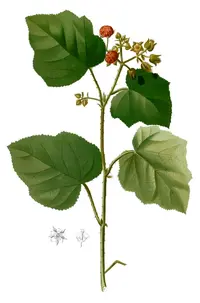
Dog rose, Rosa canina, is a vigorous deciduous shrub rose native to Europe, western Asia, and North Africa, now naturalized in many temperate regions. It typically forms arching, thorny stems with matte green leaflets and pale pink to white single flowers, followed by bright red hips. In the wild it often grows in hedgerows, woodland edges, and rough grassland, where it tolerates wind and poor soils. The plant is generally hardy and long-lived, but its strong growth and thorns can make it harder to manage in small spaces. It prefers sun to light shade and moderately moist, well-drained soil, which helps when learning how to care for dog rose.

Care Difficulty
Easy Care

Light Preference
Full Sun

Water Requirements
Moderate Water

Temperature Preference
Cold Hardy

Hardiness Zone
4–9

Soil Texture
Sandy, Loamy, Clay

Soil pH
Acidic (5.5–6.5), Slightly acidic (6.5–7.0)

Soil Drainage
Well-drained

Fertilization
Minimal (feed rarely)
Scan your plant to receive care tips personalized for your specific plant
Available on iOS and Android
Rosa canina performs best in open, sunny positions that support strong flowering and healthy growth.
Rosa canina prefers evenly moist, well-drained soil rather than constant wetness or complete drying.
Rosa canina is a hardy shrub rose that tolerates a wide temperature range once established outdoors.
Humidity is rarely critical for dog rose, which adapts well to typical outdoor air conditions.
Rosa canina prefers moderately fertile, well-structured mineral soils with reliable drainage.
This species can be grown in containers, but it needs careful management due to its eventual size and root vigor.
Rosa canina usually thrives in average garden soil and needs only modest feeding to support healthy growth and flowering.
Rosa canina responds well to light, structured pruning that maintains an open, healthy framework.
Dog rose is most often grown in the ground, so focus on careful transplanting rather than frequent repotting.
Rosa canina is commonly propagated from seeds, hardwood cuttings, or suckers taken from the base of mature plants.
Rosa canina is cold hardy in most temperate climates and usually needs only minimal winter care outdoors.

Plant Health Check
Not sure what's wrong with your plant? Check your plant's health inside the app.
The orange-red hips of this species are among the richest natural plant sources of vitamin C in Europe and have been widely used in traditional syrups, teas, and food products to supplement diets, especially in winter.
It serves as an alternate host for the rust fungus Phragmidium mucronatum, a highly specialized parasite that infects its leaves and stems and plays a role in the ecology of rose rust diseases.
This wild rose can hybridize with garden roses, and breeders have used its hardiness, disease resistance, and cold tolerance as genetic resources when developing modern rose cultivars.

During World War II in the United Kingdom, organized national campaigns encouraged the public to collect dog rose hips, which were processed into vitamin C–rich rose-hip syrup to help replace imported citrus fruits that were scarce due to wartime shipping restrictions.
Lack of flowers usually comes from insufficient sun, heavy pruning at the wrong time, or nutrient imbalance. Flower buds form on older wood, so avoid hard pruning in late winter and early spring. Phosphorus supports flowering.
Keep your plants happy and healthy with plant identification, disease detection, and easy care guidance.