Pruinose Bramble Care (Rubus pruinosus)

Pruinose Bramble

About Pruinose Bramble

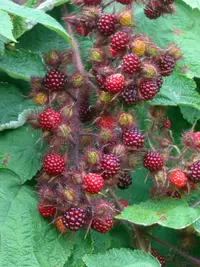
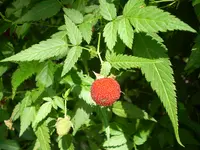
Rubus pruinosus, commonly called pruinose bramble, is a deciduous shrub in the blackberry group. It forms arching, thorny canes with a pale, bluish bloom on young stems and fruits.

This bramble typically grows in hedgerows, woodland edges, and scrubby habitats in parts of Europe. It produces white to pale pink flowers followed by small, dark berries.

The plant spreads by vigorous shoots and can form dense thickets, so it suits wilder gardens more than tight, formal beds. Once established, it is quite resilient.

To care for Pruinose Bramble, provide sun to light shade, moderately moist but well-drained soil, and enough space for its canes to develop without crowding nearby plants.

Main Plant Requirements

Care Difficulty

Moderate Care

Light Preference

Full Sun

Water Requirements

Moderate Water

Temperature Preference

Cool Climate

Hardiness Zone

6–9

Soil Texture

Loamy, Sandy, Organic-rich

Soil pH

Acidic (5.5–6.5), Slightly acidic (6.5–7.0)

Soil Drainage

Moist but well-drained

Fertilization

Minimal (feed rarely)

Get Personalized Care Plan

Scan your plant to receive care tips personalized for your specific plant

Available on iOS and Android

How to Care for the Pruinose Bramble

This shrub prefers full sun but tolerates light shade in warmer regions.

  • Provide 6–8 hours of direct sun daily, with morning sun and light afternoon shade ideal in hotter zones to reduce leaf scorch.
  • Allow partial shade (around 4–5 hours of direct sun) in regions with very intense summer light; yields may drop slightly but foliage remains healthy.
  • Avoid deep shade, which causes weak, elongated canes and poor fruiting; in winter, maximize unobstructed light to support Pruinose Bramble bud formation.

This bramble prefers consistently moist, well-drained soil rather than extremes of wet or dry.

  • Water when the top 3–5 cm of soil feels dry, aiming for moist soil that does not stay soggy after 24 hours; adjust after heavy rainfall.
  • During active growth and fruiting, check soil 2–3 times per week in dry weather; reduce frequency in cool, rainy periods and after leaf fall.
  • Watch for yellowing, soft canes or a sour smell as overwatering signs, and drooping leaves with crisp edges as underwatering signs in Rubus pruinosus plantings.

This species is a cool- to temperate-climate bramble with good cold tolerance once established.

  • Support strongest growth at 60–75°F (16–24°C) in spring and early summer, when canes and roots develop most actively.
  • Mature plants typically tolerate winter lows to about 0–10°F (-18 to -12°C) with proper mulching; young plants benefit from protection below 20°F (-7°C).
  • In hot spells above 90°F (32°C), maintain soil moisture and light mulch to protect roots, as extended extreme heat can stress canes and reduce fruit quality.

This species tolerates a wide humidity range and usually does not need special humidity management outdoors or in unheated spaces.

Rubus pruinosus grows best in loose, moisture-retentive but well-drained soil that allows air to reach the roots.

  • Use a loamy structure with plenty of organic matter, such as garden loam mixed with compost or well-rotted manure.
  • Aim for slightly acidic to neutral pH around 6.0–7.0, avoiding strongly alkaline or saline conditions that reduce nutrient uptake.
  • Improve drainage and aeration by incorporating coarse sand or fine gravel in heavier clay-based soils before planting.
  • Avoid compacted, waterlogged, or very shallow soils, which restrict root development and increase the risk of root rot.

This bramble can be grown in containers if the pot is large and stable enough for its vigorous, spreading root system.

  • Choose a deep, heavy container at least 40–50 cm wide so the spreading roots do not crowd and the canes remain stable in wind.
  • Use a slightly raised pot base or pot feet to keep drainage holes clear and prevent water from pooling under the container.
  • Position the container where trailing or climbing canes can be tied to a support, preventing the plant from pulling or tipping the pot over.

This bramble responds to moderate feeding but can grow in lean soils if established in the ground.

  • Apply a balanced NPK granular or slow-release fertilizer in early spring as new growth starts.
  • Supplement with a light top-dressing of compost once in spring to improve soil structure and microbial activity.
  • Feed container-grown Pruinose Bramble every 4–6 weeks in the growing season at half-strength liquid fertilizer.
  • Stop fertilizing in late summer and avoid feeding in winter dormancy to prevent soft, frost-prone growth.

Pruning helps maintain healthy structure and productive canes in Rubus pruinosus hedges or thickets.

  • Carry out main pruning in late winter to very early spring before buds break.
  • Remove dead, diseased, or crossing canes first, then thin overcrowded stems at ground level.
  • Cut out older, exhausted fruiting canes after harvest to favor strong new replacement shoots.
  • Use sharp, clean bypass pruners and make cuts just above outward-facing buds to guide growth.

This species is usually grown in the ground, so focus on careful transplanting rather than frequent repotting.

  • Transplant in early spring or fall when temperatures are mild and soil is moist but not waterlogged.
  • Look for signs such as poor vigor, root circling in containers, or crowding in a thicket before moving plants.
  • Lift with a generous root ball, keep roots shaded and moist, and replant at the same depth in well-drained soil.
  • Water thoroughly after transplanting, then keep soil evenly moist for several weeks to reduce root stress.

Rubus pruinosus is commonly propagated vegetatively to maintain desired traits and vigorous growth.

  • Use tip layering in late summer by pegging flexible cane tips into moist soil until rooted, then sever.
  • Take semi-ripe stem cuttings in mid to late summer and root in a free-draining mix under high humidity.
  • Divide young suckering plants in early spring, ensuring each piece has strong shoots and a good root portion.
  • Sow fresh seed in autumn outdoors or after cold stratification, since dormancy-breaking chill improves germination.

Established plants are generally cold hardy and need little winter intervention in most temperate climates.

  • Tolerates typical frost once mature, but young plants benefit from a 5–8 cm mulch over the root zone.
  • Use straw, leaf mold, or compost as mulch, keeping it slightly away from the canes to limit rot risk.
  • In very cold areas or exposed sites, tie canes loosely and use windbreak fabric to limit desiccation.
  • Move container-grown plants to a sheltered, unheated spot and keep soil just barely moist through winter.

Care Tips

Install sturdy support

Set strong posts and tensioned wires (2–3 levels at 45–60 cm intervals) before planting so new canes can be tied in loosely as they grow, reducing wind damage and making harvest and disease inspection easier.

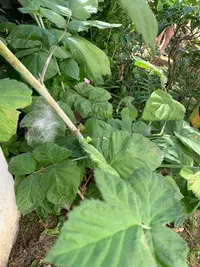
Separate cane generations

After the first year, keep 1-year-old fruiting canes on one side of the support and young replacement canes on the other, which simplifies pruning and improves air movement through the row.

Summer tip-pruning

When vigorous new canes reach about 1.5–1.8 m, pinch or cut out just the soft tip to encourage sturdy lateral branches and a more manageable, higher-yielding framework.

Mulch for clean fruit

Maintain a 5–8 cm layer of clean organic mulch under the row to suppress weeds, keep fruits cleaner from soil splash, and reduce the spread of soil-borne diseases while growing Pruinose Bramble.

Routine cane hygiene

Inspect canes every few weeks during the growing season, removing and discarding any dead, cracked, or heavily pest-damaged cane sections immediately to limit disease spread and keep the planting productive.

Common Pests and Diseases

Raspberry beetle

This pest lays eggs on flower buds and young fruits; larvae tunnel into developing berries, causing dry, brown, crumbly drupelets and poor fruit quality.

Solution

Monitor flowering canes closely and remove or destroy infested fruits and spent flower clusters. Encourage natural predators, shake canes over a sheet to dislodge adults, and if needed use a targeted fruit and cane-safe insecticide timed just before and during flowering, following local guidelines for Rubus pruinosus care.

Raspberry cane borer

This insect causes wilting and dieback of individual tips; symptoms include characteristic double row of girdling punctures on young canes where larvae later tunnel downward.

Solution

Cut and remove wilted cane tips 5–10 cm below the lowest ring of punctures as soon as they appear, then destroy the pruned material. Maintain good sanitation by removing old fruited canes after harvest and keep plantings slightly open to make inspection and pruning easier.

Anthracnose

This disease produces small sunken spots on canes and leaves that enlarge into gray centers with purple margins, leading to cracking, weakened canes, and reduced yield.

Solution

Prune out and discard infected canes in late winter, and thin plantings to improve airflow and faster drying after rain. Avoid overhead irrigation, irrigate at soil level, and in regions with a history of anthracnose use a labeled copper or other fungicide preventively at bud break and after pruning as part of structured Rubus pruinosus plant care.

Spur blight

This disease causes brown to purplish lesions around leaf bases and buds on primocanes, leading to weakened buds, shortened fruiting laterals, and reduced productivity.

Solution

Remove and destroy heavily infected canes during dormant-season pruning and avoid excess nitrogen that drives dense, soft growth. Promote air circulation by proper spacing, keep foliage as dry as possible, and in high-pressure areas consider a registered caneberry fungicide applied from late spring through early summer when new canes are elongating.

Orange rust

This systemic rust disease causes early-season yellowing of leaves followed by bright orange powdery pustules on the undersides and stunted, unproductive canes.

Solution

As soon as symptoms appear, dig out and destroy entire infected plants including roots, since they remain systemically infected. Plant only certified disease-free stock, remove nearby wild Rubus hosts where practical, and maintain good spacing and airflow to reduce humidity that favors spore spread when growing Pruinose Bramble.

Interesting Facts

Frosted cane appearance

The canes and some fruiting parts of this bramble often show a bluish-white pruinose coating, a waxy layer that gives a frosted look and slightly reduces water loss from exposed tissues.

Patchy European distribution

This species has a scattered, local distribution in parts of western and central Europe, where it tends to occur in specific lowland habitats rather than being widespread like many other brambles.

Hybridisation challenges

Like several Rubus species, it belongs to a taxonomically complex group where frequent natural hybridisation makes accurate identification difficult for non-specialists and has led to ongoing revisions in regional floras.

FAQs about Pruinose Bramble

This species spreads by arching canes and root suckers, so it can form dense thickets over time. Regular pruning, removal of unwanted suckers, and installing root barriers help confine it to the desired area.

Grow Healthy Plants with Botan Care

Keep your plants happy and healthy with plant identification, disease detection, and easy care guidance.

Botan plant care app — identify plants on mobile

Explore More Plants