West Indian raspberry Care (Rubus rosifolius)

Also known as: roseleaf bramble, roseleaf raspberry, Mauritius Raspberry
West Indian raspberry

About West Indian raspberry

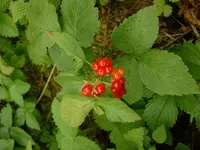
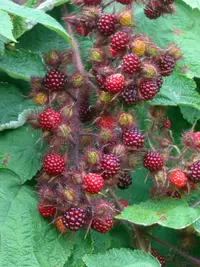
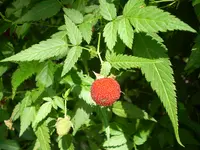
West Indian raspberry, Rubus rosifolius, is a shrubby bramble that forms dense, arching canes with bright green leaves and small white flowers. It produces red, glossy berries that look similar to traditional raspberries but are usually milder in flavor.

This species is native to tropical and subtropical regions, including parts of the Caribbean, Central and South America, and some Pacific islands. It often naturalizes in disturbed areas and along forest edges.

The plant grows quickly and can spread, which makes it easy to establish but sometimes hard to contain. It prefers sun to light shade, moderate moisture, and well-drained soil, which helps guide how to care for West Indian raspberry.

Main Plant Requirements

Care Difficulty

Moderate Care

Light Preference

Partial Sun

Water Requirements

Regular Water

Temperature Preference

Warm Climate

Hardiness Zone

9–11

Soil Texture

Loamy, Sandy, Organic-rich

Soil pH

Acidic (5.5–6.5), Slightly acidic (6.5–7.0)

Soil Drainage

Moist but well-drained

Fertilization

Minimal (feed rarely)

Get Personalized Care Plan

Scan your plant to receive care tips personalized for your specific plant

Available on iOS and Android

How to Care for the West Indian raspberry

This shrub favors bright conditions with some protection from harsh midday sun.

  • Provide 4–6 hours of direct morning sun plus bright, filtered light in the afternoon for strong flowering and fruiting in West Indian raspberry.
  • Allow light partial shade, especially in hotter climates, but avoid planting in spots with less than 3 hours of direct sun to prevent weak, leggy growth.
  • In summer, shield from intense afternoon sun in hot zones to reduce leaf scorch, while in cooler seasons ensure more open exposure to maximize light.

This species prefers steady soil moisture without prolonged saturation.

  • Water when the top 3–5 cm of soil feels dry, aiming for consistently moist but not soggy soil around the root zone of Rubus rosifolius.
  • Use well-drained soil or raised beds to prevent standing water; yellowing, soft leaves and sour-smelling soil indicate overwatering and possible root problems.
  • Increase watering during hot, dry periods and while fruit is forming, then reduce in cool or rainy seasons, watching for drooping leaves or dry, crisp edges as signs of underwatering.

This shrub grows best in mild, frost-free to light-frost climates.

  • Aim for active growth in 65–80°F (18–27°C), where shoots extend steadily and fruit quality remains high.
  • Tolerates brief drops to about 28–30°F (-2 to -1°C) once established, but young plants and flowers are easily damaged by hard frost or sudden cold snaps.
  • Handles summer warmth up to about 90–95°F (32–35°C) if soil moisture is stable and roots are mulched; above this, expect stress, leaf scorch, and reduced fruit set.

This species tolerates a fairly wide humidity range, so moisture at the roots is more critical than air humidity.

  • Target 40–60% air humidity, which suits West Indian raspberry in most temperate homes and outdoor settings.
  • Dry indoor air can increase transpiration, so monitor soil moisture more closely and water before the root zone fully dries.
  • Wilting, crisp leaf edges, and rapid substrate drying signal low ambient humidity; group plants or use a humidity tray if grown in a sheltered spot.

Rubus rosifolius prefers a loose, moist, well-drained substrate with high organic content.

  • Use a loamy mix with 40–60% compost or well-rotted manure, blended with garden soil and coarse material for structure.
  • Ensure fast drainage by adding coarse sand or fine bark and some perlite so water moves through quickly but roots stay evenly moist.
  • Aim for slightly acidic to neutral pH around 5.5–7.0, avoiding strongly alkaline substrates that can limit nutrient uptake.
  • Avoid heavy, compacted clay, waterlogged sites, or very sandy mixes without organic matter, which lead to root stress and poor growth.

This species is suitable for container growing when the pot is sized and stabilized for its spreading, shrubby habit.

  • Choose a deep, wide container to allow lateral root spread and support multiple canes without crowding the root zone.
  • Select a heavy material such as ceramic or thick plastic to reduce tipping risk as canes lengthen and fruit add weight.
  • Raise the pot slightly on feet or bricks so drainage holes stay clear and runoff moves away quickly after heavy watering or rain.

Rubus rosifolius benefits from modest feeding to support flowering and fruiting without excessive leafy growth.

  • Use a balanced granular or slow-release fertilizer (around 10-10-10) in early spring as new growth starts.
  • Apply compost or well-rotted manure as a 2–5 cm mulch to add nutrients and improve soil structure.
  • Feed once more in midsummer if growth or fruiting declines, using fertilizer at 1/2 label strength.
  • Stop fertilizing in late summer to allow shoots to harden before winter and avoid soft, frost-prone growth.

Pruning Rubus rosifolius maintains plant health, controls spread, and supports reliable fruiting.

  • Prune in late winter or very early spring before strong new growth starts.
  • Remove dead, diseased, or damaged canes first, then thin out the weakest and most crowded stems.
  • Cut out spent fruited canes at ground level to encourage new, productive shoots.
  • Use clean, sharp bypass pruners and make cuts just above a healthy bud to limit tissue damage.

This shrub is usually grown in the ground, so focus on careful transplanting rather than frequent repotting.

  • Transplant in early spring or fall, when temperatures are mild and soil is workable.
  • Move plants when growth slows, canes crowd tightly, or roots circle a container and emerge from drainage holes.
  • Water deeply the day before moving, then dig a wide root ball and replant at the same depth in enriched, well-drained soil.
  • After transplanting, water thoroughly, shade for a few days if sun is intense, and keep soil evenly moist to limit root stress.

Rubus rosifolius is commonly propagated to expand productive patches or replace aging plants.

  • Use tip layering in spring or early summer by pegging young, flexible cane tips into moist soil until rooted.
  • Take semi-ripe stem cuttings in late spring–summer, root them in a free-draining mix, and keep humidity high.
  • Divide established clumps in early spring, ensuring each division has healthy canes and a solid root mass.
  • Sow fresh seed in trays outdoors for natural cold stratification, then transplant seedlings once sturdy.

This species is moderately frost sensitive and benefits from simple winter protection in colder regions where caring for West Indian raspberry outdoors is marginal.

  • In areas below about 25°F, add a 5–8 cm mulch layer over the root zone in late fall to buffer soil temperature.
  • Avoid heavy pruning late in the season so canes have time to mature before freezing conditions.
  • For container plants in cold climates, move pots into an unheated garage, shed, or sheltered porch to avoid hard frost.

Care Tips

Install sturdy trellis

Provide a strong wire or timber trellis and loosely tie new canes as they grow to keep stems off the ground, improve air movement, and make harvesting easier.

Renewal cane thinning

At the end of the fruiting season, remove all spent, dark brown canes at ground level and leave only the healthiest new canes spaced 10–15 cm apart to reduce disease pressure and encourage strong future crops.

Mulch for cane protection

Apply a 5–8 cm layer of organic mulch around the root zone, keeping it a few cm away from the stems, to protect shallow roots, stabilize soil moisture, and keep fruits cleaner by reducing splash-back from rain or irrigation.

Targeted pest scouting

Inspect flowers and developing fruit clusters weekly for sap-sucking insects and cane borers, and prune out any wilted or hollow stems promptly to stop damage from spreading when caring for West Indian raspberry.

Fruit hygiene management

Harvest berries promptly when ripe and remove any damaged or moldy fruit from the plant and soil surface to discourage fruit rot fungi and pests that are attracted to fermenting berries.

Common Pests and Diseases

Spider mites

This pest often attacks plants in hot, dry conditions and can cause rasping damage on leaves, leading to bronzing and fine webbing on the undersides. Symptoms include reduced vigor and a dull, stippled appearance on foliage.

Solution

Rinse foliage thoroughly with a strong, lukewarm water spray, focusing on leaf undersides, and repeat every few days until activity drops. For heavier infestations, use insecticidal soap or a horticultural oil labeled for food crops, and increase ambient humidity and air movement to make conditions less favorable for mites.

Raspberry leaf spot

This disease causes small, pale spots on the upper leaf surface that enlarge, turn tan or gray in the center, and may lead to early leaf drop. Symptoms include thinning foliage and reduced plant vigor, especially in humid, poorly ventilated plantings.

Solution

Remove and discard infected leaves and old canes at the end of the season to reduce spores. Improve airflow by thinning crowded stems, avoid overhead watering, and if the disease recurs, apply a labeled copper or other fungicide at early leaf emergence following local extension guidance for Rubus rosifolius care.

Anthracnose cane blight

This disease produces small, purple to dark lesions on young canes that can enlarge, crack, and girdle stems, leading to dieback and reduced fruiting. Symptoms include weak, spindly canes and poor overall growth, especially after wet spring weather.

Solution

Cut out and dispose of infected canes down to healthy tissue, disinfecting pruners between cuts. Maintain open, well-spaced plants, avoid overhead irrigation, and where anthracnose is persistent, use a preventative fungicide spray at bud break and after pruning according to label directions for Rubus species.

Raspberry rust

This disease forms yellow to orange powdery pustules on the undersides of leaves and sometimes on stems, which can lead to yellowing and premature leaf drop. Symptoms include weaker plants and lower fruit yield when rust pressure is high.

Solution

Remove and destroy heavily infected leaves and canes to lower spore levels. Improve spacing and airflow, keep foliage as dry as possible, and in areas with recurring rust problems, apply a sulfur or other rust-labeled fungicide early in the season when the first spots appear.

Raspberry cane borer

These insects lay eggs in young stems, and the larvae tunnel inside the canes, causing wilting and dieback of the tip above the damage. Symptoms include two girdling rings on the cane and sudden drooping of the top 10–15 cm of new shoots.

Solution

Prune off wilted cane tips 5–8 cm below the lower girdling mark and destroy the removed material to kill larvae. Monitor new shoots in late spring and early summer, maintain good field hygiene by removing old canes after harvest, and consider using row covers or trapping methods if local extension services report high borer pressure in the area.

Interesting Facts

Rose‑like leaves

This species has finely serrated, glossy leaflets that resemble small rose leaves, which is why many references describe it as having a rose-like foliage compared with other raspberries.

Tropical raspberry shrub

Unlike most raspberries from temperate climates, this plant is native to tropical and subtropical regions, including parts of Asia and the Pacific, and thrives at warm, mid-elevation sites.

Attractive but seedy fruit

The bright red berries are edible and visually showy, but they are often considered bland and very seedy compared with commercial raspberry cultivars, so they are more often used in jams or preserves than for fresh eating.

FAQs about West Indian raspberry

This species spreads vigorously by roots and tips that touch the soil, forming dense thickets. In mild climates it can become weedy. Use root barriers, regular pruning, and prompt removal of unwanted runners to keep it contained.

Grow Healthy Plants with Botan Care

Keep your plants happy and healthy with plant identification, disease detection, and easy care guidance.

Botan plant care app — identify plants on mobile

Explore More Plants