Sucker Management
Inspect the base of the shrub 2–3 times per season and promptly cut unwanted suckers at or below soil level to prevent dense thickets and keep paths and neighboring plants clear.

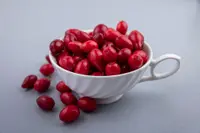
Common barberry, Berberis vulgaris, is a deciduous, spiny shrub grown for its small yellow flowers, bright red berries, and dense branching habit. It often forms thickets and works well as a barrier hedge due to its sharp spines and tolerance of pruning.
This species is native to parts of Europe and western Asia and has naturalized in many temperate regions, including North America. It adapts to a range of soils and urban conditions, which makes it relatively easy to establish.
In general, it prefers full sun to light shade and well-drained soil, and it tolerates moderate drought once established. These traits make it straightforward to care for Common Barberry in many home landscapes.

Care Difficulty
Easy Care

Light Preference
Full Sun

Water Requirements
Low Water

Temperature Preference
Cold Hardy

Hardiness Zone
3–8

Soil Texture
Sandy, Loamy, Clay

Soil pH
Slightly acidic (6.5–7.0), Slightly alkaline (7.0–7.5)

Soil Drainage
Well-drained

Fertilization
Minimal (feed rarely)
Scan your plant to receive care tips personalized for your specific plant
Available on iOS and Android
This deciduous shrub thrives in open sites with plenty of direct sun for dense growth and strong color.
This shrub prefers evenly moist, well-drained soil and becomes increasingly drought tolerant as it matures.
This hardy shrub tolerates a wide temperature range but grows best in moderate conditions.
Humidity is not a significant factor for Berberis vulgaris, which thrives in typical outdoor air conditions.
Berberis vulgaris prefers well-structured, free-draining soil that does not stay waterlogged.
This species can be grown in containers outdoors, provided the pot is chosen and managed for stability and drainage.
This shrub needs only light feeding, as Common Barberry adapts well to average soils.
Berberis vulgaris responds well to thoughtful pruning that maintains shape and encourages healthy growth.
This species is usually grown in the ground, so transplanting is more relevant than frequent repotting.
Berberis vulgaris is commonly propagated by seed and semi-hardwood cuttings under suitable conditions.
This shrub is cold hardy in much of the US and usually needs minimal winter care.

Plant Health Check
Not sure what's wrong with your plant? Check your plant's health inside the app.
The bright red berries have been traditionally used in parts of Europe and Western Asia to make sharp-tasting jams, jellies, and flavorings, although they are very sour when raw due to high organic acid content.
This shrub acts as an alternate host for the black stem rust fungus Puccinia graminis, which is a serious disease of wheat and other cereals, so it has been removed in some grain-growing regions to reduce disease spread.
The plant’s sharp spines are modified leaves, and the true leaves often occur in small clusters on short shoots, an adaptation that helps reduce herbivory and water loss in exposed sites.

In several North American regions, common barberry was heavily targeted by early 20th-century agricultural eradication programs because of its role in the life cycle of wheat stem rust, leading to laws that restricted its planting near cereal crops.
This shrub spreads mainly by seed and suckering. In many regions it is considered invasive because birds distribute its berries. Check local regulations before planting and remove unwanted seedlings promptly to prevent gradual, uncontrolled spread.
Keep your plants happy and healthy with plant identification, disease detection, and easy care guidance.