hairy banana Care (Musa velutina)

Also known as: Pink Banana
hairy banana

About hairy banana

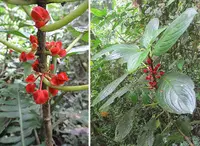
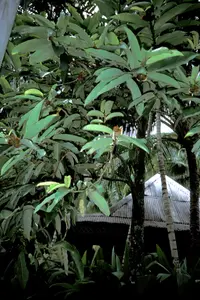
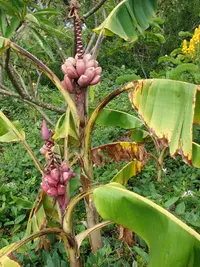
Hairy banana, Musa velutina, is a small ornamental banana species grown mainly for its striking pink, fuzzy fruit and lush tropical foliage. It usually forms a compact clump with broad green leaves and a short, trunk-like pseudostem.

This species is native to eastern India and nearby regions, where it grows in warm, humid conditions. In gardens and containers it is valued for fast growth and an exotic look.

Hairy banana is considered moderately easy to grow if given warmth, bright light, regular moisture, and well-drained soil. Understanding how to care for hairy banana helps keep it vigorous and attractive over many seasons.

Main Plant Requirements

Care Difficulty

Moderate Care

Light Preference

Partial Sun

Water Requirements

Keep Soil Moist

Temperature Preference

Tropical / Frost Sensitive

Hardiness Zone

8–11

Soil Texture

Loamy, Sandy, Organic-rich

Soil pH

Acidic (5.5–6.5), Slightly acidic (6.5–7.0)

Soil Drainage

Moist but well-drained

Fertilization

Moderate (every 2–4 weeks)

Get Personalized Care Plan

Scan your plant to receive care tips personalized for your specific plant

Available on iOS and Android

How to Care for the hairy banana

This small banana prefers bright, warm conditions similar to a lightly shaded tropical edge.

  • Provide 4–6 hours of morning sun with light afternoon shade; strong late-day sun in hot summers can scorch leaves, especially in containers.
  • It tolerates partial shade (2–4 hours direct sun) but growth and flowering decline if light stays lower for long periods.
  • In cooler climates, site hairy banana where it gets maximum autumn sun to extend the season and help ripen its pink fruit.

This species likes steadily moist but not waterlogged soil, especially during active growth.

  • Water when the top 3–5 cm of soil feels dry; soil below should stay slightly damp, not soggy, to protect roots from rot.
  • Use deep watering so moisture reaches 15–20 cm, then let drainage holes or in-ground soil clear excess water; avoid standing water around the base.
  • In cool seasons, extend the interval between waterings; drooping, pale leaves often signal overwatering, while crisp edges and curling indicate underwatering in Musa velutina.

This compact banana thrives in warm, frost-free conditions with stable temperatures.

  • Aim for 70–85°F (21–29°C) during active growth; short hot spells up to 90–95°F (32–35°C) are tolerated if soil moisture and humidity stay adequate.
  • Growth slows below 60°F (16°C); foliage is damaged around 32°F (0°C), so protect the pseudostem from frost with mulch or covers in marginal climates.
  • In regions with cool winters, treat it as a die-back perennial, allowing top growth to freeze while protecting the root zone above 40°F (4°C) for regrowth in spring.

This species benefits from fairly moist air to support large, tender foliage.

  • Aim for 50–70% humidity for Musa velutina, as lower levels slow growth and can crisp leaf edges.
  • It tolerates brief spells of drier indoor air, but chronic 30–40% humidity causes brown tips and thin, papery leaves.
  • Increase humidity with grouped plants, a nearby humidifier, or an evaporative tray rather than misting, which adds little lasting moisture for hairy banana.

This banana prefers loose, well-aerated, organically enriched soil that drains quickly but does not dry out instantly.

  • Use a mix of roughly 50% peat or coco coir, 25–30% compost, and 20–25% perlite or coarse sand to keep the root zone airy and moist.
  • Slightly acidic to neutral soil, around pH 6.0–7.0, supports nutrient uptake and reduces the risk of micronutrient deficiencies in Musa velutina.
  • In heavy native clay, grow in raised beds or large containers and incorporate coarse materials to improve structure and prevent waterlogging.
  • Avoid compacted or sticky mixes that stay wet for many hours, since low oxygen around the roots encourages rot and weak, shallow rooting.

This species adapts well to container culture when given enough root volume and stable support.

  • Choose a wide, heavy container to counterbalance tall foliage and reduce the risk of tipping in wind or on balconies.
  • Select a pot depth that allows a broad, shallow root system to spread, rather than a very tall, narrow container that stays wet at the bottom.
  • Use containers made from slightly porous materials, like unglazed clay, where extra evaporation helps keep the root zone from staying saturated after deep watering.

Musa velutina benefits from moderate feeding during its active growing season for strong foliage and flowering.

  • Use a balanced water-soluble fertilizer (such as 10-10-10 or 20-20-20) at 1/2 strength every 2–4 weeks in spring and summer.
  • Alternatively, apply a slow-release balanced granular fertilizer at the start of the growing season, following label rates.
  • Supplement with a thin layer of compost over the root zone to improve soil structure and micronutrient availability.
  • Reduce feeding in fall and stop in winter when growth slows, as caring for hairy banana during dormancy focuses on light watering, not nutrition.

Musa velutina benefits from light, targeted pruning to keep clumps tidy and support healthy new growth.

  • Best time for pruning is late winter to early spring, or after frost risk has passed and new growth begins.
  • Remove dead, yellowing, torn, or diseased leaves by cutting them close to the pseudostem with clean, sharp pruners.
  • Cut back flowered stems to ground level once fruiting is finished, encouraging new shoots and future blooms.
  • Thin out weak, crowded pups at the base to maintain good air flow and a manageable clump size.

This banana develops a clumping root system and sometimes needs more space for healthy growth.

  • Repot or transplant every 2–3 years, or when roots circle the pot, emerge from drainage holes, or growth becomes stunted.
  • Plan moves for late spring to early summer when Musa velutina is actively growing and can recover more quickly.
  • Choose a container 1–2 in wider with good drainage, or a garden spot with rich, well-drained soil and shelter from strong winds.
  • Gently loosen circling roots, keep the root ball slightly moist, and shade the plant for several days after moving to reduce stress.

This species is commonly propagated by division of pups and from seed, both of which are straightforward with warmth and moisture.

  • Divide basal pups in late spring or early summer when they have several leaves and a small root system.
  • Use a clean, sharp knife or spade to separate pups, keeping a good portion of corm and roots attached, then plant in moist, well-drained mix.
  • For seeds, lightly scarify the hard coat, then sow in warm (75–85°F), consistently moist, but not waterlogged, seed mix.
  • Provide bright, indirect light and stable warmth; germination can be slow and irregular, often taking several weeks or longer.

This banana is frost tender and needs thoughtful winter care in cooler climates.

  • In regions below USDA zone 9, grow in containers so plants can be moved indoors before nights drop near 40°F.
  • For in-ground plants in marginal climates, cut back frost-damaged leaves and mulch the root zone with 10–15 cm of dry material.
  • Wrap pseudostems in breathable insulation (such as burlap with dry leaves) where brief light frosts occur.
  • Indoors, overwinter in bright light with temperatures around 60–70°F and keep soil slightly moist but never saturated.

Care Tips

Wind protection

Place the plant where it is sheltered from strong, drying winds, or use a temporary windbreak such as mesh or a low fence so the large leaves do not shred and the pseudostem remains stable.

Mulch for roots

Apply a 5–8 cm layer of organic mulch around the base, keeping it a few cm away from the pseudostem, to buffer soil temperature, conserve moisture, and protect the shallow roots from mechanical damage.

Pup management

Thin crowded suckers by keeping 1–3 strong pups and removing the weakest ones at soil level, which directs energy into a few robust stems and improves airflow around the clump.

Overwintering strategy

In cooler climates, cut back frost-damaged foliage after the first cold spells and insulate the root zone with extra mulch, or lift and pot the plant before hard frost for easier indoor protection.

Container stability

For container plants, use a heavy, wide-based pot or add weight (such as clean stones at the bottom) so the tall foliage does not tip the container, especially when growing hairy banana on balconies or exposed patios.

Common Pests and Diseases

Banana aphids

These insects cluster on young leaves and flower stalks, sucking sap and causing curling, distortion, and sticky honeydew that can lead to sooty mold growth.

Solution

Prune and discard heavily infested soft growth, then wash remaining leaves and stems with a strong but gentle stream of water and wipe off honeydew. For ongoing Musa velutina care, treat undersides of leaves with insecticidal soap or a light horticultural oil every 7–10 days until new growth appears clean, and reduce excess nitrogen fertilization that encourages soft, aphid-prone tissue.

Banana weevils

These pests bore into the pseudostem and corm, causing weakening, yellowing, stunted growth, and potential plant collapse, especially in outdoor or in-ground plantings.

Solution

Remove and destroy severely damaged plants or pseudostems to eliminate breeding sites and avoid reusing infested soil or plant material. Use clean, healthy divisions, keep mulch and plant debris away from the base, and in outdoor settings set simple traps with cut banana stem pieces to monitor and manually remove adults before damage becomes severe.

Panama disease (Fusarium wilt)

This disease is caused by a soil-borne fungus that blocks water transport, leading to one-sided yellowing, wilting, and eventual browning and collapse of leaves while the pseudostem may remain standing for some time.

Solution

Remove and destroy affected plants including as much of the root system as possible, and do not replant bananas in the same soil, since the fungus can persist for many years. Use only clean tools and planting material, avoid waterlogging, and for container plants discard contaminated soil and replant into fresh, well-draining mix in a disinfected pot.

Black leaf streak

This disease, also called black Sigatoka, causes dark streaks and spots that expand into large necrotic patches on leaves, reducing photosynthesis and overall vigor, mainly in warm, humid outdoor conditions.

Solution

Promptly remove and dispose of heavily spotted leaves, keeping at least a few healthy leaves to sustain the plant, and avoid overhead watering that keeps foliage wet. Improve air circulation around plants, space them generously, and in high-risk outdoor areas use a preventive copper-based fungicide on young leaves during warm, humid periods following label directions.

Spider mites

These pests are tiny sap feeders that thrive in warm, dry indoor air, causing fine speckling, dulling of leaves, and delicate webbing between leaf ribs and at petiole bases.

Solution

Shower the plant with lukewarm water, focusing on leaf undersides, and repeat every few days to disrupt their life cycle, then maintain higher humidity (40–60%) and avoid hot, stagnant air. For persistent infestations, apply insecticidal soap or a light horticultural oil to both sides of the leaves at 5–7 day intervals until no new stippling or webbing appears, a key step in hairy banana indoor care.

Interesting Facts

Self-peeling pink fruit

This species produces small, bright pink bananas whose fuzzy skins often split open on the plant to reveal the pulp without being touched, a trait rarely seen in edible bananas.

Edible but seedy pulp

The fruits are technically edible and sweet but packed with hard seeds, which makes them more important for ornamental use and seed propagation than for eating.

Cold-tolerant for a banana

Compared with many tropical bananas, this species shows relatively high cold tolerance and can survive brief drops close to freezing if its roots are protected, which contributes to its popularity in cool-climate ornamental gardens.

Botan icon

Did you know?

In its native range in the eastern Himalayas and Assam, this compact banana often grows in forest clearings and along disturbed slopes, where birds disperse its numerous seeds after feeding on the exposed pink fruits, helping it colonize newly opened habitats.

FAQs about hairy banana

Lack of flowering usually comes from insufficient maturity, low light, cool temperatures, or nutrient imbalance. Flowering improves when the plant is fully grown, kept warm, evenly watered, and given balanced fertilizer without excessive nitrogen that only drives leaf growth.

Grow Healthy Plants with Botan Care

Keep your plants happy and healthy with plant identification, disease detection, and easy care guidance.


Botan plant care app — identify plants on mobile

Explore More Plants