White candles Care (Whitfieldia elongata)

White candles

About White candles

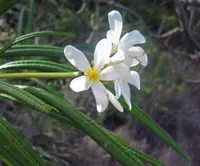
White candles, Whitfieldia elongata, is a tropical evergreen shrub grown mainly for its upright white flower spikes and glossy, deep green foliage. It is often used as a compact indoor ornamental or in shaded outdoor beds in warm climates.

The plant forms a bushy habit with multiple stems and repeated blooming in suitable conditions. It occurs naturally in the understory of West and Central African forests.

This background explains its preference for warm temperatures, bright filtered light, and evenly moist, well-drained soil. With stable conditions and moderate humidity, it is relatively straightforward to care for White candles.

Main Plant Requirements

Care Difficulty

Moderate Care

Light Preference

Bright Indirect Light

Water Requirements

Keep Soil Moist

Temperature Preference

Tropical / Frost Sensitive

Hardiness Zone

10–11

Soil Texture

Loamy, Organic-rich

Soil pH

Acidic (5.5–6.5), Slightly acidic (6.5–7.0)

Soil Drainage

Moist but well-drained

Fertilization

Moderate (every 2–4 weeks)

Get Personalized Care Plan

Scan your plant to receive care tips personalized for your specific plant

Available on iOS and Android

How to Care for the White candles

Whitfieldia elongata prefers bright, gentle light that mimics an understory tropical habitat.

  • Provide 4–6 hours of bright, indirect light daily, such as near an east-facing window or under light shade outdoors, for reliable flowering of White candles.
  • Tolerates partial shade, especially in the hot season, but very deep shade leads to leggy stems, sparse blooms, and duller foliage over time.
  • Protect from intense midday and afternoon sun, which can scorch leaves; use sheer curtains or dappled tree shade, especially in summer at lower latitudes.

Whitfieldia elongata benefits from steady moisture without prolonged saturation of the root zone.

  • Water when the top 2–3 cm of soil feels dry, aiming for evenly moist but not soggy soil, and let excess drain freely to avoid root rot.
  • In warm, active growth periods, expect more frequent watering, while in cooler seasons reduce frequency as evaporation and growth slow.
  • Watch for yellowing, soft leaves as a sign of overwatering, and for drooping, dull leaves and dry soil pulling from the sides as signs of underwatering.

This species thrives in warm, frost-free conditions that resemble a stable tropical climate.

  • Aim for 65–80°F (18–27°C) for best growth; flowering and leaf production slow noticeably below about 60°F (16°C).
  • Avoid temperatures below 50°F (10°C), as foliage damage and root stress increase; the plant is not frost tolerant and can be killed by freezing conditions.
  • Tolerates short heat spells up to about 90°F (32°C) if humidity and soil moisture are maintained, but provide shade and airflow during extreme heat.

This species prefers moderately high humidity to keep foliage lush and reduce leaf edge damage.

  • Aim for 50–70% humidity, as very dry rooms cause leaf tips to brown and edges to curl.
  • White candles tolerate short dry spells, but prolonged air below 40% leads to dull, papery leaves and slower growth.
  • Increase humidity with a nearby humidifier, grouped plants, or a wide pebble tray placed under but not touching the pot base.

This plant prefers a loose, organic-rich, well-drained mix that stays evenly moist but never waterlogged.

  • Use a peat- or coco-based mix with added compost for nutrients and perlite to improve drainage and aeration.
  • A typical blend is 2 parts all-purpose potting mix, 1 part compost, and 1 part perlite or fine bark chips.
  • Target slightly acidic to neutral pH, around 6.0–7.0, which supports nutrient uptake and healthy Whitfieldia elongata growth.
  • Avoid heavy clay, compacted mixes, or pots that stay soggy, as these promote root rot and leaf drop.

This species is well suited to container growing, especially in cooler climates where outdoor survival is limited.

  • Choose a pot slightly wider than the root ball to balance foliage mass and reduce tipping in wind or accidental knocks.
  • Use a container material that matches your watering style; plastic retains moisture longer, while unglazed clay dries out faster.
  • Select a stable, relatively heavy container for larger plants, as the tall, shrubby top growth can become top-heavy in light pots.

Whitfieldia elongata benefits from moderate feeding to support foliage and flowering in active growth.

  • Use a balanced liquid fertilizer (such as 10-10-10 or 20-20-20) diluted to 1/2 strength for White candles in containers.
  • Apply every 4–6 weeks during spring and summer, onto moist soil to reduce root burn risk.
  • Reduce feeding to 1 light application in fall and stop during the coldest winter months indoors.
  • In garden beds, incorporate a thin layer of compost in spring instead of frequent soluble feeds.

Pruning Whitfieldia elongata maintains a compact shape and encourages fresh flowering growth.

  • Carry out light pruning at the end of winter or early spring before strong new growth starts.
  • Remove dead, damaged, or crossing stems first, then shorten leggy branches to a healthy outward-facing node.
  • Use clean, sharp hand pruners or scissors to make angled cuts just above leaf joints.
  • Pinch soft shoot tips after flowering flushes to promote bushier branching and more flower spikes.

Container-grown plants benefit from occasional repotting to refresh Whitfieldia elongata root space and soil.

  • Look for roots circling the pot base, water running straight through, or slowed growth as signs it needs a larger container.
  • Plan to repot every 2–3 years in late winter or early spring before vigorous shoot growth resumes.
  • Move into a pot 2–5 cm wider, using a well-drained, peat-free mix; gently tease circling roots without tearing masses.
  • Water thoroughly after repotting, keep in bright but indirect light for 7–10 days, and avoid heavy feeding until new growth appears.

New Whitfieldia elongata plants are most often produced from stem cuttings rather than seed.

  • Take 8–12 cm semi-ripe stem cuttings in late spring or summer, choosing non-flowering shoots.
  • Remove lower leaves, dip the cut base in rooting hormone if available, and insert into a moist, well-drained propagation mix.
  • Maintain warmth around 70–80°F, high humidity, and bright, indirect light to encourage rooting.
  • After firm roots form, gradually reduce humidity, then pot cuttings individually into small containers with similar soil.

Winter care focuses on preventing cold damage to this tropical shrub.

  • Whitfieldia elongata is frost-sensitive and should be kept above 50°F, ideally 60–75°F in winter.
  • Move container plants indoors or into a heated greenhouse before overnight temperatures drop near 50°F.
  • Provide bright, indirect light, allow the topsoil to dry slightly between waterings, and avoid heavy feeding.
  • In mild climates, add a 5–8 cm mulch layer around outdoor roots to buffer short cool spells.

Care Tips

Pinch For Bushiness

Pinch back soft shoot tips every 4–6 weeks during active growth to keep plants compact, encourage side branching, and produce more flower spikes.

Staggered Repotting

Repot into only 2–5 cm wider pots at a time and lightly tease outer roots, which helps maintain steady growth without forcing the plant into a container that stays wet for too long.

Support Heavy Stems

Install discreet canes or small hoop supports before stems become top-heavy with foliage and flowers so they harden in a stable position and are less likely to snap.

Targeted Pest Monitoring

Inspect the undersides of leaves and young shoot tips weekly with a hand lens, focusing on mealybugs and spider mites, and isolate the plant early if pests are found to prevent spread to other tropicals.

Seasonal Light Rotation

Rotate the pot 90° every 1–2 weeks and shift it slightly closer to the brightest window in winter to keep growth balanced and prevent the plant from leaning strongly to one side when growing White candles indoors.

Common Pests and Diseases

Spider mites

This pest often appears on Whitfieldia elongata grown in warm, dry indoor air, causing fine webbing, pale stippling, and dull, dusty-looking leaves. Symptoms include slowed growth and eventual leaf drop if the infestation is heavy.

Solution

Rinse foliage thoroughly with a strong but gentle stream of lukewarm water, including the undersides of leaves, then increase humidity and reduce heat stress. For persistent mites, use repeated applications of insecticidal soap or a horticultural oil every 7–10 days, isolating the plant until new growth appears clean.

Mealybugs

These insects form white, cottony clusters in leaf axils and along stems, where they suck sap and excrete sticky honeydew that can lead to sooty mold. This pest often appears on lush, tender growth of shade-loving ornamentals like White candles kept indoors or in sheltered patios.

Solution

Isolate the plant, then remove visible mealybugs with a cotton swab dipped in 70% isopropyl alcohol, and lightly wipe affected areas. Follow up with several treatments of insecticidal soap or neem oil, ensuring thorough coverage of hidden crevices, and monitor new growth closely for several weeks.

Scale insects

These insects attach firmly to stems and leaf veins as small, brown or tan bumps, drawing sap and causing yellowing leaves, weak growth, and sticky honeydew. Infestations tend to build up slowly on older stems of established plants in shaded, protected sites.

Solution

Scrape or rub off individual scales with a soft cloth or fingernail, then prune and discard heavily infested stems. Apply horticultural oil to smother remaining scales, repeating as needed, and improve light and airflow around the plant to reduce reinfestation pressure.

Leaf spot

This disease causes brown, tan, or dark purple spots with possible yellow halos on older leaves, especially under crowded, humid conditions. Symptoms include premature yellowing and shedding of foliage from the lower part of the plant upward.

Solution

Remove and discard affected leaves, then thin or prune to improve air circulation and avoid wetting the foliage when watering. If spotting continues to spread, use a copper-based or other labeled ornamental fungicide according to directions and keep the plant in moderate, not stagnant, humidity.

Botrytis blight

This disease develops in cool, humid, low-light conditions, causing soft brown lesions on leaves and flowers that develop gray, fuzzy mold. Symptoms include rapid collapse of tender shoots and discolored petals or bracts on flowering plants.

Solution

Cut off all affected tissue and dispose of it in the trash, then increase light, airflow, and spacing around the plant while avoiding overhead watering. In severe or recurring cases, apply a fungicide labeled for ornamental botrytis control and adjust care conditions to keep foliage dry and the environment less humid at night.

Interesting Facts

Acanthaceae family member

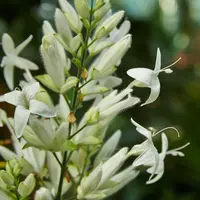
Whitfieldia elongata belongs to the Acanthaceae family, a group known for tubular flowers adapted to pollination by specific insects and sometimes sunbirds in its native West and Central African range.

Shade-forest understory origin

In the wild, this species grows as a shrub in the shady understory of moist lowland forests, where it is adapted to filtered light and consistently warm, humid conditions.

Long-tubed white flowers

The plant produces elongated, tubular white flowers arranged in compact clusters, which in nature help guide pollinators toward nectar while ensuring effective pollen transfer.

FAQs about White candles

Lack of blooms often results from insufficient light, low nutrients, or skipped pruning. Provide bright, indirect light, feed lightly during the growing season, and trim spent flower spikes to direct energy into new buds.

Grow Healthy Plants with Botan Care

Keep your plants happy and healthy with plant identification, disease detection, and easy care guidance.

Botan plant care app — identify plants on mobile

Explore More Plants