Tuber protection
Lift tubers from outdoor containers after foliage dies back, dry them for 3–5 days in a shaded, airy place, then store in barely moist peat or vermiculite at 45–55°F to reduce rot and winter loss.

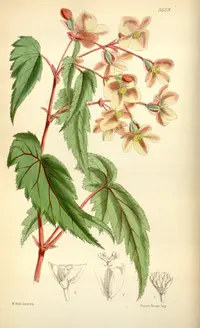
Begonia sutherlandii, often called Sutherland begonia, is a small tuberous perennial valued for its fine, arching stems and abundant orange to salmon flowers. It has delicate, pointed green leaves and a softly cascading habit that works well in hanging baskets, pots, and shaded outdoor displays.
This species comes from cool, moist, rocky slopes in parts of southern Africa, where it grows in bright but filtered light. It tends to be forgiving if kept out of harsh sun and allowed even moisture in a free-draining mix.
Its seasonal dormancy and tuber-forming habit make it fairly resilient once established, which helps simplify how to care for Sutherland begonia for most home growers.

Care Difficulty
Moderate Care

Light Preference
Partial Shade

Water Requirements
Moderate Water

Temperature Preference
Tropical / Frost Sensitive

Hardiness Zone
9–11

Soil Texture
Loamy, Peaty, Organic-rich

Soil pH
Acidic (5.5–6.5)

Soil Drainage
Moist but well-drained

Fertilization
Light (every 4–6 weeks)
Scan your plant to receive care tips personalized for your specific plant
Available on iOS and Android
This species prefers bright, gentle light that mimics dappled woodland conditions.
This tuberous begonia prefers evenly moist but never waterlogged soil.
This species grows best in mild, frost-free conditions.
This species prefers moderately moist air but adapts to typical indoor humidity if not kept too dry.
This tuberous species needs a light, fast-draining yet moisture-retentive substrate to avoid rot.
This species is well suited to container growing due to its trailing, tuberous habit.
Light, consistent nutrition supports compact growth and flowering in Sutherland begonia during the active season.
Thoughtful pruning keeps Begonia sutherlandii tidy, encourages bushy growth, and supports good flowering.
Container-grown plants benefit from periodic repotting to maintain healthy roots and steady growth.
This species responds well to several simple propagation methods when done in warm, bright, but indirect light.
This tuberous species is frost sensitive above ground but survives mild to moderate cold via its underground parts.

Plant Health Check
Not sure what's wrong with your plant? Check your plant's health inside the app.
This species forms small underground tubers and also produces tiny bulbils in the leaf axils, allowing it to spread both below and above the soil surface in favorable conditions.
It is native to cool, moist, rocky habitats in eastern South Africa and neighboring regions, where it often grows on cliffs and shaded rock faces exposed to frequent mists.
Unlike many commonly grown begonias with pink or white blooms, this species bears pendulous, bright orange flowers that attract pollinators such as bees in its native range.

Begonia sutherlandii is one of relatively few begonias that can tolerate light frost for short periods when dormant, thanks to its resting tubers, which survive underground even when the foliage is completely killed back above ground.
Insufficient light, overly rich nitrogen fertilizer, or skipping a cool, drier rest period can reduce flowering. Crowded tubers and old, depleted potting mix also limit blooms. Refresh soil, moderate feeding, and provide a brief winter rest.
Keep your plants happy and healthy with plant identification, disease detection, and easy care guidance.