Elephant's Ear Care (Alocasia macrorrhizos 'Borneo Giant')

Also known as: Upright Elephant Ear, Giant Taro, Wild Taro
Elephant's Ear

About Elephant's Ear

Elephant's ear Alocasia macrorrhizos 'Borneo Giant' is a dramatic tropical aroid grown for its huge, upright, heart-shaped leaves and strong, architectural stems. It forms a bold clump that can reach impressive size in warm climates or large indoor spaces.

This cultivar comes from humid tropical regions of Southeast Asia, where it grows in bright, filtered light at forest edges and clearings. Its fast growth, large leaves, and need for steady warmth and moisture make it moderately demanding, especially indoors.

Gardeners who want to care for Elephant's Ear should provide consistent moisture, high humidity, and rich, well-drained soil, along with protection from strong, drying winds or harsh midday sun.

Main Plant Requirements

Care Difficulty

Moderate Care

Light Preference

Partial Shade

Water Requirements

Keep Soil Moist

Temperature Preference

Tropical / Frost Sensitive

Hardiness Zone

9–11

Soil Texture

Loamy, Peaty, Organic-rich

Soil pH

Acidic (5.5–6.5), Slightly acidic (6.5–7.0)

Soil Drainage

Moist but well-drained

Fertilization

Moderate (every 2–4 weeks)

Get Personalized Care Plan

Scan your plant to receive care tips personalized for your specific plant

Available on iOS and Android

How to Care for the Elephant's Ear

Alocasia macrorrhizos 'Borneo Giant' thrives in bright, indirect light with some gentle direct sun.

  • Provide 3–4 hours of soft morning sun with bright, filtered light for the rest of the day; avoid harsh midday and afternoon sun that can scorch leaves.
  • Tolerates partial shade, but in deep shade leaves elongate, lose vigor, and overall growth slows noticeably.
  • In summer, use light shade cloth or dappled tree cover; in cooler seasons, move it where it receives more open sky or longer bright exposure.

This large aroid prefers consistently moist, airy soil without becoming waterlogged.

  • Outdoors in growing season, water when the top 3–5 cm of soil feel slightly dry, then soak thoroughly so excess drains away.
  • Use rich, loose soil with good drainage; puddling around the base, sour smell, or yellowing lower leaves suggest overwatering and poor aeration.
  • In cooler months, allow the top layer to dry a bit more between waterings; drooping, thin leaves and dry edges indicate underwatering.

This plant grows best in warm, stable conditions similar to a tropical summer.

  • Ideal growth occurs at 70–85°F (21–29°C); growth slows noticeably below 65°F (18°C).
  • Avoid temperatures below 55°F (13°C); brief dips near 40°F (4°C) can damage foliage, and frost may kill the plant to the ground.
  • Tolerates short heat waves up to about 95°F (35°C) if soil moisture is consistent and humidity is moderate; provide shade and shelter from hot, drying winds.

This species prefers consistently high humidity and reacts quickly to dry indoor air.

  • Aim for 60–80% humidity; below 50% often leads to crisping leaf edges and stalled growth.
  • Watch for curling leaves, brown tips, and spider mite outbreaks as common signs of humidity stress.
  • Increase humidity with a nearby humidifier, grouped plants, and a pebble tray, rather than misting leaves directly.

This plant needs moist, airy, organic-rich soil that drains quickly yet does not dry out too fast.

  • Use a loose, loamy mix of roughly 50% peat or coco coir, 30% compost, and 20% chunky materials such as bark, perlite, or pumice.
  • Ensure fast drainage so water runs through in seconds while the mix still holds moisture evenly around the roots.
  • Target a slightly acidic to neutral pH of about 6.0–7.0 for Alocasia macrorrhizos 'Borneo Giant'.
  • Avoid heavy clay, compacted mixes, or straight garden soil, which reduce aeration and increase the risk of root rot.

This large species can be grown in containers if the pot provides sufficient volume and stability.

  • Choose a wide, heavy container to prevent the tall, top-heavy plant from tipping in wind or when soil is moist.
  • Select a pot depth that allows thick, tuberous roots to spread vertically without coiling tightly at the base.
  • Use a pot material with moderate breathability, such as thick plastic or glazed clay, to slow evaporation while still allowing heat dispersion.

This large aroid benefits from steady nutrition during the warm growing season to support oversized foliage typical of Elephant's Ear.

  • Use a balanced, water-soluble fertilizer (around 10-10-10 or 20-20-20) at 1/2 strength every 2–3 weeks in spring and summer.
  • In containers, supplement with a slow-release granular fertilizer at the soil surface at the start of the growing season.
  • Pause or reduce feeding to 1/4 strength monthly in fall and winter when growth slows or dormancy begins.
  • In the ground, incorporate compost or well-rotted manure in spring to improve soil structure and provide gentle, long-lasting nutrients.

Alocasia macrorrhizos 'Borneo Giant' needs light, targeted pruning mainly to keep foliage healthy and the clump tidy.

  • Best time for pruning is during active growth in spring and summer, when recovery is fastest.
  • Remove yellowing, dead, or mechanically damaged leaves at the base with a clean, sharp knife or bypass pruners.
  • Thin out badly crowded stems to improve air flow, which helps limit fungal leaf spots and keeps the plant more balanced in shape.
  • Avoid cutting healthy green leaves heavily, as this reduces photosynthesis and can slow overall growth and vigor.

This fast-growing giant often outgrows containers or planting spaces and needs thoughtful repotting or transplanting to stay vigorous.

  • Check for roots circling the pot, pushing through drainage holes, or noticeably slowed growth as signs it needs a larger container.
  • Plan repotting or outdoor transplanting in mid to late spring, once soil temperatures are warm and frost risk has passed.
  • Move up only 1–2 pot sizes, using a rich, well-drained mix; handle the thick roots gently and avoid breaking large rhizomes.
  • Water thoroughly after moving, then keep soil evenly moist and provide bright, indirect light for 1–2 weeks to limit transplant shock.

This plant is most reliably propagated by division of its rhizomes rather than from seeds or cuttings.

  • Time division for late spring or early summer, when Alocasia macrorrhizos 'Borneo Giant' is entering strong growth.
  • Gently unpot or lift the clump and separate offsets with their own roots and at least 1–2 healthy leaves or buds.
  • Plant divisions in a warm, humid environment with loose, well-drained, high-organic soil and bright, indirect light.
  • Maintain steady moisture without waterlogging and avoid strong direct sun until new growth indicates successful establishment.

This tropical species is frost-sensitive and needs specific winter care in most temperate climates.

  • In USDA zones colder than 9, grow in containers and move indoors before temperatures drop below 50°F.
  • For in-ground plants in mild climates, apply a 7–10 cm mulch layer over the root zone to insulate rhizomes.
  • Keep indoor plants in bright, indirect light at 60–75°F and reduce watering so the soil stays just slightly moist.
  • Expect partial dormancy with fewer new leaves; do not force growth with heavy watering or high fertilizer rates.

Care Tips

Provide sturdy support

Install a strong, corrosion-resistant stake or short trellis early in the plant’s life and loosely tie the main petioles with soft plant ties to prevent snapping as the leaves enlarge and catch wind.

Plan for root expansion

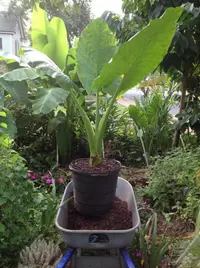
Use a wide, heavy container with at least 1–2 in of extra radius around the current root ball and repot before roots circle tightly, which helps prevent the plant from becoming unstable or pot-bound under its large canopy.

Seasonal downscaling

In cooler regions, cut back the largest, oldest leaves at the end of the growing season so the plant can be lifted, potted, and overwintered more easily without excessive transpiration stress.

Proactive pest scouting

Inspect the undersides of new leaves and along petioles weekly during warm months and treat early signs of spider mites or scale with a targeted product, since pests spread quickly on the large leaf surfaces when caring for Elephant's Ear.

Safe wind placement

Position outdoor plants where buildings or fences break strong prevailing winds but light can still reach the canopy, since abrupt gusts can tear the large leaf blades and cause creasing along the midrib.

Common Pests and Diseases

Spider mites

This pest thrives in warm, dry conditions and sucks sap from the large leaves, causing stippling, dulling, and fine webbing on the undersides. Heavy infestations can lead to leaf yellowing and premature leaf drop.

Solution

Rinse foliage thoroughly with a strong, lukewarm water spray, focusing on leaf undersides, then wipe with a soft cloth. Increase humidity, isolate the plant, and use insecticidal soap or a horticultural oil labeled for mites, repeating every 7–10 days until no new damage appears.

Aphids

These insects cluster on young shoots and the undersides of emerging leaves, feeding on sap and excreting sticky honeydew that can attract sooty mold. New growth may appear distorted, curled, or stunted.

Solution

Shower the plant to dislodge colonies, then inspect and pinch off heavily infested soft tips if needed. Treat remaining aphids with insecticidal soap or neem oil, ensuring full coverage of tender growth, and repeat treatments weekly until populations are controlled.

Bacterial leaf spot

This disease causes water-soaked, translucent or dark lesions on leaves that may expand and develop yellow halos. Symptoms include irregular spots that can coalesce, leading to larger dead patches and premature leaf decline.

Solution

Remove and discard affected leaves promptly, disinfecting pruning tools between cuts, and avoid overhead watering that leaves foliage wet for long periods. Improve air circulation, keep leaves dry, and, if spread continues, consider replacing severely affected plants rather than using antibiotics, which are not practical for home use.

Pythium root rot

This disease is favored by saturated, poorly drained mix and warm conditions, causing roots to become brown, soft, and slimy, with leaves wilting or yellowing despite moist soil. Symptoms include stunted growth and an overall collapse of the plant if not corrected early.

Solution

Unpot the plant, trim off all mushy roots, and repot into a fresh, chunky, fast-draining mix in a pot with drainage holes, then water only when the top 2–3 cm of soil feel dry. Reduce watering frequency, improve drainage and aeration, and avoid letting the pot sit in standing water to prevent recurrence when trying to grow Alocasia macrorrhizos 'Borneo Giant'.

Leaf blight (fungal)

This disease produces brown or black necrotic patches on leaves, often starting at edges or along veins, sometimes with a yellow border. In humid, stagnant air, spots can enlarge quickly and cause large sections of the leaf blade to die back.

Solution

Remove and discard affected leaves as soon as lesions are noticed and keep foliage as dry as possible by watering at the soil level. Increase spacing and airflow, reduce overcrowding, and in persistent cases apply a copper-based or other labeled ornamental fungicide according to package directions, focusing on new, healthy growth as a protective barrier.

Interesting Facts

Extreme leaf dimensions

Individual leaves of this cultivar can exceed 2.5–3 m in length under ideal tropical conditions, making them among the largest foliage structures produced by any commonly cultivated aroid.

Selected giant clone

This plant is not a separate species but a selected giant form of Alocasia macrorrhizos, bred and distributed specifically for exaggerated leaf size and taller, more imposing growth compared with wild-type populations.

Massive underground storage

It forms an enlarged corm, a swollen underground stem that stores water and nutrients, allowing the plant to rapidly push out huge new leaves when warmth, moisture, and nutrients become available.

Botan icon

Did you know?

In mature specimens grown in consistently warm, frost-free climates, the petioles alone can reach well over head height, so that the leaf blades form a canopy-like layer that can cast deep shade similar to that of small trees.

FAQs about Elephant's Ear

Growth is vigorous in warm climates. In ideal outdoor conditions, this plant can reach 2–3 m tall with leaves 90–150 cm long within 2–3 years, forming a bold, architectural clump from its underground corms.

Grow Healthy Plants with Botan Care

Keep your plants happy and healthy with plant identification, disease detection, and easy care guidance.

Botan plant care app — identify plants on mobile

Explore More Plants