Root-space management
Plant in a position where surface roots can expand freely, and in containers shift to a wider, heavier pot before the plant becomes top-heavy to reduce wind rock and root damage.

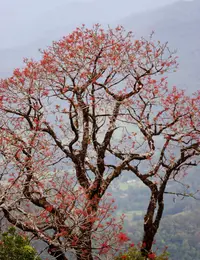
Illawarra flame tree, Brachychiton acerifolius, is a fast-growing, deciduous tree best known for its brilliant clusters of red bell-shaped flowers. It typically develops a straight trunk with a rounded crown and maple-like leaves, dropping foliage before flowering so the canopy can appear completely covered in red.
This species is native to subtropical and dry rainforests of eastern Australia, where it often grows on rocky hillsides and forest edges. In cultivation it is considered moderately easy, provided it receives strong light, good drainage, and protection from hard frost.
Gardeners who learn how to care for Illawarra Flame Tree often grow it as a striking landscape specimen in warm climates or as a large container plant in cooler regions.

Care Difficulty
Moderate Care

Light Preference
Full Sun

Water Requirements
Low Water

Temperature Preference
Tropical / Frost Sensitive

Hardiness Zone
10–11

Soil Texture
Sandy, Loamy

Soil pH
Slightly acidic (6.5–7.0), Neutral (7.0)

Soil Drainage
Well-drained

Fertilization
Minimal (feed rarely)
Scan your plant to receive care tips personalized for your specific plant
Available on iOS and Android
This species thrives in bright, direct sun for strong growth and flowering.
This drought-tolerant tree prefers deep, infrequent watering once established.
This species prefers warm, frost-free conditions for reliable growth and flowering.
This species handles typical indoor humidity but benefits from slightly moist air in very dry homes.
This tree prefers freely draining, moderately fertile, slightly gritty soil.
This species can adapt to container growing for many years if the pot is chosen and managed carefully.
This species grows in poor soils but responds well to modest, targeted feeding in containers or nutrient-poor sites.
Pruning Brachychiton acerifolius is mainly used to control size, remove problem wood, and encourage a strong framework.
This tree is usually grown in the ground, with transplanting done carefully while young to avoid root disturbance.
Propagation is most reliable from seed, with vegetative methods used less often for this species.
In mild, frost-free climates this tree needs little winter care, but extra measures are required in colder regions.

Plant Health Check
Not sure what's wrong with your plant? Check your plant's health inside the app.
Although often described as evergreen, this species commonly sheds most or all of its leaves just before flowering, creating a striking display of bare branches covered in red blossoms. This brief deciduous phase helps highlight the flowers for pollinators and reduces water loss at a dry time of year in its native range.
The tree is naturally found on the edges of subtropical and dry rainforests of eastern Australia, especially in New South Wales and southeastern Queensland. In the wild it often grows on fertile, well-drained volcanic or alluvial soils along river valleys and coastal slopes.
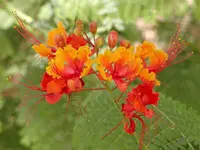
Its bright red, bell-shaped flowers are borne in large clusters directly on leafless branch tips, giving the appearance of a tree on fire. These nectar-rich blooms mainly attract birds and insects, which act as pollinators in its native habitats.

In Australia some individuals of this species have become notable street and park trees, with records of specimens exceeding 30 m tall in favorable coastal climates, making them among the more imposing ornamental flowering trees in subtropical urban plantings.
Lack of flowers often comes from youth, insufficient seasonal temperature contrast, or stress from pruning, transplanting, or drought. Many trees need several years of stable conditions before producing reliable blooms, especially outside warm coastal climates.
Keep your plants happy and healthy with plant identification, disease detection, and easy care guidance.