Moisture zoning
When planting in a shallow container or bog bed, create a gentle slope so the crown sits slightly higher than the wettest zone, which mimics natural seep habitats and reduces rot around the stems.

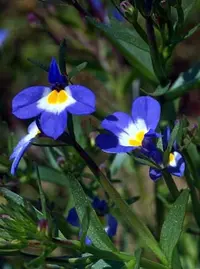
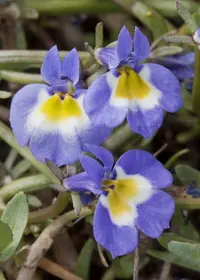
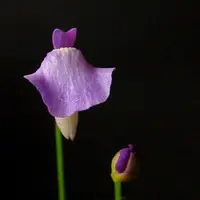
Cascade calicoflower (Downingia yina) is a small annual wildflower from the bellflower family, valued for its intricate, bicolored blooms. It typically forms low, branching clumps dotted with blue, purple, and white flowers that resemble tiny orchids.
This species is native to wet meadows, seasonal pools, and stream edges in the Pacific Northwest of North America. It prefers cool conditions, consistent moisture, and light, well-drained soils that do not stay waterlogged for long periods.
Because it is adapted to very specific seasonal wetland cycles, it can be challenging to grow outside its natural climate. Gardeners who want to care for cascade calicoflower often focus on mimicking its natural winter-wet, summer-dry pattern.

Care Difficulty
Hard Care

Light Preference
Full Sun

Water Requirements
Aquatic

Temperature Preference
Cool Climate

Hardiness Zone
7–9

Soil Texture
Loamy, Silty, Organic-rich

Soil pH
Slightly acidic (6.5–7.0), Neutral (7.0)

Soil Drainage
Waterlogged tolerant

Fertilization
Minimal (feed rarely)
Scan your plant to receive care tips personalized for your specific plant
Available on iOS and Android
This annual wildflower prefers bright, open conditions similar to its natural wet meadow and pond-edge habitats.
This species naturally grows in seasonally wet sites, so consistent moisture is critical during its active growth phase.
This cool-season annual performs best in mild conditions that resemble late winter to spring weather.
This species prefers moderate humidity but is reasonably tolerant of short dry spells.
Downingia yina needs consistently moist, fine-textured soil that never dries out fully.
This species can be grown in containers if moisture retention is carefully managed.
This annual wildflower generally needs minimal feeding in natural or low-input garden settings.
Pruning needs for Downingia yina are minimal and focus on seasonal cleanup.
This species is usually grown as a short-lived annual in situ, so transplanting is limited and delicate.
Propagation of this annual is done almost entirely from seed rather than vegetative methods.
In most climates where it is grown as an annual, this plant requires little dedicated winter care.

Plant Health Check
Not sure what's wrong with your plant? Check your plant's health inside the app.
This annual wildflower is native to shallow seasonal wetlands of the Pacific Northwest, especially vernal pools and pond margins in Washington and Oregon, and does not occur naturally outside this region.
Seeds germinate as water recedes in late winter to spring, the plants grow and flower along the drying edges of pools, then set seed before the basins fully dry, matching their life cycle precisely to temporary wetland conditions.
The flowers have a distinctive two-color pattern with bright white and yellow patches on the lower lip that act as nectar guides, helping native bees and other small pollinators locate the reproductive parts of the flower efficiently.

This species is considered a characteristic indicator plant of natural vernal pool ecosystems in parts of the Pacific Northwest, so its presence often signals relatively intact, seasonally flooded wetland habitat that has not been heavily altered or drained.
This species behaves as a cool-season annual in cultivation. It germinates, grows, flowers, sets seed, then dies back within one season, relying on self-sown seed to return in suitable moist habitats each year.
Keep your plants happy and healthy with plant identification, disease detection, and easy care guidance.