feathered mosquitofern Care (Azolla pinnata)

Also known as: Ferny Azolla, Mosquito Fern, Water Velvet
feathered mosquitofern

About feathered mosquitofern

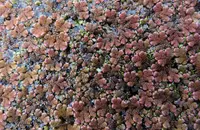
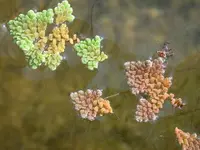
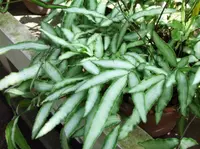
Feathered mosquitofern, Azolla pinnata, is a small free-floating aquatic fern often used as a fast-growing cover on ponds, rice paddies, and water gardens. It forms dense mats of tiny overlapping fronds that can appear green, reddish, or bronze depending on light and temperature.

This fern naturally occurs in still or slow-moving freshwater in tropical and subtropical regions of Asia, Africa, and Australia. It grows quickly, fixes nitrogen with the help of symbiotic cyanobacteria, and can spread aggressively in favorable conditions.

It is relatively easy to manage in controlled containers if excess growth is removed regularly. Those who care for feathered mosquitofern should provide calm, shallow water, good light, and nutrient availability without strong water movement.

Main Plant Requirements

Care Difficulty

Moderate Care

Light Preference

Partial Sun

Water Requirements

Aquatic

Temperature Preference

Tropical / Frost Sensitive

Hardiness Zone

9–11

Soil Texture

Loamy, Silty, Organic-rich

Soil pH

Acidic (5.5–6.5), Slightly acidic (6.5–7.0)

Soil Drainage

Waterlogged tolerant

Fertilization

Minimal (feed rarely)

Get Personalized Care Plan

Scan your plant to receive care tips personalized for your specific plant

Available on iOS and Android

How to Care for the feathered mosquitofern

Azolla pinnata thrives as a floating aquatic fern in bright, gentle light rather than harsh, direct sun.

  • Provide 3–5 hours of soft morning sun with bright, indirect or lightly filtered light for the rest of the day to prevent frond scorch.
  • Allow partial shade, especially in summer; 40–60% shade cloth works well in ponds exposed to strong midday or afternoon sun.
  • Watch color changes: healthy feathered mosquitofern shows rich green to reddish tones, while pale or stretched growth often signals insufficient light.

As a free-floating aquatic fern, Azolla pinnata depends on consistently stable, clean water rather than conventional soil watering.

  • Maintain water depth at least 10–15 cm so plants float freely; avoid strong currents or splashing that overturns fronds or exposes roots.
  • Top up ponds or trays when water drops 2–5 cm, using low-nutrient, non-chlorinated water if possible to reduce stress and sudden chemical shifts.
  • Monitor health instead of a schedule: browning, crisp fronds suggest drying or high salinity, while slimy, decaying mats indicate poor water quality or stagnation.

This floating fern prefers warm, stable conditions and declines quickly in cold or very hot extremes.

  • Aim for an optimal range of 72–86°F (22–30°C) for fastest growth; mild fluctuations around this range are usually tolerated.
  • Protect from cold: growth slows sharply below 60°F (16°C) and plants can die with repeated exposure to 41–45°F (5–7°C), especially with wind chill.
  • Limit heat stress by shading shallow water when air temperatures exceed 95°F (35°C), as overheated, stagnant water promotes dieback and algal competition.

This free-floating aquatic fern needs constant high humidity because foliage sits directly on the water surface.

  • Maintain 80–100% humidity by keeping plants on still or very slowly moving water, never in exposed dry air.
  • Dry air causes browning, crisp fronds, and slowed spread, especially along the outer mat edges.
  • Increase humidity by using deeper trays, grouping water containers, and shielding from wind that strips moisture from fronds.

This species grows best when treated as a floating aquatic plant rather than a traditional soil-rooted species.

  • Use shallow trays, ponds, or tubs filled with water enriched by a thin layer of decaying leaves, pond mud, or composted organic matter at the bottom.
  • Aim for nutrient-rich, mildly acidic to neutral conditions around pH 5.5–7, avoiding strongly alkaline water that limits Azolla pinnata growth.
  • Ensure any underlying sediment stays soft and fine-textured, never compacted, so roots can spread into a loose organic layer without being buried deeply.
  • Avoid coarse gravel, rapidly flowing water, or strongly anaerobic black sludge, which reduce aeration and can cause dieback of the floating mat.

This floating fern is suitable for containers when grown in shallow, stable water bodies.

  • Choose wide, shallow tubs or basins that maximize surface area so the mat can spread without piling up and shading itself excessively.
  • Use heavy, tip-resistant containers outdoors so wind or animals do not overturn the water body and strand the fern.
  • Select opaque or dark-colored containers to limit excessive algae growth that competes with the fern for nutrients and light.

Azolla pinnata usually needs very little fertilizer because it hosts nitrogen-fixing cyanobacteria that supply much of its nitrogen demand.

  • If growth is pale or slow in nutrient-poor water, use a very dilute balanced NPK aquatic fertilizer at 1⁄4 strength.
  • Apply light feeding every 4–6 weeks during the warm growing season only, monitoring water quality to avoid algal blooms.
  • Avoid fertilizing in winter or dormancy; cooler temperatures and low light reduce nutrient demand.
  • For low-tech systems, a small amount of well-aged compost tea can supplement micronutrients without heavy nitrogen.

Pruning Azolla pinnata is mainly a matter of biomass control and keeping the water surface healthy.

  • Thin dense, crowded mats during warm seasons by skimming excess fronds from the surface with a fine net or shallow container.
  • Remove discolored, dead, or decomposing fronds to maintain water quality and reduce disease pressure.
  • Use gentle scooping motions rather than pulling to avoid tearing healthy tissue and stirring up sediment.
  • Harvested material can be composted or used as green manure, encouraging fresh, compact new growth.

Transplanting Azolla pinnata focuses on moving healthy colonies between ponds, tanks, or trays rather than classic repotting.

  • Transplant when growth becomes overly dense, water quality declines, or when starting a new pond or rice bed.
  • Best timing is in warm weather once water temperatures are stable above about 60°F, typically in late spring or early summer.
  • Every 3–6 months, shift a portion of vigorous plants into fresh, nutrient-moderate water to prevent decline.
  • Use shallow containers, move plants with some of their original water, and avoid sudden temperature or pH changes to limit stress.

Azolla pinnata is commonly propagated by vegetative division of floating colonies rather than by seed in cultivation.

  • In late spring or summer, scoop small, healthy portions of the mat into new ponds, tubs, or trays with still, nutrient-moderate water.
  • Provide full to bright indirect light and 68–82°F water for rapid establishment and spread.
  • Avoid strong currents or aeration that submerge or break fronds during the first days after transfer.
  • Maintain shallow water and stable pH (about 6–7.5) to support continuous branching and coverage.

Feathered mosquitofern is frost sensitive and needs planning for cold-season conditions, especially in temperate climates.

  • In regions with frost, move container-grown colonies indoors to a bright, cool room or greenhouse before temperatures drop near 40°F.
  • Keep water liquid and above freezing; a small aquarium heater can help in unheated spaces.
  • Outdoors, treat it as an annual or allow a protected fraction to overwinter indoors for reintroduction in spring.

Care Tips

Manage Water Depth

Keep the water depth shallow (10–30 cm) so the plant can cover the surface quickly and remain easy to harvest or thin, and avoid deep ponds where wind and waves can break and sink the fronds.

Control Nutrient Load

Test and manage nitrogen and phosphorus levels in the water, because excess nutrients encourage algae that outcompete Azolla and too little nitrogen weakens its color and growth despite its nitrogen-fixing ability.

Prevent Wind Drift

Shelter ponds or tubs from strong wind using windbreak netting or nearby structures, or create floating frames so the fern does not clump on one side and leave bare water exposed.

Regular Biomass Harvest

Skim off and compost or use a portion of the fern every 3–7 days once coverage is dense, which keeps the stand young, prevents self-shading, and reduces the risk of sudden die-off and water quality problems.

Quarantine New Stock

Hold any newly acquired plants in a separate container for 1–2 weeks to observe and remove snails, algae, or disease before introducing them to an established culture when growing feathered mosquitofern at scale.

Common Pests and Diseases

Sap‑sucking aphids

These insects feed on the tender fronds and stems, causing yellowing, curling, and stunted mat growth. This pest also excretes honeydew, which can lead to sooty mold on dense surface mats.

Solution

Skim heavily infested plant material from the water surface and discard, then use a strong water spray along pond edges and emergent vegetation to dislodge remaining aphids. In outdoor ponds, encourage predators such as lady beetles and lacewings and avoid broad‑spectrum insecticides that harm aquatic life, using only products labeled safe for aquatic systems if chemical control is necessary.

Azolla weevil

This pest is a small beetle whose adults and larvae chew fronds, producing shot‑hole damage and gradual thinning or collapse of the floating mat. Symptoms include browning, fragmentation, and reduced nitrogen‑fixing capacity of the stand.

Solution

Monitor mats regularly and remove and destroy heavily damaged clumps to reduce the local weevil population. In production ponds, maintain good water movement and avoid dense single‑species stands, and consult local extension guidelines before introducing biological control agents to avoid ecological side effects.

Leaf‑eating caterpillars

These insects graze extensively on the floating foliage, leaving ragged edges, missing fronds, and patchy open water. This pest can quickly reduce coverage during warm seasons when caterpillar populations peak.

Solution

Hand‑skim or net out affected Azolla sections containing caterpillars and pupae, then dispose of them away from the water body. Where appropriate, use a biological larvicide containing Bacillus thuringiensis kurstaki (Bt) applied according to label directions that are specifically cleared for use near aquatic environments.

Fungal blight

This disease appears as brown to black necrotic patches spreading across fronds, often starting in overcrowded or stagnant areas. Symptoms include rapid mat collapse, frond disintegration, and reduced regrowth even under good nutrients and light.

Solution

Remove and discard affected mats, then thin remaining Azolla to reduce crowding and improve water circulation. Lower organic debris, avoid nutrient overload, and if used in controlled culture systems, rotate or rest ponds between crops to break the disease cycle as part of Azolla pinnata care instructions.

Algal overgrowth

This condition occurs when filamentous or planktonic algae overtake the water surface, shading the Azolla and limiting photosynthesis. Symptoms include pale, weak fronds, slow spread, and sections of the mat dying back under a dominant algal layer.

Solution

Physically remove excess algae with nets or surface skimmers and reduce nutrient inputs, especially from fertilizers and runoff. Maintain partial shade or cover and adjust stocking density so the Azolla forms a continuous but not excessively thick mat, which helps it outcompete algae while keeping water quality stable.

Interesting Facts

Nitrogen-fixing fern ally

Azolla pinnata hosts the cyanobacterium Nostoc azollae inside its leaves, forming a permanent symbiosis that allows the plant to fix atmospheric nitrogen and enrich nutrient-poor waters and soils.

Floating mat formation

In warm, still water, this species can rapidly form dense floating mats that shade the water surface, which can lower water temperature and reduce light for submerged algae and aquatic plants.

Ancient green manure

In parts of South and Southeast Asia, Azolla pinnata has been traditionally used as a living green manure in flooded rice paddies, where it grows alongside rice plants and then decomposes to supply bioavailable nitrogen to the crop.

Botan icon

Did you know?

Fossil and geological evidence suggests that close relatives of modern Azolla species once proliferated so extensively in Arctic regions during the Eocene that their massive blooms contributed significantly to long-term carbon sequestration, a phenomenon known as the Azolla event.

FAQs about feathered mosquitofern

Yellowing usually comes from nutrient depletion, stagnant or polluted water, or very strong sun combined with heat. Refresh the water, remove decaying mats, and provide gentle water movement. Light, balanced aquatic fertilizer can also help restore color.

Grow Healthy Plants with Botan Care

Keep your plants happy and healthy with plant identification, disease detection, and easy care guidance.

Botan plant care app — identify plants on mobile

Explore More Plants