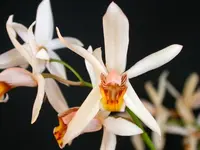
doublehorn calicoflower Care (Downingia bicornuta)

doublehorn calicoflower

About doublehorn calicoflower

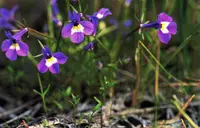
Doublehorn calicoflower (Downingia bicornuta) is a small annual wildflower in the bellflower family, known for its bright blue and white, horned-looking blooms. It typically grows low to the ground, forming delicate displays along the edges of seasonal pools and wet meadows.

This species is native to western North America, especially California and nearby regions, where it appears in spring as temporary waters recede. It can be challenging in gardens because it prefers cool conditions, moist but not stagnant soil, and a marked wet–dry seasonal cycle.

Gardeners who want to learn how to care for doublehorn calicoflower should focus on mimicking its natural wetland margins with full sun, clean moisture, and lean, well-drained soil.


Main Plant Requirements

Care Difficulty

Hard Care

Light Preference

Full Sun

Water Requirements

Aquatic

Temperature Preference

Cool Climate

Hardiness Zone

7–10

Soil Texture

Loamy, Silty, Organic-rich

Soil pH

Acidic (5.5–6.5), Slightly acidic (6.5–7.0)

Soil Drainage

Waterlogged tolerant

Fertilization

Minimal (feed rarely)

Get Personalized Care Plan

Scan your plant to receive care tips personalized for your specific plant

Available on iOS and Android

How to Care for the doublehorn calicoflower

Downingia bicornuta, or doublehorn calicoflower, prefers bright, open conditions that mimic sunny seasonal wetlands.

  • Provide 6–8 hours of direct sun daily in cool to mild climates; in hotter regions, aim for full morning sun with light afternoon shade after 2–3 pm.
  • Allow brief partial shade from taller plants or grasses, but avoid deep shade, which leads to weak, floppy stems and reduced flowering.
  • Watch for leaf scorching or crispy edges in intense summer sun; offer filtered light or short periods of shade if this appears.

Downingia bicornuta grows as a seasonal annual that prefers moist to wet soil during active growth.

  • Keep soil consistently moist in spring, never letting the top 1–2 cm dry out completely while plants are actively growing and flowering.
  • Ensure soil or site drains slowly but does not stay stagnant; yellowing, limp foliage and soft stems suggest overwatering or poor drainage.
  • Reduce watering sharply as plants yellow and set seed, allowing the site to dry more between soakings to match the natural seasonal dry-down.

This species prefers cool to mild conditions and follows a seasonal wet–dry cycle linked to temperature.

  • Aim for 55–70°F (13–21°C) during active growth; seeds typically germinate as soil cools in fall and plants thrive in cool spring weather.
  • Tolerates brief drops to about 28–30°F (-2 to -1°C) once established, but hard freezes below this can damage foliage and reduce flowering.
  • In hot areas, flowering declines when temperatures stay above 80–85°F (27–29°C); cooler nights and adequate moisture help plants finish their life cycle.

This annual wildflower prefers moderate air humidity but usually adapts to typical indoor levels.

  • Aim for 40–60% humidity to reduce flower and leaf desiccation in doublehorn calicoflower.
  • Expect some tolerance of short dry spells, but prolonged air below 30% can cause curled, crispy leaf edges.
  • Increase humidity locally with a nearby open tray of water or grouping plants, rather than misting directly onto the flowers.

This species thrives in moist, fine-textured substrates that mimic wet meadow or seasonal pool conditions.

  • Use a mix of 50–70% peat or coir with 30–50% fine sand or loam to create a soft, moisture-retentive base similar to Downingia bicornuta’s natural habitat.
  • Keep drainage slow but not stagnant; containers should drain, yet the upper layer should not dry out completely between waterings.
  • Target slightly acidic to neutral pH, roughly 6.0–7.0, avoiding strongly alkaline substrates that can limit nutrient uptake.
  • Avoid dense clay or heavy, compacted mixes; lighten them with coarse sand or fine perlite to preserve aeration in the root zone.

This species can be grown in containers if moisture and depth mimic a shallow, seasonally wet habitat.

  • Choose a broad, shallow container so water spreads evenly and mimics a temporary pool margin.
  • Use a pot with controlled drainage holes so water drains slowly rather than flushing straight through.
  • Select plastic or glazed ceramic pots to reduce evaporation and keep the substrate consistently moist.

Downingia bicornuta is an annual wildflower that generally performs well in nutrient-poor, seasonally wet soils, so fertilization is usually unnecessary.

Downingia bicornuta needs only light end-of-season cleanup rather than structured pruning.

  • Cut back spent flowering stems after blooming finishes to keep the planting tidy.
  • Remove any dead, diseased, or insect-damaged material with clean, sharp scissors or snips.
  • Avoid heavy cutting during active bloom since flowering occurs on the current season’s growth.

This species is typically grown in situ from seed, so repotting or transplanting mature plants is rarely needed or recommended.

  • If container-grown, transplant nursery seedlings in early spring while still small and before flowering starts.
  • Choose a shallow, moist site that mimics seasonal wet meadows, avoiding compacted or very dry ground.
  • Handle roots gently and keep the soil evenly moist for 1–2 weeks to minimize transplant shock.

Downingia bicornuta is almost always propagated from seed rather than vegetative methods.

  • Sow fresh seed in late summer to fall in trays or directly outdoors where plants will grow.
  • Use a fine, well-drained but consistently moist mix and press seed lightly onto the surface, as light aids germination.
  • Expose sown trays to cool, natural outdoor conditions; winter chilling improves spring germination.
  • Thin crowded seedlings carefully, retaining the strongest plants and keeping the root zone evenly moist.

As a cool-season annual adapted to Mediterranean-type climates, doublehorn calicoflower usually needs no special winter care when grown in suitable regions.

  • In mild-winter areas, leave outdoor containers in place, ensuring drainage holes stay open.
  • Avoid waterlogged conditions in prolonged freezes, which can damage roots and seedlings.
  • In colder climates than its native range, treat as an annual and restart plants from seed each year.

Care Tips

Seasonal basin flooding

If growing in a container, place the pot in a shallow tray and keep the tray flooded only during active growth, then allow it to dry out completely once plants set seed to mimic the natural wet–dry cycle that triggers healthy flowering and seed maturation.

Succession sowing strategy

Sow small batches of seed every 1–2 weeks at the start of the cool, wet season to stagger bloom times and reduce the risk of losing the entire planting to a single cold snap or unexpected heat wave.

Use of fine mesh

Cover young plants and freshly sown seed trays with insect mesh or floating row cover supported on hoops to protect delicate rosettes from heavy rain splash, grazing insects, and wind while still allowing light and air movement.

Seed bank management

After flowering, allow some plants to dry and drop seed in place, then mark the area and avoid deep cultivation so the natural seed bank can re-germinate in the next cool, wet season, which is key for successfully growing doublehorn calicoflower over multiple years.

Microhabitat grouping

Plant this annual in shallow depressions or the lowest parts of a rain garden so brief surface water can collect around it, creating a moist microhabitat that supports stronger growth and more consistent flowering than level, fast-draining ground.

Common Pests and Diseases

Leaf spot

This disease causes small brown or purplish spots on the narrow leaves and sometimes on the flower stems, often during cool, wet periods in shallow seasonal pools. Symptoms include spotting that may merge into larger patches and premature yellowing of foliage.

Solution

Remove and discard heavily spotted plants to limit spread, and avoid overhead watering in cultivation by irrigating at soil level. Improve air movement around the plants and use a copper or chlorothalonil-based fungicide labeled for ornamental annuals if conditions stay wet and disease progresses.

Powdery mildew

This disease produces white, powdery patches on leaves and sometimes on the calyx and lower flower parts, especially when days are warm and nights are cool with high humidity. Symptoms include distorted new growth and a dull, grayish cast to the foliage.

Solution

Increase spacing and airflow, and water early in the day so foliage dries quickly. Remove and discard the most affected plants, and if needed apply a sulfur or potassium bicarbonate product labeled for powdery mildew on ornamentals, following label directions exactly as part of broader Downingia bicornuta care.

Aphids

These insects cluster on young stems, buds, and the backs of leaves, sucking sap and excreting sticky honeydew that can attract sooty mold. This pest can cause curling or distortion of the delicate flowering shoots and reduced blooming in dense plantings.

Solution

Rinse colonies off with a firm but gentle stream of water, focusing on tender shoot tips. For persistent infestations, use insecticidal soap or a light horticultural oil, making sure to cover undersides of leaves and repeating applications as new aphids appear.

Spider mites

These pests are tiny and often go unnoticed until fine webbing appears between stems and leaves, especially in hot, dry weather. Symptoms include stippled, pale foliage and a general decline in plant vigor late in the season.

Solution

Raise humidity around container-grown plants by grouping them and avoiding very dry, hot exposure, and regularly hose down foliage to dislodge mites. If populations remain high, apply insecticidal soap or a miticide labeled for ornamental annuals, ensuring thorough coverage of both sides of the leaves.

Interesting Facts

Seasonal pool specialist

This species is strongly tied to vernal pools and other seasonally wet depressions in western North America, completing its life cycle as these temporary wetlands fill and then slowly dry out.

Two-horned flower shape

The specific epithet bicornuta refers to the distinctive two-horned appearance of the upper corolla lobes, which curve like small horns above the broader lower lip of the flower.

Endemic western annual

This plant is a small, short-lived annual endemic to parts of California and nearby regions, germinating with winter rains and typically flowering only once before setting seed and dying back as the habitat dries.

Botan icon

Did you know?

This species often occurs alongside other highly specialized vernal pool endemics, so its presence is sometimes used as an indicator of relatively intact seasonal wetland ecosystems in parts of California.

FAQs about doublehorn calicoflower

This species behaves as a cool-season annual in cultivation. It germinates, grows, flowers, sets seed, then dies within 1 year. Long-term persistence in a site relies on successful reseeding and suitable seasonal moisture patterns.

Grow Healthy Plants with Botan Care

Keep your plants happy and healthy with plant identification, disease detection, and easy care guidance.

Botan plant care app — identify plants on mobile

Explore More Plants