Control Water Movement
Keep the plant in ponds or tubs with very gentle water movement or use a floating barrier to slow currents, since strong circulation breaks apart the mat and reduces growth efficiency.

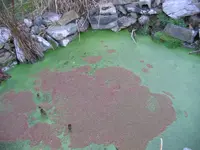
Carolina mosquitofern (Azolla caroliniana) is a small floating aquatic fern that forms dense, soft mats on the surface of still or slow-moving water. The tiny overlapping leaves often shift from green to reddish tones, especially in strong light or cooler weather, giving ponds a colored, velvety look.
This species is native to parts of North America and commonly occurs in ponds, ditches, and quiet backwaters. It grows quickly under warm, bright conditions and high nutrient levels.
Because it can spread fast, it is easy to establish but needs regular control in small water features. Gardeners who learn how to care for Carolina mosquitofern can use it effectively for surface cover and basic water shading.

Care Difficulty
Moderate Care

Light Preference
Partial Sun

Water Requirements
Aquatic

Temperature Preference
Warm Climate

Hardiness Zone
7–11

Soil Texture
Silty, Peaty, Organic-rich

Soil pH
Acidic (5.5–6.5)

Soil Drainage
Waterlogged tolerant

Fertilization
Minimal (feed rarely)
Scan your plant to receive care tips personalized for your specific plant
Available on iOS and Android
This floating aquatic fern needs bright but gentle light to maintain healthy, compact growth.
This species must grow on still or very slow-moving water rather than in soil, so moisture is constant.
Warm, frost-free conditions support the best growth of this aquatic fern.
This free-floating aquatic fern needs constant high humidity because its fronds sit directly on the water surface.
This species grows on or just below the water surface, so the focus is on submerged substrate rather than conventional potting soil.
This fern is well suited to container culture in shallow tubs, basins, or ponds as long as stable water coverage is maintained.
This floating fern gains nitrogen from symbiotic bacteria, so Carolina mosquitofern needs minimal fertilization in most ponds.
Azolla caroliniana benefits from periodic thinning to keep water surfaces open and plants healthy.
This species is usually managed by transplanting patches between water bodies rather than traditional repotting.
New plants of Azolla caroliniana are commonly produced by division of existing floating mats.
Winter care depends strongly on climate, as this fern is sensitive to hard freezes.

Plant Health Check
Not sure what's wrong with your plant? Check your plant's health inside the app.
This small floating fern forms a tight symbiosis with the cyanobacterium Anabaena azollae, which lives in its leaf cavities and converts atmospheric nitrogen into forms the plant can use, enriching still-water habitats with bioavailable nitrogen.
Under warm, nutrient-rich, still-water conditions, this species can rapidly form dense, continuous surface mats that shade out submerged plants and strongly reduce light penetration into ponds and ditches.
The fronds often shift from green to reddish or bronze tones when exposed to high light, cool temperatures, or nutrient stress, due to increased production of protective pigments such as anthocyanins.

Carolina mosquitofern has been studied as a potential biological tool for removing excess nutrients and certain heavy metals from contaminated waters, because its fast growth and dense mats can accumulate pollutants that are then removed when the biomass is harvested.
This floating fern spreads very rapidly under warm, nutrient-rich, still-water conditions. It can double its surface coverage in a few days, so regular thinning and physical removal are often needed to prevent complete pond coverage.
Keep your plants happy and healthy with plant identification, disease detection, and easy care guidance.