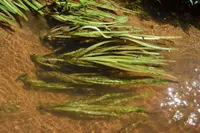
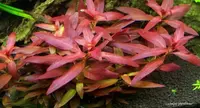
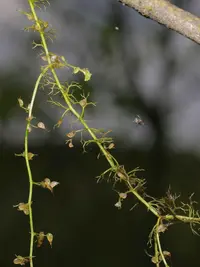
globefruit primrose-willow Care (Ludwigia sphaerocarpa)

Also known as: globe-fruited false-loosestrife
globefruit primrose-willow

About globefruit primrose-willow

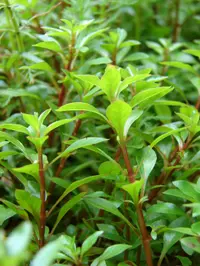
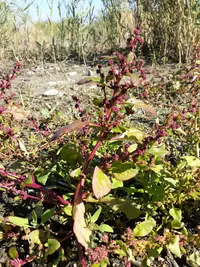
Ludwigia sphaerocarpa is a herbaceous aquatic or semi-aquatic plant, often found along pond margins, ditches, and slow-moving streams. It forms low, spreading clumps with narrow green leaves and small, rounded fruit capsules. Native to parts of eastern North America, it typically grows in open, sunny wetland habitats with seasonally or permanently moist soils. Its growth habit can be somewhat vigorous in the right conditions, but it usually remains manageable in small, controlled plantings. For those learning how to care for Ludwigia sphaerocarpa, the main considerations are consistent moisture, adequate light, and a soil or substrate that does not dry out completely.

Main Plant Requirements

Care Difficulty

Moderate Care

Light Preference

Full Sun

Water Requirements

Aquatic

Temperature Preference

Warm Climate

Hardiness Zone

6–9

Soil Texture

Sandy, Loamy, Silty

Soil pH

Slightly acidic (6.5–7.0), Neutral (7.0)

Soil Drainage

Waterlogged tolerant

Fertilization

Minimal (feed rarely)

Get Personalized Care Plan

Scan your plant to receive care tips personalized for your specific plant

Available on iOS and Android

How to Care for the globefruit primrose-willow

This wetland species needs consistent sun to fuel strong, compact growth.

  • Provide 6–8 hours of direct sun, ideally with morning sun and light afternoon shade in hotter regions to reduce leaf stress.
  • Tolerates light partial shade (3–4 hours sun), but stems may elongate and foliage color fade if light stays below this level.
  • In open sites, protect from intense midsummer afternoon sun where temperatures exceed 90°F (32°C) to limit scorch, especially in shallow or drying margins.

This species thrives in saturated conditions and declines quickly if the root zone dries out.

  • Maintain consistently wet to saturated soil or shallow standing water; never allow the root zone to dry completely between waterings.
  • In garden settings, water whenever the surface begins to lose its glossy wet look, aiming for at least the top 5–8 cm to feel fully moist.
  • Watch for yellowing, limp stems and sour odor as signs of chronic overwatering in poorly drained upland soil; crisping leaves and stunted tips indicate drying.

This species prefers warm growing conditions with protection from frost and drying heat.

  • Best growth occurs around 70–86°F (21–30°C), with active spread during consistently warm months and slower growth in cooler weather.
  • Avoid exposure below 40°F (4°C); repeated drops near freezing can damage stems, especially in plants growing at pond or ditch margins.
  • Plants tolerate short heat spikes to 95°F (35°C) if roots remain submerged or saturated; in hot, shallow water, monitor for wilted or browned tips.

This amphibious species prefers consistently high humidity that matches its wetland habitat.

  • Aim for 70–90% humidity, as air that is too dry accelerates leaf edge drying and stunted new growth.
  • In low humidity, expect curled, brittle leaves and slowed shoot elongation, even if roots remain submerged or moist.
  • Increase humidity with open-topped water trays around the planting area or by clustering aquatic tubs to reduce air movement.

For emergent or marginal culture, this species grows best in saturated, fine-textured, organic-rich substrates.

  • Use a heavy loam or clay-loam with 30–50% decomposed organic matter such as leaf mold or compost to anchor roots in shallow water.
  • Maintain soils that stay constantly wet but not anaerobic; avoid pure peat or dense clay that turns sour and foul-smelling.
  • A slightly acidic to neutral pH of 6.0–7.0 supports nutrient uptake and stable growth of Ludwigia sphaerocarpa.
  • Improve structure by mixing in a small proportion of coarse sand to prevent compaction while keeping enough fines for nutrient retention.

This species adapts well to container growing in shallow water or as a marginal plant in ponds and tubs.

  • Choose a broad, low container so horizontal stems can spread without tipping the pot in shallow water.
  • Use a heavier material such as ceramic or clay to keep the pot from floating or shifting when stems become buoyant.
  • Fill the container to within 2–3 cm of the rim with dense substrate to limit soil washout when water levels fluctuate.

This native aquatic plant usually grows well in natural soils, so added fertilizer is modest and targeted.

  • Use a dilute balanced aquatic fertilizer (around 10-10-10 NPK) if growth is weak or foliage pales in nutrient-poor water.
  • Apply at low strength, about 1/4–1/2 the label dose, during the warm growing season only.
  • Skip feeding in winter or when Ludwigia sphaerocarpa is dormant or not actively producing new stems and leaves.
  • Avoid heavy manures; light compost or leaf litter nearby is usually sufficient in naturalistic plantings.

Pruning is mainly used to manage size and encourage bushy, healthy growth.

  • Trim back soft stem tips in late spring or summer to keep plants compact and promote branching.
  • Remove dead, damaged, or shading stems at the base with clean scissors or hand pruners.
  • Thin crowded shoots to improve light penetration and water flow around the plant.
  • Regular light cutting can extend flowering display and maintain neat Ludwigia sphaerocarpa clumps.

Management focuses more on dividing and transplanting patches than on classic indoor repotting.

  • Transplant when clumps become dense, stems lodge, or growth slows despite good light and water.
  • Plan moves for spring or early summer, when water is warming and plants restart active growth.
  • Lift sections with roots and some substrate, then replant at the same depth and spacing in the new site.
  • Handle roots gently, keep them moist, and shade the area for a few days to reduce transplant stress.

Propagation is commonly done to expand stands or restore wetland plantings.

  • Use stem cuttings in late spring to summer, taking 8–10 cm tips with several leaf nodes.
  • Strip lower leaves and anchor cuttings in shallow water or saturated soil so 1–2 nodes are buried.
  • Maintain warm conditions, 68–80°F, with steady moisture and good light for rapid rooting.
  • For genetic diversity, sow fresh seeds of Ludwigia sphaerocarpa in moist trays under bright, cool conditions.

This species is generally hardy in its native range and needs little targeted winter care in-ground.

  • In colder zones, allow top growth to die back naturally while roots persist below the soil or waterline.
  • Mulch gently around shorelines with leaves or straw to buffer freeze–thaw cycles in exposed sites.
  • Move container-grown plants to a frost-free but cool, bright area or sink pots below the ice line outdoors.

Care Tips

Substrate anchoring

Plant stems in small groups and gently press the lower 2–3 nodes into a fine-grained, nutrient-rich substrate so roots form along the stem and the stand becomes dense and self-supporting.

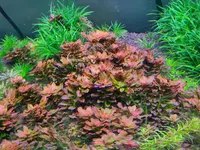
Regular stem rotation

Rotate bunches every 1–2 weeks so all sides receive similar light, which keeps vertical growth straight and reduces lower-leaf drop on shaded stems.

Top replanting cycle

Every 4–6 weeks, cut the healthiest top portions and replant them while removing older, woody bases to maintain vigorous, compact growth when growing Ludwigia sphaerocarpa.

Flow pattern management

Position stems where water flow is moderate, not directly in front of strong filter outlets, to avoid bent or uprooted shoots while still ensuring fresh, oxygenated water around the foliage.

Targeted micronutrient check

Monitor for pale new leaves or distorted tips and, if seen, adjust trace element dosing rather than only increasing macronutrients, since this species reacts quickly to iron and micronutrient deficiencies.

Common Pests and Diseases

Algal overgrowth

Symptoms include dense green or brown film or clumps on stems and leaves that shade the plant and slow growth. This condition is common in nutrient-rich, still or slow-moving water where Ludwigia sphaerocarpa grows.

Solution

Reduce excess nutrients by lowering fertilizer input or fish stocking, increase water movement, and, where possible, allow more competing submerged plants to establish. Manually remove algae from stems, and maintain stable light periods rather than very long, intense lighting to support balanced Ludwigia sphaerocarpa care.

Leaf spot fungi

This disease causes small brown to dark purple spots on emergent or marginal leaves, which can merge into larger lesions leading to premature leaf drop. It is favored by warm, humid conditions with stagnant air around emergent growth.

Solution

Remove and discard affected leaves to reduce spore load, avoid overhead splashing of nutrient-rich water onto foliage, and improve air circulation around emergent stems. If the problem persists in cultivation beds, rotate planting areas and keep plant debris out of the water to limit reinfection.

Aphids

These insects feed on tender emergent stems and young leaves, causing curling, distortion, and sticky honeydew that can support sooty mold growth. Colonies often cluster on shoot tips and undersides of leaves above the waterline.

Solution

Rinse emergent shoots with a firm stream of water to dislodge colonies, and prune heavily infested tips. For persistent populations, use insecticidal soap or a neem oil solution directed only at emergent foliage, applied in calm weather to avoid drift into surrounding water.

Leaf-mining fly larvae

This pest creates pale, winding tunnels inside emergent or marginal leaves, which can lead to blotchy, weakened foliage. Damage is most visible as serpentine trails that turn brown over time.

Solution

Remove and destroy mined leaves as soon as tunnels are noticed to break the insect life cycle. Limit nearby weedy hosts, and in managed ponds or culture systems, monitor new growth regularly so infestations are caught early while leaves can still be selectively pruned.

Spider mites

These pests can colonize emergent or marginal stems during hot, dry periods, causing fine stippling, bronzing, and eventual drying of leaves. Fine webbing may appear on leaf undersides and between nodes above the waterline.

Solution

Increase local humidity around emergent growth if possible and rinse foliage thoroughly, focusing on leaf undersides. For ongoing problems, use insecticidal soap or a miticide labeled for ornamental aquatic margins, applied carefully to emergent parts without saturating open water surfaces.

Interesting Facts

Spherical seed capsules

The species name sphaerocarpa refers to its nearly spherical seed capsules, which distinguish it from many related Ludwigia species with elongated fruits.

Affinity for wet sands

This plant is closely associated with moist to wet sandy or gravelly soils along stream margins and pond edges, often forming low, spreading patches in periodically flooded habitats.

Southeastern US native

It is naturally distributed in the southeastern United States, where it occurs in coastal plain wetlands and riparian zones, contributing to local aquatic and semi-aquatic plant communities.

FAQs about globefruit primrose-willow

This species can spread noticeably in wet soils, ditches, and pond margins through seed and stem fragments. In suitable conditions it may form patches, so monitor edges, thin regularly, and dispose of cut material securely.

Grow Healthy Plants with Botan Care

Keep your plants happy and healthy with plant identification, disease detection, and easy care guidance.

Botan plant care app — identify plants on mobile

Explore More Plants