eastern beebalm Care (Monarda bradburiana)

eastern beebalm

About eastern beebalm

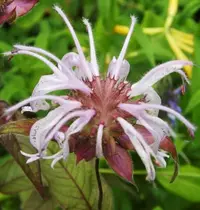
Eastern beebalm (Monarda bradburiana) is a compact, clump-forming perennial in the mint family, valued for its pale pink to lavender, tufted summer flowers. It typically forms rounded mounds of aromatic, disease-resistant foliage and sends up sturdy stems that attract bees, butterflies, and hummingbirds.

This species is native to dry glades and open woodlands in central North America, especially the Ozark region. It is generally easier to grow than many garden bee balms because it tolerates heat, light drought, and average soils.

Gardeners who want to learn how to care for eastern beebalm should know it prefers full sun to light shade and well-drained soil with moderate moisture.

Main Plant Requirements

Care Difficulty

Easy Care

Light Preference

Full Sun

Water Requirements

Moderate Water

Temperature Preference

Cold Hardy

Hardiness Zone

4–8

Soil Texture

Sandy, Loamy, Clay

Soil pH

Acidic (5.5–6.5), Slightly acidic (6.5–7.0)

Soil Drainage

Moist but well-drained

Fertilization

Minimal (feed rarely)

Get Personalized Care Plan

Scan your plant to receive care tips personalized for your specific plant

Available on iOS and Android

How to Care for the eastern beebalm

This perennial prairie species grows and flowers best with abundant direct light outdoors.

  • Provide 6–8 hours of direct sun daily, with a preference for morning sun and some light afternoon shade in hotter regions to reduce leaf scorch.
  • Plant eastern beebalm in an open site; it tolerates light or dappled shade, but flowering and mildew resistance decline when sun drops below about 4 hours.
  • In cooler climates, full sun all day is suitable, while in warmer areas a bit of high, filtered shade during peak summer afternoons helps prevent stress.

This species prefers evenly moist but not saturated soil, especially during its first growing season.

  • Water when the top 3–5 cm of soil feels dry, applying a deep soak at the root zone rather than frequent light splashes to encourage deeper rooting.
  • During hot, dry periods, increase checks for dryness; in cooler or rainy seasons, extend the interval and skip watering if soil is still moist and crumbly.
  • Watch for wilting, browning leaf edges, or unusually light foliage as signs of underwatering, and yellowing lower leaves or a sour soil smell as indicators of excess moisture for Monarda bradburiana.

This hardy perennial tolerates a wide temperature range once established in the garden.

  • Active growth occurs best around 65–80°F (18–27°C), with strong vegetative growth and flowering supported by stable spring and early summer temperatures.
  • Plants survive winter cold down to about -20°F (-29°C) in the ground, dying back to the crown and re-sprouting when soil temperatures warm in spring.
  • Mature clumps handle summer heat up to about 90–95°F (32–35°C) if soil moisture is adequate, but prolonged extreme heat combined with drought can cause stunted growth and leaf scorch.

This species tolerates a wide humidity range and rarely needs special humidity management outdoors.

  • Target ambient humidity around 30–60% for stable growth, which suits most outdoor garden conditions in temperate climates.
  • Plants handle short dry spells in the air but may show leaf edge browning and slower growth in very arid, windy sites.
  • If eastern beebalm shows humidity stress, group plants and add organic mulch to reduce evaporation and buffer local humidity at soil level.

This species prefers well-structured, moderately fertile soil that drains freely but does not dry out too fast.

  • Use a loamy or sandy-loam soil with 20–30% compost mixed in to provide nutrients and moisture retention without becoming compacted.
  • Aim for slightly acidic to neutral pH, roughly 6.0–7.0, where Monarda bradburiana typically shows best nutrient uptake and root activity.
  • Improve drainage and aeration by blending in coarse sand or fine gravel on heavier soils, especially where water sits after rain.
  • Avoid persistently waterlogged, heavy clay or very thin, stony soils, which increase root rot risk and reduce long-term vigor.

This species can be grown in containers if the pot allows enough root volume and drains efficiently.

  • Choose a container at least 25–30 cm deep and wide so the clumping root system can spread without circling tightly.
  • Use a heavier pot material such as clay or ceramic to counterbalance the leafy top growth and reduce tipping in wind.
  • Elevate the container slightly on feet or bricks so drainage holes stay clear and excess water escapes quickly after rain or watering.

This native perennial thrives in average soils, so fertilizing eastern beebalm should be light and targeted.

  • Use a balanced, slow-release fertilizer (around 10-10-10) or a thin layer of compost in early spring.
  • Feed once per growing season in the ground; containers may benefit from a second light application in midsummer.
  • Apply at half the label strength to avoid lush, floppy growth and increased disease risk.
  • Skip feeding in late fall and winter, as the plant is dormant and not using extra nutrients.

Thoughtful pruning supports compact growth and abundant flowering in Monarda bradburiana.

  • In late winter or very early spring, remove dead or damaged stems at the base with clean hand pruners.
  • After the first main bloom, shear back spent flower stems by about one-third to encourage a lighter rebloom and denser shape.
  • Thin crowded or weak stems during the growing season to improve air circulation and reduce mildew pressure.
  • In autumn, stems can be left standing for wildlife, then cut to ground level before new growth emerges in spring.

This species is usually grown in beds or meadows, so care focuses on dividing and transplanting clumps rather than frequent repotting.

  • Plan transplanting or division for early spring or early fall, when temperatures are mild and soil moisture is consistent.
  • Lift and divide crowded or declining clumps every 3–4 years, keeping divisions with several shoots and a healthy root mass.
  • If grown in containers, repot when roots circle the pot or growth slows, stepping up only 1–2 in to limit stress.
  • Water thoroughly after transplanting, shade lightly for a few days if sun is intense, and keep soil evenly moist until reestablished.

Monarda bradburiana is commonly propagated by division, stem cuttings, or seeds, depending on how quickly new plants are needed.

  • Divide mature clumps in early spring or early fall, replanting healthy sections at the same soil depth and watering in well.
  • Take softwood cuttings in late spring to early summer, root them in a moist, well-drained medium, and keep humidity high until rooted.
  • Sow seeds in fall outdoors or after cold stratification, using a bright, lightly covered seedbed or tray for better germination.
  • Space new plants adequately and maintain even moisture while young to encourage strong root systems and stable early growth.

This prairie perennial is cold hardy in much of the US and usually needs minimal winter care in the ground.

  • Plants tolerate normal frost and freeze conditions once established, especially in well-drained soil.
  • After hard frost, optional cutting back of stems to a few inches keeps beds tidy but is not essential for survival.
  • Apply a 5–7 cm mulch layer in colder regions to moderate soil temperature and limit freeze–thaw heaving, especially for first-year plants.
  • Container-grown plants benefit from moving pots into a sheltered, unheated but frost-moderated spot to protect roots.

Care Tips

Divide aging clumps

Every 3–4 years, lift and divide the clumps in early spring or early fall to maintain vigor, reduce congestion, and limit self-seeding spread when growing eastern beebalm.

Promote air circulation

Space plants so mature foliage does not overlap and, if needed, remove a few central stems in late spring to reduce mildew risk and keep foliage dry after rain or irrigation.

Mulch with care

Apply a 3–5 cm layer of organic mulch around but not touching the crowns to stabilize soil moisture and temperature while preventing crown rot.

Deadhead strategically

Shear off spent flowering stems just above the foliage to encourage a tidier plant, reduce unwanted seedlings, and sometimes promote a modest second flush of blooms.

Monitor for rhizome spread

Check the outer edges of the planting each year and cut back or lift wandering rhizomes to keep the plant within its intended area and prevent it from overtaking neighboring perennials.

Common Pests and Diseases

Powdery mildew

This disease causes white to gray, powdery patches on leaves, stems, and sometimes flower bracts, often starting on lower foliage and spreading in humid, crowded plantings.

Solution

Improve air circulation with wider spacing, thin surrounding growth, and water at soil level rather than overhead; remove and dispose of heavily infected leaves. In long, humid periods, apply a preventive sulfur or potassium bicarbonate fungicide labeled for ornamentals, following label directions, as part of broader Monarda bradburiana care instructions.

Leaf spot

This disease produces small purple, brown, or tan spots that may merge into larger blotches, causing premature leaf yellowing and drop in wet conditions.

Solution

Remove and discard affected leaves and any infected debris around the plant to reduce spore spread, and avoid wetting foliage by using drip or soaker hoses. If spotting is severe or recurring, use a labeled ornamental fungicide during wet periods and improve air movement by thinning and dividing dense clumps every few years.

Spider mites

These pests cause fine stippling, bronzing, and a dull, dusty appearance on leaves, sometimes with delicate webbing on stems and leaf undersides, especially during hot, dry weather.

Solution

Rinse foliage thoroughly with a strong but gentle stream of water, focusing on leaf undersides, and increase humidity slightly around the plants without keeping foliage constantly wet. For persistent infestations, use horticultural oil or insecticidal soap directed to the undersides of leaves, repeating at 5–7 day intervals as needed.

Aphids

These insects cluster on tender stems and flower buds, sucking sap and causing distortion, sticky honeydew, and sometimes black sooty mold growth on leaves below.

Solution

Spray colonies off with a firm stream of water and remove heavily infested shoot tips by pinching. If numbers remain high, treat with insecticidal soap or a light horticultural oil, ensuring full coverage of stems and the undersides of leaves, and repeat as needed according to the product label.

Rust

This disease leads to orange, brown, or rust-colored pustules primarily on leaf undersides, with yellowing and early drop of severely affected foliage.

Solution

Remove and destroy infected leaves as soon as symptoms appear and keep the area around plants free of fallen foliage to reduce overwintering spores. Improve airflow by proper spacing and dividing crowded clumps, avoid overhead watering, and in severe cases apply a labeled fungicide early in the season when first spots are seen.

Interesting Facts

Early-season bee magnet

This species flowers unusually early for a beebalm, often in late spring, providing one of the first substantial nectar and pollen sources for native solitary bees and early-emerging bumble bees in its central U.S. range.

Soft pink hooded blooms

Its flowers are pale pink to soft lavender with distinct purple spotting and a strongly hooded upper lip, a shape that helps guide pollinators precisely to the nectar while dusting them with pollen.

Drought-tolerant prairie native

Unlike several taller, moisture-loving Monarda relatives, this species is naturally adapted to dry glades and open woodlands on rocky or thin soils, which gives it comparatively strong drought tolerance once established.

FAQs about eastern beebalm

This species is highly attractive to native bees, honeybees, butterflies, and some moths. Its nectar-rich flowers and open structure make it a reliable pollinator plant, especially in meadow, prairie, and mixed perennial border plantings.

Grow Healthy Plants with Botan Care

Keep your plants happy and healthy with plant identification, disease detection, and easy care guidance.

Botan plant care app — identify plants on mobile

Explore More Plants