


Early-season staking
Install sturdy stakes or a low wire support ring around young clumps in spring so the tall stems stay upright and resist lodging in wind and heavy rain later in the season.

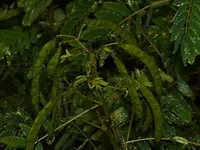
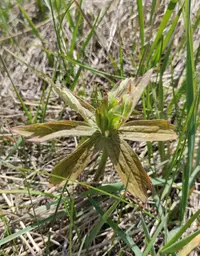
American senna (Senna hebecarpa) is a hardy, herbaceous perennial in the legume family, grown mainly for its bright summer flowers and wildlife value. It forms upright clumps with sturdy stems, divided leaves, and clusters of yellow, pea-like blooms followed by narrow seed pods.
This species is native to eastern and central North America, where it occurs in prairies, open woods, and stream banks. It is generally easy to grow in full sun with moist, well-drained soil, and it tolerates a range of garden conditions.
Deep roots, good drought tolerance once established, and resistance to most pests make it a reliable choice for naturalistic plantings. Gardeners who want to care for American senna should provide enough light and avoid very dry, compacted sites.

Care Difficulty
Easy Care

Light Preference
Full Sun

Water Requirements
Regular Water

Temperature Preference
Cold Hardy

Hardiness Zone
4–8

Soil Texture
Sandy, Loamy, Organic-rich

Soil pH
Acidic (5.5–6.5), Slightly acidic (6.5–7.0)

Soil Drainage
Moist but well-drained

Fertilization
Minimal (feed rarely)
Scan your plant to receive care tips personalized for your specific plant
Available on iOS and Android
This sun-loving perennial shrub performs best with strong, direct light in most climates.
This deep-rooted perennial prefers evenly moist but not saturated soil once established.
This hardy, warm-season perennial tolerates a wide temperature range once established outdoors.
Humidity is not a major factor for this hardy, outdoor perennial.
Senna hebecarpa grows best in moderately fertile, well-drained but moisture-retentive ground.
This species can be grown in large containers, but it is better suited to open ground.
Senna hebecarpa generally needs modest feeding, especially in poor soils or containers.
Pruning Senna hebecarpa is mainly for tidiness and to maintain a strong, flowering framework.
This deep-rooted native is better transplanted young and is rarely suited to long-term container culture.
Senna hebecarpa is most commonly propagated from seed, with some preparation to improve germination.
This species is cold hardy in much of the US and usually needs minimal winter care once established.

Plant Health Check
Not sure what's wrong with your plant? Check your plant's health inside the app.
This species forms root nodules with nitrogen-fixing bacteria, which allows it to enrich poor soils and support surrounding plant communities in its native eastern and central US range.
Its bright yellow summer flowers are especially important for several native bee species that have evolved to preferentially collect pollen from Senna, making it a key resource in certain pollinator networks.
The foliage serves as a larval host plant for sulphur butterflies such as cloudless sulphur and sleepy orange, providing essential food for caterpillars and supporting local butterfly populations.

Unlike many ornamental perennials, this species often does not self-seed heavily unless a compatible second plant is nearby for effective cross-pollination, so natural spread in gardens can remain relatively controlled compared to many other native legumes.
This species usually blooms in mid to late summer, often July–August, depending on climate. Flowering typically continues for 3–6 weeks, with individual flower clusters opening in succession to provide an extended display and pollinator resource.
Keep your plants happy and healthy with plant identification, disease detection, and easy care guidance.

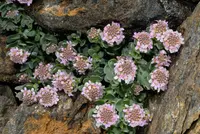
Aethionema thomasianum
Aethionema thomasianum
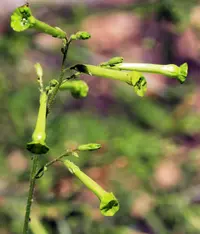
tobacco
Nicotiana paniculata
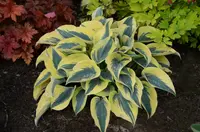
Hosta
Hosta Shadowland Autumn Frost
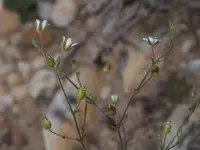
Arenaria modesta
Arenaria modesta
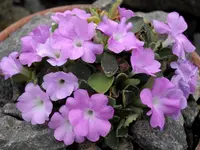
Allioni's Primrose
Primula allionii
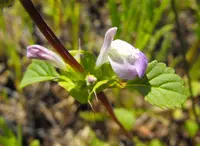
San Diego thorn-mint
Acanthomintha ilicifolia
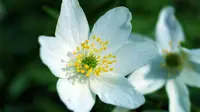
Anemonoides amurensis
Anemonoides amurensis
Anemonastrum dichotomum
Anemonastrum dichotomum