Anemonastrum dichotomum Care

Anemonastrum dichotomum

About Anemonastrum dichotomum

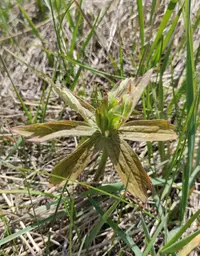
Anemonastrum dichotomum is a small herbaceous perennial related to windflowers and buttercups. It forms clumps of divided green foliage topped with delicate, usually white, star-like flowers. Plants typically grow in cool, temperate regions of Asia, often in woodland edges, meadows, or mountain slopes with good natural moisture. It prefers light, well-drained soil and locations that do not dry out completely. The species is not widely grown in gardens, so information on how to care for Anemonastrum dichotomum is still limited, but it generally suits gardeners comfortable with other woodland perennials.

Main Plant Requirements

Care Difficulty

Moderate Care

Light Preference

Partial Shade

Water Requirements

Moderate Water

Temperature Preference

Cold Hardy

Hardiness Zone

3–7

Soil Texture

Loamy, Silty, Organic-rich

Soil pH

Acidic (5.5–6.5), Slightly acidic (6.5–7.0)

Soil Drainage

Moist but well-drained

Fertilization

Minimal (feed rarely)

Get Personalized Care Plan

Scan your plant to receive care tips personalized for your specific plant

Available on iOS and Android

How to Care for the Anemonastrum dichotomum

This woodland perennial prefers bright, gentle light rather than harsh, all-day sun.

  • Provide 3–5 hours of morning sun with light dappled shade for the rest of the day; east-facing or lightly shaded garden spots suit Anemonastrum dichotomum well.
  • Tolerates partial shade, but dense shade reduces flowering; aim for bright shade under open trees or beside taller perennials that filter light.
  • Avoid strong midday and late-afternoon sun, which can scorch leaves and dry soil quickly; in hotter summers, increase shade from about 11 am–3 pm.

This plant favors consistently moist but not saturated soil, especially during its active growth.

  • Water when the top 2–4 cm of soil feels slightly dry, aiming for soil that is damp to the touch below the surface, not soggy.
  • Use humus-rich, well-drained soil so water moves through freely; pooling water or a sour smell indicates poor drainage and risk of root rot.
  • In spring and early summer, monitor closely during dry spells; in cooler or rainy periods, reduce watering, watching for wilting (too dry) or yellowing, mushy stems (too wet).

This species is a cool- to mild-climate perennial with good cold tolerance.

  • Optimal growing temperatures are around 55–70°F (13–21°C), typical of mild spring and early summer conditions in temperate regions.
  • Established plants tolerate cold down to about 0°F (−18°C) in the ground, dying back above soil level and resprouting in spring if crowns are not waterlogged.
  • Prolonged heat above 85°F (29°C) can stress plants; provide extra shade and consistent moisture during hot spells, and avoid planting in heat-reflective sites near walls or paving.

This species tolerates a broad humidity range and rarely needs special humidity management in temperate homes or gardens.

  • Aim for 30–60% humidity; the plant handles brief drier spells without lasting damage.
  • Crisping leaf edges, stalled growth, or buds aborting during hot, dry weather can indicate humidity stress combined with heat or drought.
  • In very dry indoor air, group pots together and place them on a pebble tray with water below the pot base to slightly raise local humidity.

This woodland perennial prefers loose, humus-rich, well-drained soil that stays evenly moist but not waterlogged.

  • Use a loamy mix with 40–60% garden soil or loam, 20–30% compost, and 20–30% sharp sand or fine grit for structure and drainage.
  • Maintain slightly acidic to neutral pH around 6.0–7.0, which supports nutrient availability and healthy root development.
  • Improve aeration by incorporating leaf mold or fine bark, which creates pore spaces and mimics natural forest-floor conditions for Anemonastrum dichotomum.
  • Avoid heavy clay that stays wet, compacted ground, or pure sand; these extremes either suffocate roots or dry them out too quickly.

This species can be grown in containers if the pot provides cool, moist, yet sharply drained root conditions.

  • Choose a deep pot rather than a shallow one so roots can grow downward into cooler, more stable moisture zones.
  • Select a thick-walled clay or ceramic container, which moderates temperature swings and reduces rapid substrate drying in sun or wind.
  • Raise the container slightly on pot feet or bricks so drainage holes clear the ground and excess water runs off rapidly after rain or watering.

This woodland perennial benefits from light feeding but often grows acceptably in fertile garden soil without extra inputs.

  • Use a balanced, slow-release fertilizer (around 10-10-10 NPK) or a thin layer of finished compost in early spring.
  • Feed once at shoot emergence and, if growth seems weak, a second light dose in mid-season.
  • Apply at half the label strength for container plants to avoid root burn.
  • Do not fertilize during dormancy or winter; allow Anemonastrum dichotomum to rest with minimal nutrients.

This species needs only modest pruning to stay healthy and flower well.

  • In late fall or very early spring, remove dead, damaged, or diseased stems with clean hand pruners.
  • Deadhead spent flowers during the blooming season to encourage a tidier appearance and potential repeat flowering.
  • Thin out crowded or weak stems at the base to improve air circulation and reduce fungal issues.
  • Avoid cutting healthy foliage too hard during the growing season, as leaves support root and rhizome strength.

Anemonastrum dichotomum is usually grown in the ground, so focus on careful transplanting rather than frequent repotting.

  • Transplant in early spring or early fall when temperatures are mild and soil is evenly moist.
  • Move clumps only when growth declines, flowering decreases, or plants become overcrowded, typically every 4–6 years.
  • Dig widely around the root system, lifting with a soil ball intact to limit root disturbance and stress.
  • Replant at the same depth in well-drained, humus-rich soil, then water thoroughly and shade lightly for several days.

This plant is most reliably propagated by division, with seed used mainly for patient growers or breeding work.

  • Divide mature clumps in early spring or early fall, when soil is cool and plants are not in peak growth.
  • Lift the clump, gently tease apart sections with several buds and healthy roots, and replant promptly.
  • Keep divisions in evenly moist, humus-rich soil with light shade until well re-established.
  • For seed, sow fresh seed outdoors in fall so winter chilling supports natural germination in spring.

This hardy perennial typically needs minimal winter care in temperate climates once established outdoors.

  • Plants tolerate normal winter frosts when grown in the ground with well-drained soil.
  • After foliage dies back, leave stems in place until late winter in colder areas to mark the planting site.
  • Apply a 3–5 cm layer of leaf mulch over the root zone in late fall, keeping mulch off crowns.

Care Tips

Label dormancy zones

Mark planting spots with durable labels or discreet stakes so you do not disturb the clumps during summer dormancy or early spring before shoots emerge, which helps long-lived stands establish undisturbed.

Use light mulch ring

Apply a thin ring of fine, weed-free mulch around but not over the crown to suppress weeds, buffer soil moisture, and keep the shallow rhizomes from heaving in freeze–thaw cycles.

Stage gradual divisions

When clumps become crowded, divide only a portion of the plant every 3–4 years in early spring, keeping divisions with at least 2–3 buds each, so flowering performance and stand density are maintained.

Combine with nurse plants

Plant among open-canopy perennials or low shrubs that leaf out slightly later, which provides light shade to protect the delicate spring foliage and flowers from wind and intense sun as the season advances.

Monitor self-seeding

Allow some seed heads to ripen where naturalizing is desired, but deadhead the remainder before they shatter if a controlled colony is preferred, which is a key part of caring for Anemonastrum dichotomum in small gardens.

Common Pests and Diseases

Powdery mildew

This disease causes a white to gray, powdery coating on upper leaf surfaces and young stems, often during warm days and cool, humid nights.

Solution

Remove and discard affected leaves, avoid overhead watering, and thin or space plants to improve air circulation. If conditions stay favorable for infection, apply a sulfur or potassium bicarbonate fungicide labeled for ornamentals according to label directions as part of broader Anemonastrum dichotomum care instructions.

Leaf spot

This disease produces small purple, brown, or black spots on leaves that may merge into larger blotches, leading to premature leaf yellowing and drop.

Solution

Prune and destroy heavily spotted foliage, keep overhead watering to a minimum, and water at soil level to keep leaves dry. In beds with a history of leaf spot, use clean mulch to reduce splash and, if necessary, use a copper- or chlorothalonil-based fungicide labeled for ornamental perennials early in the season.

Botrytis blight

This disease leads to soft, water-soaked lesions on leaves, stems, and flower buds, which develop a gray, fuzzy mold in cool, damp conditions.

Solution

Promptly remove and discard all affected plant parts and any fallen debris, and increase spacing and airflow around plants. Avoid wetting the foliage, and in persistent cool, wet weather consider a preventive application of a botrytis-labeled fungicide, following the label strictly.

Aphids

These insects cluster on young stems, flower stalks, and buds, sucking sap and causing distortion, sticky honeydew, and sometimes sooty mold growth.

Solution

Dislodge colonies by spraying plants with a strong stream of water, and pinch off heavily infested shoot tips. For continued pressure, use insecticidal soap or neem oil, making sure to wet the undersides of leaves and repeating as needed according to the product label.

Leaf miners

This pest lives inside the leaf tissue, creating pale, winding tunnels that can reduce the photosynthetic area of the foliage.

Solution

Remove and dispose of mined leaves as soon as damage is noticed to reduce the developing larvae. In severe or recurring cases, use a systemic insecticide or a product with spinosad labeled for leaf miners, timing applications to target young larvae early in their development.

Interesting Facts

Disjunct Asian range

This species has a scattered natural distribution across parts of Siberia, Mongolia, northern China, Korea, and Japan, typically in cool-temperate to subalpine regions. Its patchy range suggests historical climate shifts and mountain refugia played a role in its evolution.

Preference for rocky habitats

In the wild it often grows on rocky slopes, grassy screes, and open forest margins rather than deep rich soils. This preference reflects its adaptation to well-drained, often slightly disturbed, mountain and foothill sites.

Early-season flowering

The plant usually flowers in late spring to early summer, taking advantage of high light levels before taller surrounding vegetation fully leafs out. Its relatively short flowering period is timed to local snowmelt and soil warming patterns in its native range.

FAQs about Anemonastrum dichotomum

This species is a herbaceous perennial. The top growth dies back after the growing season, but the roots survive and send up new shoots each year if conditions remain suitable and the soil does not stay waterlogged.

Grow Healthy Plants with Botan Care

Keep your plants happy and healthy with plant identification, disease detection, and easy care guidance.

Botan plant care app — identify plants on mobile

Explore More Plants