Slug exclusion strategies
Use a 5–8 cm wide ring of sharp horticultural grit or crushed gravel around clumps and refresh it each spring to discourage slugs from reaching the foliage without relying on baits.

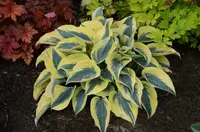
Hosta Shadowland Autumn Frost is a hardy, clump-forming perennial grown mainly for its colorful foliage rather than flowers. It belongs to the Hosta group, which is native to woodland and streamside habitats in East Asia.
This cultivar has thick, heart-shaped leaves with blue margins and bright yellow centers that age to creamy white, creating strong contrast in shady beds and borders. Plants form neat mounds that stay relatively compact, so they work well in smaller gardens.
Its sturdy leaves and shade tolerance make it easier to grow than many flowering perennials, especially in cool to mild climates. It generally prefers partial shade, consistent moisture, and rich, well-drained soil, which guides how to care for Hosta in home gardens.

Care Difficulty
Easy Care

Light Preference
Partial Shade

Water Requirements
Regular Water

Temperature Preference
Cold Hardy

Hardiness Zone
3–9

Soil Texture
Loamy, Silty, Organic-rich

Soil pH
Acidic (5.5–6.5), Slightly acidic (6.5–7.0)

Soil Drainage
Moist but well-drained

Fertilization
Light (every 4–6 weeks)
Scan your plant to receive care tips personalized for your specific plant
Available on iOS and Android
This shade-tolerant perennial prefers cool light conditions with some direct morning sun.
This plant prefers consistently moist, cool soil rather than swings between very dry and very wet.
This hardy perennial tolerates cold winters and mild to warm summers when extremes are avoided.
This cultivar grows well outdoors in 40–60% humidity and rarely needs special humidity management.
Soil should be moisture-retentive yet free-draining to support strong growth.
This hosta is well suited to container growing outdoors on patios or shaded beds.
Shadowland Autumn Frost responds well to modest, consistent nutrition during the growing season.
Pruning Hosta Shadowland Autumn Frost is mainly about cleanliness and end-of-season tidy up rather than shaping.
Transplanting or dividing this hosta is infrequent but useful for overcrowded clumps or declining vigor.
Propagation of Hosta Shadowland Autumn Frost is done by division to preserve the named cultivar traits.
This hosta is cold hardy in typical garden climates and usually needs only basic winter preparation.

Plant Health Check
Not sure what's wrong with your plant? Check your plant's health inside the app.
This cultivar shows its strongest blue leaf tones in cooler conditions, because the waxy coating on the foliage is thicker and more stable when night temperatures remain relatively low.
The golden centers of the leaves gradually soften toward creamy yellow as the season progresses, creating a noticeable contrast change without altering the blue margin.
It was selected for a naturally dense, symmetrical mound around 30–40 cm tall, which makes it suitable for small shade gardens and container displays compared with many larger blue-yellow hostas.

The leaf variegation pattern of this cultivar is stable and clonal, meaning every plant sold originates from controlled divisions or tissue culture of the original mutation, so the distinctive frosted blue margins and golden centers are genetically identical from plant to plant.
Yellowing on this plant may result from natural seasonal dieback, root stress after division, or nutrient imbalance, especially low nitrogen. Check soil drainage, avoid waterlogging, and apply a balanced slow-release fertilizer in spring if needed.
Keep your plants happy and healthy with plant identification, disease detection, and easy care guidance.