Provide firm support
Install a fine mesh, netting, or strings before planting so the slender twining stems can quickly latch on and climb without snapping in wind.

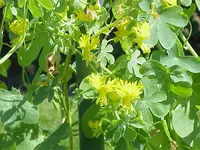
Canary-creeper, Tropaeolum peregrinum, is a tender climbing annual vine grown for its finely cut foliage and bright yellow, fringed flowers. It often trails or twines over supports, fences, or other plants, creating a light, lacy screen.
This species is native to western South America, where it grows in mild, frost-free areas. In gardens it is typically grown from seed each year and is considered fast-growing but sensitive to cold.
It prefers sunny, sheltered positions, moderately fertile, well-drained soil, and steady moisture without waterlogging. Once these needs are met, it is relatively straightforward to care for Canary-creeper in temperate climates with warm summers.

Care Difficulty
Moderate Care

Light Preference
Full Sun

Water Requirements
Moderate Water

Temperature Preference
Tropical / Frost Sensitive

Hardiness Zone
10–11

Soil Texture
Sandy, Loamy, Organic-rich

Soil pH
Acidic (5.5–6.5), Slightly acidic (6.5–7.0)

Soil Drainage
Well-drained

Fertilization
Light (every 4–6 weeks)
Scan your plant to receive care tips personalized for your specific plant
Available on iOS and Android
This fast-growing climber needs consistent, bright conditions to flower well.
This vine prefers evenly moist but not saturated soil during active growth.
This species performs best in mild, frost-free conditions.
This vine grows well in typical indoor humidity and rarely needs special adjustment.
Tropaeolum peregrinum prefers loose, moderately fertile, sharply drained soil to prevent root problems.
This species is well suited to container growing when given enough root space and support.
Tropaeolum peregrinum prefers lean soil and needs only modest feeding for good flowering.
Pruning helps Tropaeolum peregrinum stay tidy and support strong flowering on new growth.
This fast annual or tender perennial vine is usually transplanted outdoors rather than kept long term in containers.
Tropaeolum peregrinum is most often propagated from seed for strong, vigorous vines.
In most climates this vine is treated as an annual, but mild regions may overwinter its tuberous roots outdoors with some care.

Plant Health Check
Not sure what's wrong with your plant? Check your plant's health inside the app.
The bright yellow flowers have deeply fringed petals that spread like wings, giving a strong visual resemblance to a flying canary and inspiring the common name canary creeper.
This species is native to the cool, seasonally dry regions of western South America, especially the lower slopes of the Andes in Peru and surrounding areas, where it scrambles over shrubs and rocky banks.
Like other nasturtiums, its leaves and flowers are edible and have a mild, cress-like peppery taste due to mustard-like compounds, though it is grown more often for ornamental value than for salads.

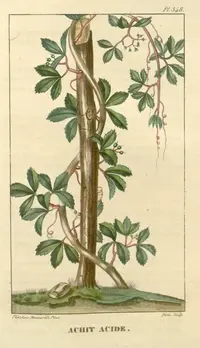
The species was first formally described in the early 19th century and soon became a popular subject in European botanical gardens, where its distinctive birdlike blooms were featured in hand-colored botanical illustrations that helped introduce many gardeners to South American climbing ornamentals.
Poor flowering often comes from too much shade, excess nitrogen fertilizer, or heat and drought stress. Provide strong light, moderate feeding, and consistent moisture, and avoid pruning off developing buds during the growing season.
Keep your plants happy and healthy with plant identification, disease detection, and easy care guidance.